
Why Laboratory Ventilation Systems Are Mission-Critical Infrastructure
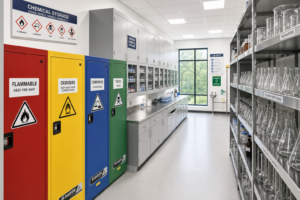
Laboratory ventilation systems do far more than keep a room comfortable. They are the primary engineering control protecting researchers from airborne chemical exposure, and they represent one of the largest ongoing energy costs in any lab facility. Getting the design right affects safety, compliance, and operating budget simultaneously.
Unlike office HVAC, which recirculates air to save energy, most laboratory ventilation systems rely on 100% once-through outside air to prevent hazardous vapors from cycling back into occupied spaces. This fundamental difference drives up energy consumption and makes airflow design decisions far more consequential than in typical commercial buildings.
Facilities planners who understand the core principles of lab HVAC design, from air change rates to exhaust strategy, are far better equipped to evaluate engineering proposals and avoid over-designed or under-designed systems. The ventilation specialists at Genie Scientific frequently help lab teams translate these technical requirements into fume hood and containment specifications that match their actual airflow budget.
Air Changes Per Hour: Setting the Right ACH for Your Lab
Air changes per hour, or ACH, measures how many times per hour the entire volume of air in a room is replaced with fresh, conditioned air. This single number drives an enormous share of a lab’s HVAC energy consumption, making it one of the most important variables in laboratory ventilation systems design.
Setting ACH too low creates real safety risk by allowing chemical vapors, heat, and odors to accumulate. Setting it too high wastes enormous amounts of energy conditioning and moving air that provides no additional safety benefit. Most labs benefit from a variable approach rather than a single fixed rate.
- General chemistry teaching and research labs typically target 6 to 12 air changes per hour, depending on chemical use intensity.
- Labs with significant fume hood usage or higher hazard chemical handling often require 10 to 15 ACH or more to maintain safe dilution.
- Unoccupied setback modes can reduce ACH during nights and weekends when no active chemical work is occurring, generating substantial energy savings.
- Demand-controlled ventilation systems use sensors to adjust ACH in real time based on detected chemical vapor levels or occupancy, rather than running at a fixed worst-case rate continuously.
- ACH requirements should be documented per room type during design, since applying a single blanket rate across an entire facility often over-ventilates low-hazard spaces while under-serving high-hazard ones.
Supply and Exhaust Balance: Maintaining Proper Directional Airflow
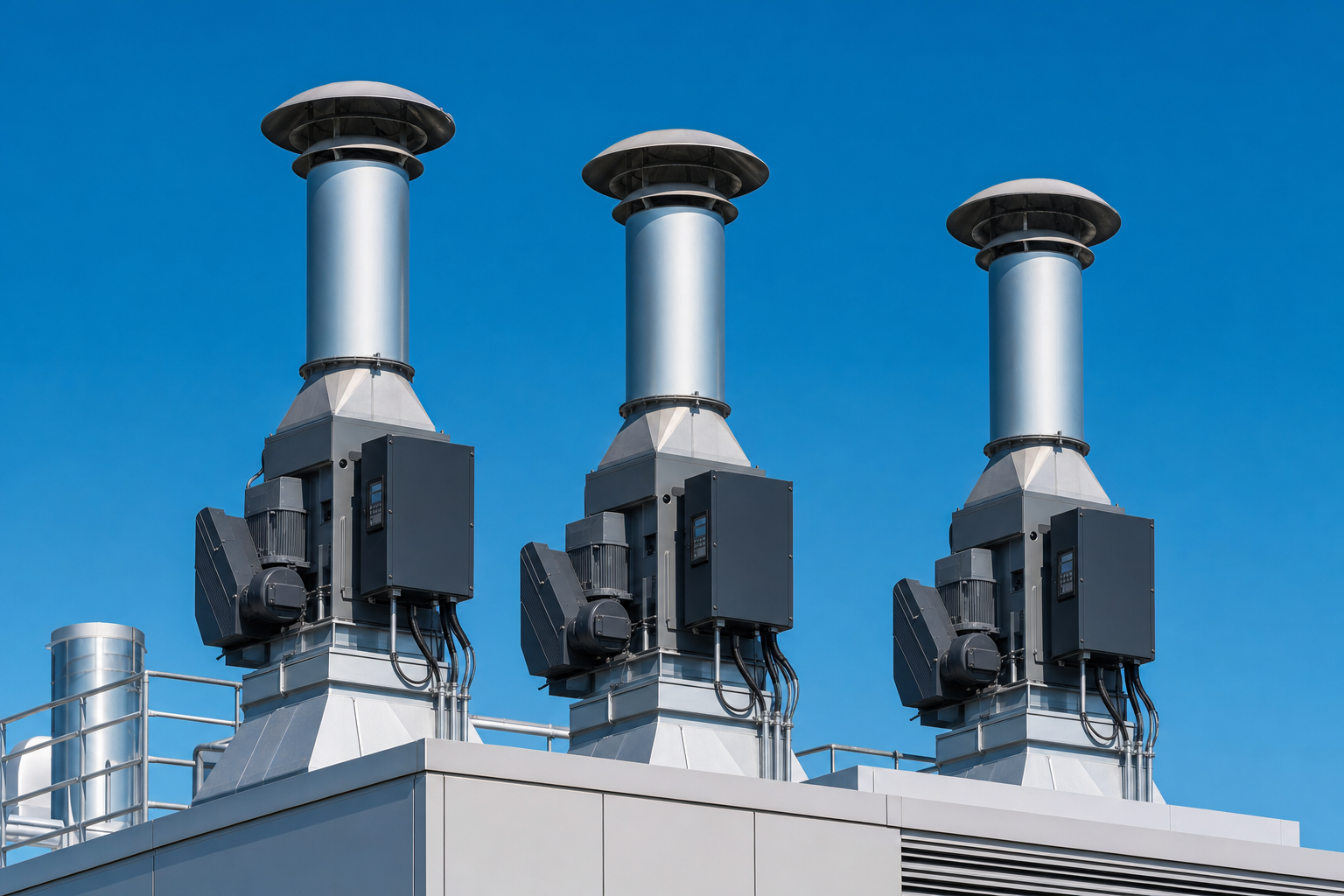
Every functional lab HVAC design depends on a careful balance between supply air and exhaust air. Laboratories are intentionally designed to run at a slight negative pressure relative to adjacent corridors and office areas, ensuring that air flows into the lab rather than out of it whenever a door opens.
This directional control prevents chemical vapors, odors, and airborne contaminants generated in the lab from migrating into hallways, offices, or other occupied spaces. Getting this balance wrong is one of the most common and most dangerous mistakes in laboratory ventilation systems design.
Achieving reliable negative pressure requires exhaust airflow to consistently exceed supply airflow by a controlled margin, along with properly sealed doors, windows, and wall penetrations that prevent uncontrolled air leakage from disrupting the pressure relationship.
- Target a pressure differential of negative 0.02 to negative 0.05 inches of water column between the lab and adjacent corridors, verified with a differential pressure monitor.
- Interlock supply and exhaust fans so that a failure in either system triggers an alarm rather than allowing an unbalanced, potentially reversed airflow condition.
- Self-closing doors with proper gasketing help maintain the pressure envelope during normal foot traffic.
- Sash position on fume hoods directly affects total exhaust demand, which is why hood usage and general room exhaust must be balanced together, not designed in isolation.
Fume Hood Integration Within the Ventilation System
Fume hoods are typically the single largest source of exhaust demand in a laboratory, and their design and operation are deeply intertwined with the building’s overall lab exhaust systems. A fume hood is only as effective as the ventilation infrastructure supporting it.
Face velocity, the speed at which air enters the hood opening, is the key performance metric for fume hood containment, and it depends directly on the exhaust fan capacity serving that hood. The relationship between face velocity, baffles, and bypass airflow is explained in depth in Understanding Fume Hood Face Velocity: Key Concepts of Containment, Baffles & Bypass, a useful reference when evaluating whether your ventilation system can adequately support your hood fleet.
Choosing between ducted and ductless hood configurations also affects overall building ventilation load, since ducted hoods draw on the central exhaust system while ductless units filter and recirculate air locally. The tradeoffs are outlined in Ducted vs. Ductless Fume Hoods: Pros, Cons, and Ideal Applications, which is especially relevant when a facility’s central exhaust capacity is already near its limit.
- Standard face velocity targets range from 80 to 120 feet per minute, with 100 fpm serving as the most common industry benchmark.
- Adding fume hoods to an existing lab without verifying available exhaust capacity is a leading cause of underperforming containment.
- Ductless hoods reduce load on central exhaust systems but require careful filter selection matched to the specific chemicals in use.
- Sash management directly affects total exhaust demand, since a fully open sash requires far more airflow than a partially closed one to maintain face velocity.
Energy Efficiency Strategies for Lab HVAC Design
Laboratory ventilation systems are notoriously energy-intensive, often consuming several times more energy per square foot than typical commercial space due to 100% outside air requirements and high air change rates. Facilities planners increasingly look for ways to reduce this burden without compromising safety.
Variable air volume, or VAV, fume hood controls represent one of the most impactful efficiency upgrades available, since they automatically reduce exhaust airflow when a hood sash is closed or partially closed rather than exhausting at a constant maximum rate. The mechanics and savings potential of these systems are covered in Energy-Efficient Fume Hoods: VAV, Low-Flow & Sash Management.
- VAV fume hood systems can reduce hood-related exhaust energy consumption by 50% or more compared to constant-volume designs.
- Heat recovery systems capture energy from exhausted lab air to precondition incoming outside air, cutting the energy penalty of once-through ventilation.
- Occupancy-based and vapor-sensing controls allow air change rates to drop safely during unoccupied periods.
- Low-flow fume hoods, designed with improved aerodynamics, can maintain safe containment at reduced face velocities and airflow volumes compared to legacy hood designs.
- Regular sash discipline training for lab staff meaningfully reduces energy use in VAV-controlled labs, since sash position directly drives exhaust fan output.
Ductwork, Exhaust Stacks, and Filtration Considerations
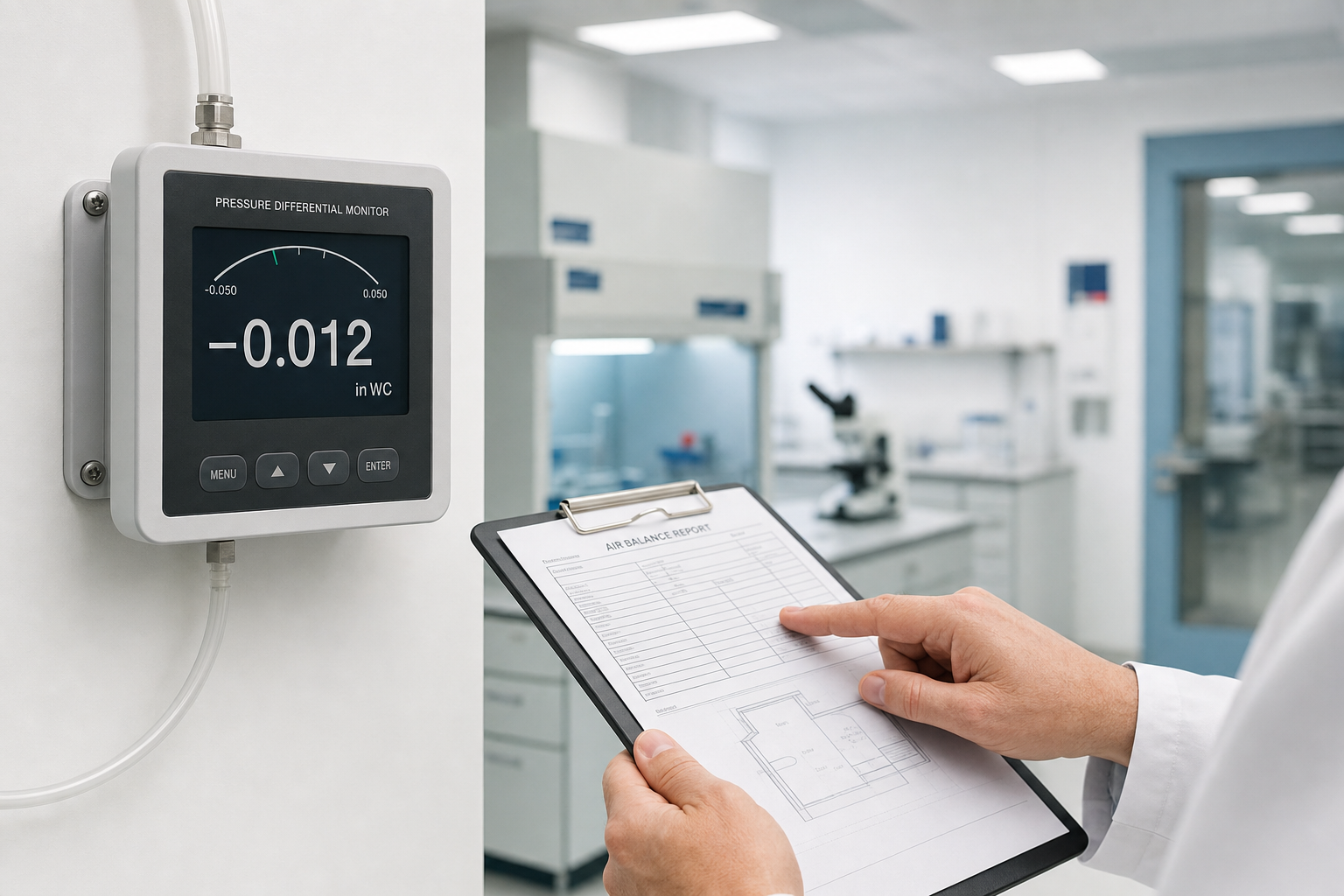
The physical infrastructure that moves air through a laboratory, ductwork, exhaust fans, and rooftop stacks, must be sized and constructed to handle the specific chemicals and volumes your lab generates. Corrosive fume exhaust, for instance, requires duct materials and coatings that resist degradation over years of continuous use.
Exhaust stack height and placement also matter for both safety and neighborhood compliance, since improperly designed stacks can allow exhausted contaminants to re-enter the building through fresh air intakes or affect nearby structures.
- Corrosion-resistant duct materials, such as coated steel, fiberglass-reinforced plastic, or PVC-coated ductwork, are necessary for labs handling acidic or corrosive fume streams.
- Exhaust stacks should discharge well above roof-level turbulence zones and away from fresh air intakes to prevent re-entrainment of contaminated air.
- Dilution modeling during design helps confirm that exhaust concentrations at the stack outlet and surrounding property lines meet environmental compliance thresholds.
- Filtration or scrubbing may be required for certain exhaust streams containing particulates, acids, or specific regulated compounds before discharge.
Monitoring, Maintenance, and Long-Term System Performance
A laboratory ventilation system is only as reliable as its ongoing maintenance and monitoring program. Fan belts wear, filters load with particulate, and dampers drift out of calibration, all of which can silently degrade performance long before an obvious failure occurs.
Continuous monitoring of key metrics gives facilities teams the early warning needed to address problems before they become safety incidents or compliance failures.
- Room pressure differential monitors provide continuous verification that negative pressure relationships remain intact.
- Fume hood face velocity should be checked at commissioning and re-verified at least annually, or after any HVAC modification.
- Preventive maintenance schedules for exhaust fans, dampers, and filters should be documented and tracked, not left to run-to-failure.
- Building automation system trending data helps facilities teams spot gradual airflow degradation before it triggers an alarm condition.
Designing Ventilation Systems That Support Safety and Efficiency Together
Effective laboratory ventilation systems require balancing three goals that can pull in different directions: researcher safety, regulatory compliance, and energy efficiency. The best designs treat these as complementary rather than competing priorities, using tools like VAV controls and heat recovery to achieve safety targets without runaway energy costs.
Facilities planners should approach lab HVAC design as an integrated system that includes air change rates, pressure relationships, fume hood specifications, and ductwork all engineered together, rather than as isolated component purchases.
Whether you are designing a new facility or evaluating whether your existing ventilation system can support additional fume hoods or new lab space, working with a partner who understands both containment engineering and furniture integration makes the process far more efficient. Genie Scientific helps facilities teams specify fume hoods and containment equipment that align with real-world exhaust capacity and safety requirements.
A laboratory ventilation system designed with this level of rigor protects your people, keeps you compliant with evolving codes, and controls one of the largest ongoing costs in facility operations, all at the same time.