
Why Pharmaceutical Lab Design Is a Distinct Discipline
Pharmaceutical lab design carries a level of regulatory scrutiny and workflow precision that few other laboratory types face. Every bench, cabinet, and airflow decision must support not just good science but a documented, auditable path toward regulatory approval.
Drug development labs operate under the constant awareness that a facility deficiency identified during an FDA inspection can delay a product launch by months or longer. This reality shapes every design decision, from the material specified for a benchtop to the layout of material flow between research and quality control zones.
Getting pharmaceutical lab design right requires deep familiarity with GMP requirements alongside practical laboratory furniture expertise. The team at Genie Scientific works with pharmaceutical facilities to translate regulatory requirements into concrete furniture and layout specifications that pass inspection and support efficient research.
GMP Lab Compliance: What Facilities Planners Need to Know
GMP lab compliance under Good Manufacturing Practice regulations sets requirements that extend well beyond the manufacturing floor into research and quality control laboratories that support drug development and production. Facilities planners need to understand these requirements before finalizing any furniture or layout decisions.
GMP compliance is fundamentally about documentation, traceability, and contamination control. Every surface, storage system, and workflow pattern needs to support the paper trail that regulators expect to see during an inspection.
- Cleanable, non-porous surfaces: All work surfaces and furniture must be constructed of materials that support validated cleaning procedures without harboring contamination.
- Segregated material flow: Raw materials, in-process samples, and finished products need physically separated storage and handling paths to prevent mix-ups.
- Equipment calibration accessibility: Furniture layout must allow instruments to be accessed for routine calibration and maintenance without disrupting ongoing work.
- Environmental monitoring integration: Benches and rooms need to accommodate particle counters, temperature loggers, and other monitoring equipment required for continuous compliance documentation.
- Change control documentation: Any furniture modification or relocation in a GMP space typically requires documented change control, so flexibility should be designed in upfront rather than requested as frequent changes later.
Pharma R&D Lab Furniture Essentials
A pharma R&D lab requires furniture that bridges the gap between early-stage discovery research and the more rigid documentation standards that will eventually govern the same compound as it moves toward clinical development. Furniture selected for R&D spaces should anticipate this trajectory rather than assume research will always remain informal.
Chemical resistance is non-negotiable in pharmaceutical R&D, where researchers routinely work with active pharmaceutical ingredients (APIs), solvents, and reagents that can degrade lower-quality bench surfaces. Fume hood integration, specialized ventilation, and containment furniture also play a much larger role than in general chemistry labs.
For a detailed look at furniture systems built specifically for pharmaceutical research environments, see Best Pharmaceutical Lab Furniture for Research Facilities.
- Chemical-resistant epoxy or phenolic resin countertops: Withstand exposure to APIs, solvents, and cleaning agents without degrading over years of use.
- Containment workstations: Powder containment booths and ventilated enclosures protect researchers handling potent or hazardous compounds.
- Fume hood integration: Bench layouts should position fume hoods for efficient workflow while maintaining required clearances and airflow patterns.
- Static-dissipative surfaces: Many pharmaceutical powder handling processes benefit from ESD-safe work surfaces to prevent dust ignition risk.
- Modular casework for scaling: R&D labs that anticipate moving compounds toward pilot-scale production benefit from modular furniture that can reconfigure as batch sizes grow.
Drug Development Lab Furniture Across the Development Pipeline
Drug development lab furniture needs vary significantly depending on where a compound sits in the pipeline. Discovery chemistry, analytical testing, formulation development, and stability testing each impose different furniture and layout requirements even within the same facility.
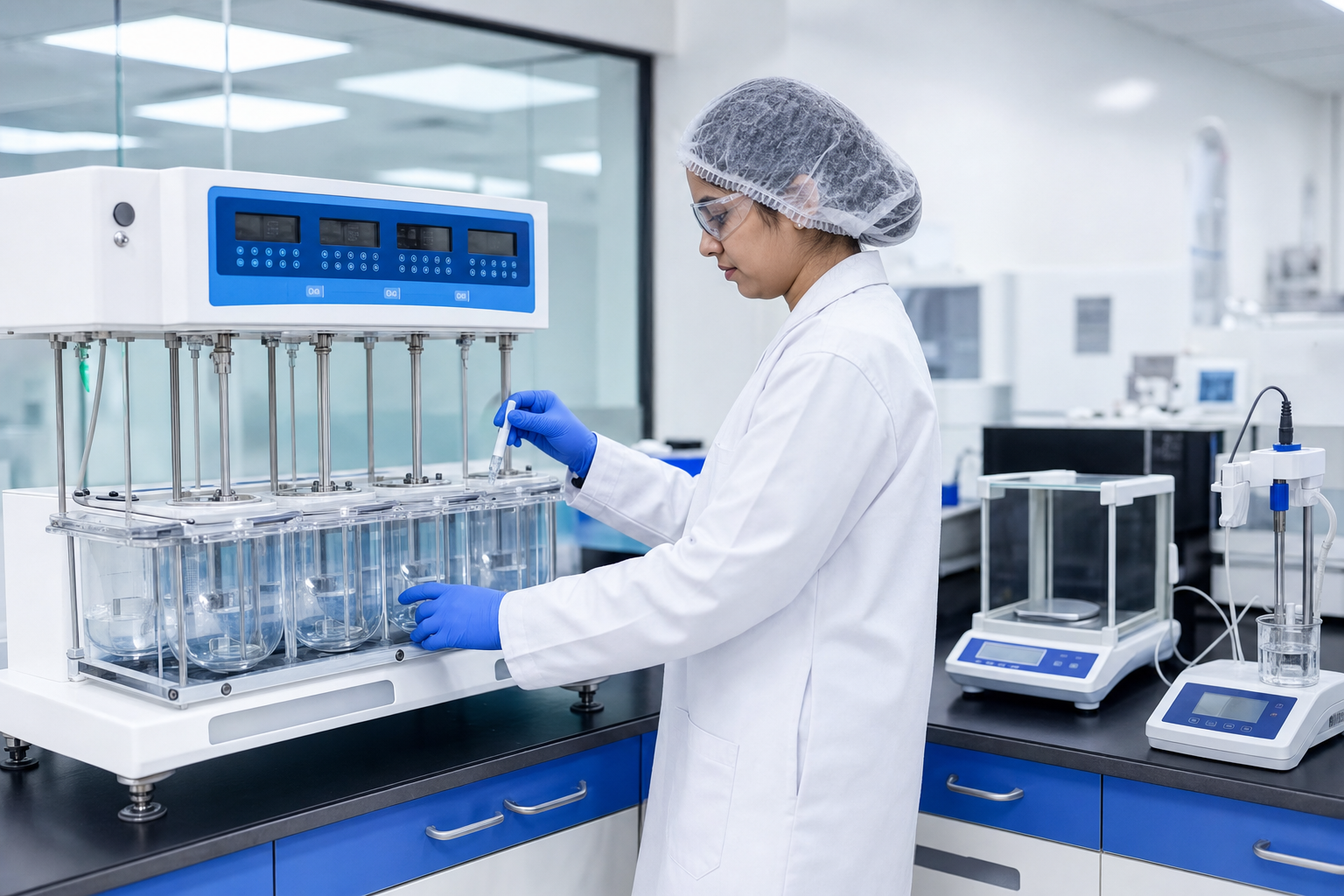
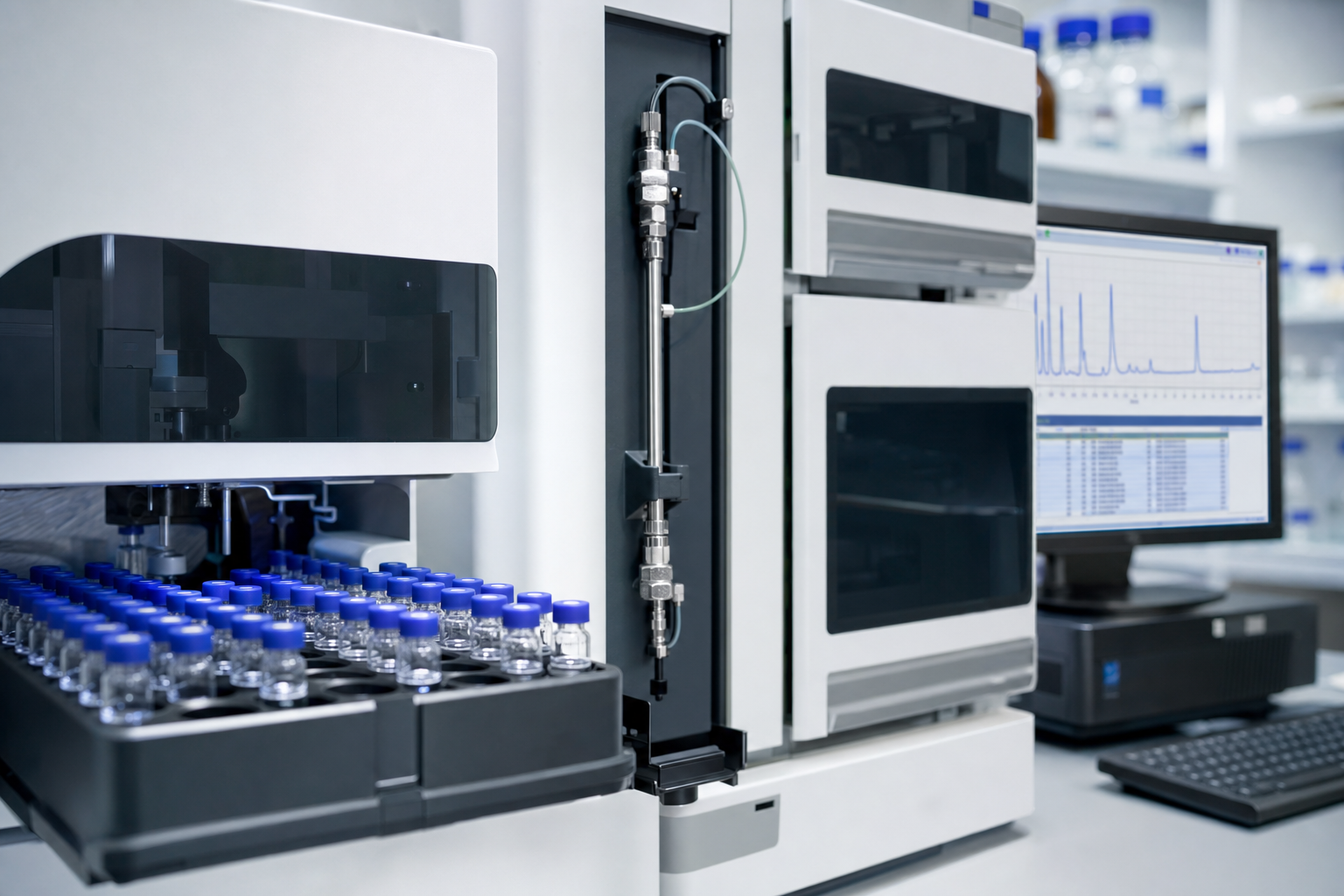
Analytical labs supporting drug development, for example, need vibration-isolated benching for sensitive instrumentation like HPLC and mass spectrometry systems, while formulation labs need robust surfaces that can handle powder handling, mixing, and granulation equipment.
Vaccine development programs illustrate this complexity particularly well, combining biosafety requirements with the precision furniture needs of formulation and analytical testing. See Creating the Ideal Vaccine Research Lab Design for Testing and Innovation for a detailed look at how these competing requirements come together in a single facility.
- Analytical instrument benching: Vibration isolation and dedicated power conditioning protect sensitive detection equipment from interference.
- Stability testing storage: Furniture and storage systems supporting stability studies need to accommodate controlled temperature and humidity chambers with clear labeling and access protocols.
- Formulation workstations: Bench surfaces near mixing and granulation equipment need heightened durability and easy cleanup for powder residue.
- Quality control segregation: QC labs testing in-process and final product samples need physically distinct furniture and storage from R&D areas to maintain chain-of-custody integrity.
cGMP Laboratory Layout and Contamination Control
A cGMP laboratory layout builds on standard GMP requirements with the added expectation of continuous, current adherence to evolving best practices and regulatory guidance. Layout decisions in a cGMP environment need to anticipate not just today’s regulations but the direction regulatory expectations are heading.
Contamination control remains the central design challenge in any cGMP laboratory. Personnel flow, material flow, and airflow all need to move in coordinated, unidirectional patterns that minimize the risk of cross-contamination between different products, batches, or development stages.
Facilities planning at this level of rigor benefits enormously from working with a construction and furniture partner experienced in regulated environments. The Comprehensive Guide to Laboratory Construction provides a broader framework for sequencing these decisions correctly from initial design through final commissioning.
- Unidirectional personnel flow: Gowning, work areas, and degowning should follow a single directional path that prevents contaminated garments from re-entering clean areas.
- Airlocks and pressure cascades: Transition spaces between zones of differing cleanliness classification maintain pressure differentials that keep contaminants from migrating.
- Dedicated equipment per product line: Where possible, equipment and furniture should be dedicated to a single product line to eliminate cross-contamination risk entirely.
- Validated cleaning zones: Furniture layout should support validated cleaning procedures, including adequate access behind and beneath equipment for thorough sanitation.
Workflow Optimization Without Sacrificing Compliance
Pharmaceutical facilities sometimes treat GMP compliance and workflow efficiency as competing priorities, but the best pharmaceutical lab design achieves both simultaneously. Compliant layouts that also minimize unnecessary staff movement and material handling steps reduce both regulatory risk and operating cost.
Time-motion studies of how technicians actually move through a pharmaceutical lab often reveal inefficiencies that add up to significant lost productivity over a year, even in a facility that passes every regulatory inspection with flying colors.
Facilities planners should map both compliance requirements and workflow efficiency together during the design phase rather than optimizing for one and retrofitting the other.
- Minimize unnecessary transport: Position related process steps close together to reduce the distance materials and samples travel between stations.
- Centralize shared equipment thoughtfully: Balance centralization of expensive shared instruments against the added travel time and gowning changes it can create.
- Batch-size appropriate furniture scaling: Furniture and equipment sized for current batch volumes prevents wasted floor space or inadequate capacity as production scales.
- Digital documentation integration: Position electronic batch record stations and barcode scanners at natural workflow checkpoints to reduce documentation lag.
Planning Your Pharmaceutical Lab Design Project
Pharmaceutical lab design projects succeed when regulatory compliance, furniture selection, and workflow optimization are planned together from the earliest design phase rather than addressed sequentially or as an afterthought. This integrated approach reduces costly rework and shortens the path to a validated, inspection-ready facility.
Start by clearly defining which regulatory framework applies to your facility, whether FDA GMP, EU GMP, or another regional standard, since specific documentation and design requirements can vary. From there, map your actual workflow alongside required contamination controls to identify where furniture and layout decisions need to prioritize compliance versus where there is genuine flexibility.
Partnering with a team experienced in pharmaceutical and life sciences facilities, like Genie Scientific, ensures your furniture and construction decisions align with both current regulations and your long-term research and production goals.
A well-designed pharmaceutical lab protects patients, satisfies regulators, and supports the researchers working to bring new therapies to market. Investing the time to get GMP compliance, furniture selection, and workflow design right from the start pays dividends throughout the life of your facility.