

Why Laboratory Storage Solutions Deserve Strategic Planning
Laboratory storage solutions rarely get the attention they deserve during facility planning, yet poor storage decisions create some of the most persistent safety and efficiency problems in daily lab operations. Cramped chemical cabinets, disorganized glassware shelving, and ad hoc sample storage all compound into wasted researcher time and elevated safety risk.
Storage is not simply about finding a place to put things. It is about matching storage type to material hazard class, access frequency, and available space in a way that keeps researchers safe and productive. A lab with excellent bench furniture can still underperform badly if its storage strategy is an afterthought.
Facilities planners who treat laboratory storage solutions as a core design element, rather than a leftover budget line, consistently build labs that stay organized and compliant years after opening. The team at Genie Scientific works with lab managers to design storage systems around actual workflow and hazard requirements rather than generic shelving specifications.
Chemical Storage: Hazard Class Segregation and Compliant Cabinetry
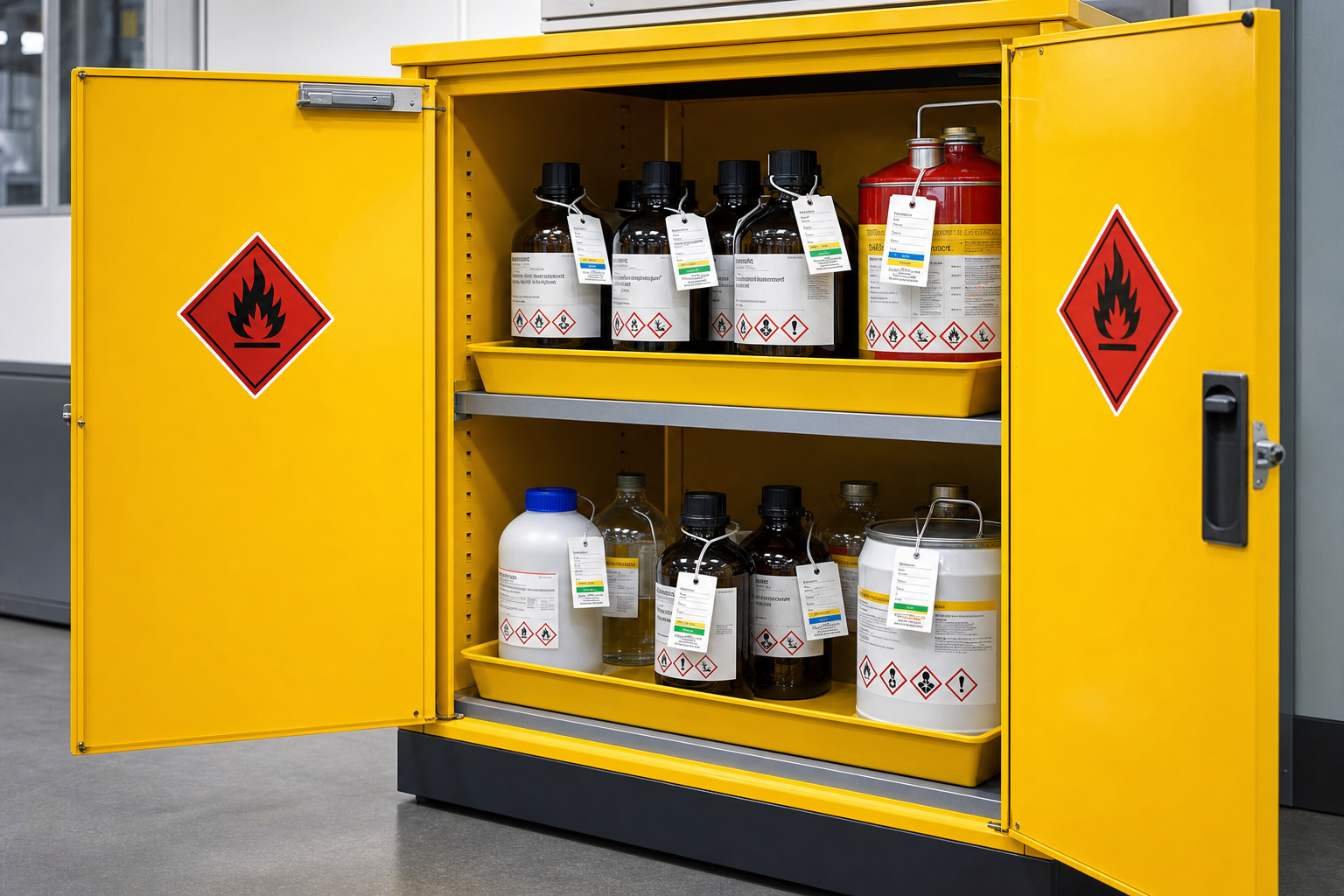
Lab chemical storage is governed by strict hazard segregation rules, and getting this wrong is one of the most common sources of fire code violations and safety incidents in laboratory facilities. Chemicals must be grouped and stored according to compatibility, not simply alphabetically or by department convenience.
Flammable liquids in particular require dedicated, rated storage cabinets designed to contain a fire for a specified period and limit vapor accumulation. The detailed requirements around flammable storage capacity, cabinet ratings, and quantity limits are covered thoroughly in Flammable Chemical Storage: Best Practices for Laboratories, an essential reference for any facility handling solvents or other flammable materials.
- Segregate chemicals by compatibility class: acids, bases, oxidizers, flammables, and reactives should never share the same storage cabinet.
- Flammable storage cabinets must meet fire-rating standards and typically limit total container quantity per cabinet under fire code.
- Corrosive storage cabinets should be constructed of corrosion-resistant materials and include secondary containment for spill control.
- Store chemicals at or below eye level whenever possible, reserving high shelving for lightweight, low-hazard materials only.
- Maintain a current chemical inventory tied to storage location, supporting both safety audits and efficient stock management.
Glassware Storage: Protecting Inventory and Preventing Breakage
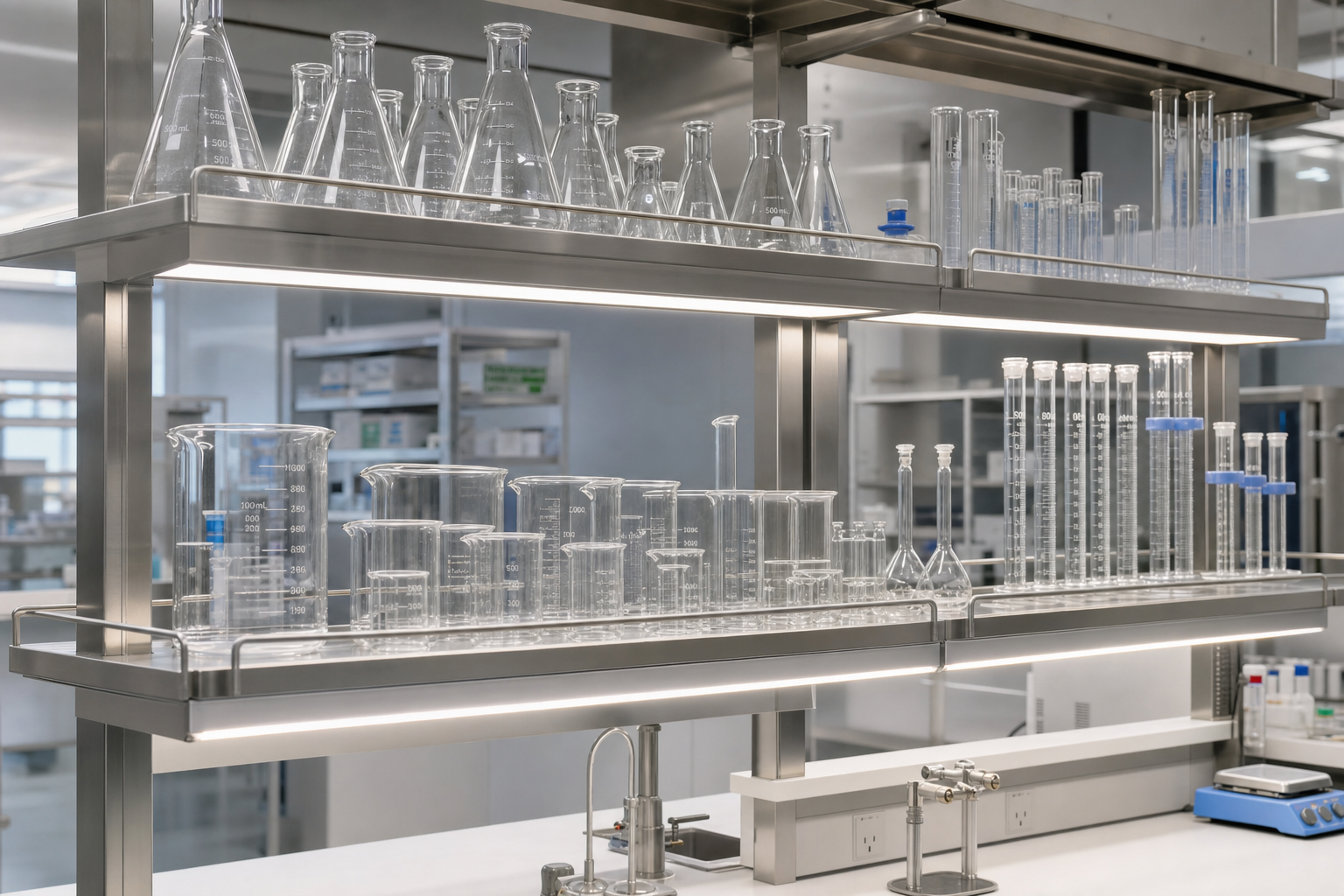
Glassware storage lab design often gets overlooked, but broken glassware represents a real safety hazard along with a recurring replacement cost. Poorly designed shelving that allows glassware to slide, tip, or stack unstably leads to chips, cracks, and outright breakage that can go unnoticed until a compromised piece fails during use.
Effective glassware storage balances accessibility with protection, using shelf design and organization systems that keep frequently used items within reach while preventing the jostling and impact damage that shortens glassware lifespan.
- Perforated or slotted shelving prevents glassware from sliding during shelf loading and unloading, reducing chip and crack risk.
- Segregate glassware by type and size rather than storing mixed items together, which speeds retrieval and reduces breakage from awkward stacking.
- Use padded or lined drawer inserts for delicate volumetric glassware and precision items that require extra protection.
- Avoid overloading shelves vertically; stacked glassware beyond two or three pieces high increases breakage risk during removal.
- Position frequently used glassware at waist to shoulder height, reserving top shelves for backup stock accessed less often.
Maximizing Vertical Space with Overhead Storage Systems
Floor space in most labs is at a premium, and laboratory storage solutions that ignore vertical space waste one of the most valuable resources in the building. Overhead storage systems let facilities reclaim square footage that would otherwise sit unused above bench height.
Well-designed overhead systems do more than add shelving. They integrate lighting, utility routing, and adjustable configurations that adapt as lab needs change. The full range of overhead storage options and their space-saving impact is detailed in Innovative Overhead Lab Storage Systems: Maximizing Vertical Space, a valuable resource for labs facing space constraints during renovation or expansion.
- Overhead cabinets mounted above bench lines free up under-counter and floor space for larger equipment or additional seating.
- Adjustable overhead shelving accommodates changing storage needs without requiring structural modification.
- Integrated task lighting within overhead storage units improves visibility at the bench without adding separate fixtures.
- Reserve overhead storage for lightweight, infrequently accessed items; heavy or frequently used materials belong within easy reach, not overhead.
- Combining overhead storage with under-bench drawer systems creates a fully utilized vertical footprint without cluttering walkways.
Drawer and Under-Bench Storage Organization
Drawer storage handles the bulk of daily-use lab supplies, from pipette tips and small tools to reagent vials and personal protective equipment. Disorganized drawers slow down routine tasks and contribute to lost time searching for commonly used items.
A well-organized drawer system uses dividers, labeling, and consistent placement logic so that any researcher, not just the person who set it up, can quickly locate what they need. Practical strategies for structuring drawer storage effectively are covered in Best Practices for Organizing Lab Drawer Storage, which offers concrete guidance for labs looking to standardize their approach across multiple benches.
- Use adjustable dividers to create custom compartments matched to the specific tools and supplies stored in each drawer.
- Label drawers clearly and consistently across all workstations so supply locations remain predictable lab-wide.
- Store heavier items in lower drawers to maintain cabinet stability and reduce strain when retrieving supplies.
- Reserve top drawers for the most frequently accessed small items, minimizing repetitive bending during routine tasks.
- Standardize drawer organization across similar workstations so researchers moving between benches do not waste time relearning storage layouts.
Sample and Specimen Storage Systems
Sample storage systems carry their own set of requirements that differ significantly from general chemical or glassware storage. Samples often require precise temperature control, chain-of-custody tracking, and protection from cross-contamination, particularly in regulated testing environments.
Cold storage, whether refrigerated, frozen, or ultra-low temperature, must be sized appropriately for both current volume and anticipated growth, since running out of capacity mid-project forces rushed, poorly planned expansion.
- Segregate sample storage by temperature requirement and by project or client to prevent mix-ups and maintain chain-of-custody integrity.
- Back up critical cold storage with monitored temperature alarms and, where possible, redundant refrigeration or backup power.
- Use barcode or digital tracking systems integrated with physical storage locations to speed retrieval and reduce manual logging errors.
- Reserve dedicated retention or archive storage separate from active sample storage to avoid confusion between in-process and completed work.
- Plan storage capacity with 20 to 30% headroom for growth, since sample volumes tend to increase faster than facilities anticipate.
Building a Scalable, Auditable Lab Organization System
The best laboratory storage solutions function as an integrated system rather than a collection of independent cabinets and shelves. A scalable approach considers how chemical storage, glassware organization, overhead systems, drawer layout, and sample storage all interact within the physical footprint of the lab.
Regular audits keep storage systems from drifting out of compliance or organization over time, particularly as staff turnover introduces new habits and priorities that can undo careful initial planning.
- Conduct periodic storage audits to verify chemical segregation compliance, inventory accuracy, and general organization standards.
- Update storage inventories whenever significant purchasing or disposal events occur, keeping records synchronized with physical stock.
- Train new staff on your facility’s specific storage organization logic during onboarding, not as an afterthought.
- Revisit storage capacity planning whenever the lab adds new research programs, testing panels, or staff, since storage needs rarely stay static.
Investing in Storage as Core Lab Infrastructure
Laboratory storage solutions deserve the same planning rigor as bench furniture, ventilation, and utility infrastructure. Labs that under-invest in thoughtful storage design pay for it later in wasted space, safety incidents, and lost researcher productivity.
Start by mapping your specific hazard classes, sample types, and daily workflow patterns, then match storage systems, chemical cabinets, glassware shelving, overhead units, drawer organization, and sample storage, to those actual needs rather than a generic catalog layout.
A knowledgeable furniture and storage partner can help translate these requirements into a coordinated system that scales with your facility. Genie Scientific works with lab managers and facilities planners to design chemical, glassware, and sample storage systems that keep labs safe, organized, and audit-ready as they grow.
Getting laboratory storage right is not a one-time project. It is an ongoing discipline that, done well, quietly supports every experiment, test, and procedure that happens in your facility.