
Vaccine development has long been at the heart of global health progress, protecting communities against infectious diseases and strengthening our preparedness for future outbreaks. Vaccine research lab design plays a pivotal role in enabling scientists to work efficiently, minimize risks, and accelerate discoveries.
Behind every breakthrough lies a carefully designed laboratory—one that not only ensures safety and compliance but also fosters innovation. From biosafety standards to flexible layouts that adapt to evolving research, the right design transforms a lab into a hub for scientific advancement.
This article examines the essential elements of creating an ideal vaccine research lab, highlighting how thoughtful design supports testing, innovation, and the next generation of medical breakthroughs.
Core Principles of Vaccine Research Lab Design
Designing a laboratory for vaccine development requires more than just the right equipment—it calls for a strategic approach that balances safety, compliance, and functionality. At its core, vaccine research lab design is about creating an environment where scientists can work efficiently while ensuring the highest levels of protection for both people and research integrity.
Biosafety and Compliance
Vaccine labs must meet strict biosafety levels (typically BSL-2 or BSL-3, depending on the pathogens studied). These classifications guide everything from airflow systems to entry protocols, ensuring researchers can handle sensitive materials safely and in line with regulatory standards.
Flexibility for Evolving Needs
The world of vaccine research is constantly advancing, with new technologies and pathogens reshaping the landscape. An adaptable lab layout—featuring modular workstations and reconfigurable casework—allows facilities to pivot quickly when new challenges emerge.
Optimized Workflow
Efficiency isn’t just about speed; it’s also about reducing the risk of cross-contamination. Designing logical pathways for personnel, samples, and waste creates a smoother workflow, ensuring research proceeds without unnecessary delays or hazards.
Together, these principles form the foundation of a well-designed vaccine research lab, setting the stage for the safety, compliance, and innovation explored in the next sections.

Safety & Compliance Considerations
When it comes to vaccine research lab design, safety isn’t optional—it’s the backbone of every experiment. A well-designed lab protects researchers, the environment, and the integrity of the work while ensuring compliance with stringent regulatory standards.
Biosafety Cabinets and Fume Hoods
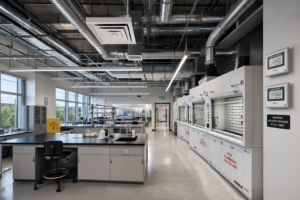
These essential tools create controlled environments for handling infectious agents. Biosafety cabinets prevent pathogens from escaping, while fume hoods ensure harmful vapors or aerosols are safely vented away. Their strategic placement is a critical element of vaccine research lab design, reducing exposure risks and supporting precise experimentation.
Zoning and Access Control
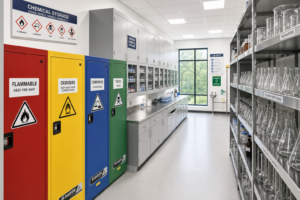
Lab zones separate clean areas from high-risk or contaminated spaces. Controlled access ensures only trained personnel enter sensitive zones, minimizing contamination and maintaining regulatory compliance. Clear signage, lockable doors, and restricted entry points are non-negotiable features in vaccine research labs.
Waste Management Systems
Proper disposal of biohazardous materials is a design consideration that cannot be overlooked. Autoclaves, sharps containers, and designated waste pathways ensure that hazardous materials are safely handled, decontaminated, and removed from the lab environment.
Regulatory Compliance
National and international guidelines, such as those from the CDC, NIH, and WHO, provide standards for biosafety, building layout, and operational procedures. Aligning lab design with these requirements is crucial—not just for legal compliance, but to foster a culture of safety that supports high-quality research outcomes.
By integrating these safety and compliance measures, a lab can function efficiently without compromising on protection—creating a solid foundation for both routine testing and groundbreaking vaccine development.

Technology and Infrastructure Requirements
In vaccine research, the right tools and infrastructure transform a lab from functional to exceptional. Effective vaccine research lab design ensures that every piece of equipment is seamlessly integrated into a workflow that prioritizes both efficiency and safety.
Specialized Equipment Integration
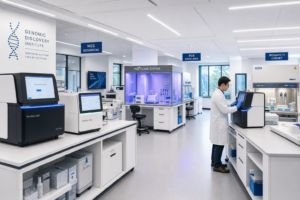
From centrifuges and incubators to PCR machines and ultra-low freezers, the selection and placement of equipment matter. Proper spacing, accessibility, and utility connections (power, water, gas) are essential to avoid bottlenecks and maintain smooth operations.
Smart Building Systems
Modern labs increasingly rely on automated monitoring systems for air quality, pressure differentials, temperature, and humidity. These technologies enhance safety and provide critical data that supports reproducibility and regulatory compliance.
Modular and Reconfigurable Layouts
Research priorities evolve quickly, and a lab must adapt. Modular casework, movable benches, and flexible utility connections allow labs to scale or reconfigure without costly renovations—a key advantage for labs focusing on rapidly emerging vaccines.
Additional Reading: Modular Laboratory Systems: The Flexible Solution for Dynamic Research Needs
Redundancy and Backup Systems
Critical equipment failures can jeopardize experiments and samples. Backup power supplies, redundant freezers, and emergency systems are vital components of a resilient vaccine research facility.
By combining specialized equipment, smart systems, and flexible layouts, a lab is equipped not only for current vaccine research demands but also for the innovations of tomorrow.

Designing for Collaboration and Efficiency
A vaccine research lab isn’t just a collection of equipment and benches—it’s a dynamic environment where ideas, data, and expertise intersect. Vaccine research lab design that prioritizes collaboration can accelerate discoveries while maintaining safety and workflow efficiency.
Open Spaces for Teamwork
Creating areas where researchers can easily exchange ideas fosters innovation. While sensitive experiments require containment, adjacent collaborative zones—like conference areas or shared workstations—allow teams to brainstorm, analyze data, and problem-solve together without disrupting lab operations.
Digital Connectivity and LIMS Integration
Modern labs rely heavily on digital systems for sample tracking, data analysis, and compliance reporting. Integrating a robust Laboratory Information Management System (LIMS) ensures that researchers have real-time access to critical information, streamlining processes and reducing errors.
Balancing Shared vs. Dedicated Spaces
While collaboration is vital, certain processes require isolation to prevent cross-contamination. Smart lab vaccine research lab design carefully balances shared equipment and workspaces with dedicated zones for sensitive experiments, allowing both teamwork and high-level biosafety.
Workflow Optimization
Logical pathways for personnel, materials, and waste not only minimize risk but also increase efficiency. Clear circulation routes reduce unnecessary movement, prevent bottlenecks, and support smooth, safe research operations.
By designing labs that emphasize collaboration, digital integration, and efficient workflows, scientists can focus on what matters most: advancing vaccine research safely and effectively.
Additional Reading: Creating a Collaborative Laboratory Space: Furniture Ideas for Teamwork

Innovation-Driven Lab Design Trends
The future of vaccine research depends not only on brilliant scientists but also on labs designed to foster innovation. Modern vaccine research lab design goes beyond safety and workflow efficiency, embracing technologies and trends that accelerate discovery and enable rapid responses to emerging pathogens.
Automation and Robotics
From automated liquid handlers to robotic sample processing, these tools reduce manual labor, increase precision, and minimize human exposure to hazardous materials. Labs equipped with automation can handle higher volumes of experiments while maintaining reproducibility and safety.
Additional Reading: How AI and Robotics Are Changing Lab Furniture
Sustainability in Lab Design
Energy-efficient lighting, water-saving systems, and eco-friendly building materials are no longer optional. Sustainable design reduces operational costs and environmental impact while aligning with global standards for responsible research facilities.
Modular and Scalable Solutions
Rapid scalability is essential, particularly during pandemics. Modular layouts, reconfigurable benches, and flexible utilities allow labs to expand capacity quickly without major construction, keeping pace with urgent vaccine development demands.
Biosafety and Compliance at the Forefront
Innovation must always be balanced with safety. Globally recognized guidance, such as the WHO Laboratory Biosafety Manual (4th Edition), provides a framework for integrating cutting-edge technology while maintaining containment, risk assessment, and regulatory compliance. Leveraging these standards ensures that modern labs remain both innovative and secure.
By embracing automation, sustainability, and flexible design while adhering to strict biosafety standards, labs can position themselves at the forefront of vaccine research, ready to tackle today’s challenges and tomorrow’s breakthroughs.

Genie Scientific’s Expertise in Vaccine Research Lab Design
Designing a vaccine research lab that seamlessly combines safety, innovation, and efficiency requires both experience and precision—which is where Genie Scientific shines. With decades of expertise in laboratory planning and custom solutions, Genie offers a single-source solution that helps clients transform their vision into fully functional, cutting-edge facilities.
Tailored Solutions for Every Lab
Every vaccine research lab has unique requirements, from specialized fume hoods and biosafety cabinets to modular casework and utility integration. Genie works closely with clients to design layouts that maximize workflow, minimize contamination risks, and accommodate future expansions.
Safety and Compliance Built In
Genie’s designs align with international biosafety standards, including BSL-2 and BSL-3 requirements, while incorporating features like access control, containment zones, anti-microbial lab surfaces , and advanced waste management systems. This ensures labs meet regulatory demands and foster a culture of safety.
Supporting Innovation and Efficiency
Genie’s approach emphasizes flexible layouts, automation readiness, and digital integration, allowing labs to adopt new technologies without disruption. From collaborative workspaces to optimized equipment placement, every detail is designed to empower researchers to focus on discovery.
Your Partner in Vaccine Development
Whether building a new facility from the ground up or upgrading an existing lab, Genie Scientific combines technical know-how with practical solutions to create environments where vaccine research thrives—safely, efficiently, and innovatively.

Conclusion
Designing the ideal vaccine research lab is a careful balance of safety, efficiency, and innovation. From biosafety cabinets and fume hoods to modular layouts and smart infrastructure, every design decision impacts both research outcomes and regulatory compliance.
By embracing modern trends such as automation, sustainability, and flexible lab spaces, facilities are better equipped to respond to emerging health challenges and accelerate vaccine development.
With decades of experience, Genie Scientific provides tailored solutions that combine compliance, safety, and cutting-edge innovation. Whether you are planning a new facility or upgrading an existing lab, Genie ensures your laboratory is not just a workspace, but a hub for groundbreaking vaccine research.
Explore how Genie Scientific can help you create a vaccine research lab designed for safety, efficiency, and innovation. Connect with our experts today to bring your vision to life.