
The Case for Energy Efficient Laboratory Design
Energy efficient laboratory design is no longer a luxury or a sustainability checkbox. It is a financial imperative. Laboratories consume three to ten times more energy per square foot than typical commercial office buildings. Ventilation systems, fume hoods, specialized equipment, and precise environmental controls all contribute to massive energy demand that directly impacts operating budgets.
For a research institution operating multiple labs, energy costs can represent one of the largest non-personnel expenses. Reducing lab energy costs by even 20 to 30 percent translates into hundreds of thousands of dollars annually, funds that can be redirected to research, staffing, or facility improvements.
Genie Scientific works with facilities planners and lab designers to create laboratories that deliver superior research environments while minimizing energy consumption. The strategies in this guide address the three biggest energy drivers in any lab: ventilation, equipment, and lighting.
Understanding Where Lab Energy Costs Come From
Before you can reduce energy consumption, you need to understand where the energy goes. Lab energy audits consistently reveal the same pattern across facility types. The breakdown typically looks like this:
- HVAC and ventilation: 50 to 70 percent of total lab energy use. This includes supply air heating and cooling, exhaust fan operation, and fume hood air consumption. Laboratories require much higher air change rates than offices, often 6 to 12 air changes per hour compared to 2 to 4 in commercial spaces.
- Plug loads and equipment: 15 to 25 percent. Freezers, centrifuges, incubators, autoclaves, and analytical instruments all draw significant power, often running 24/7.
- Lighting: 5 to 15 percent. Labs require higher illumination levels than offices, and many labs operate lights around the clock regardless of occupancy.
- Process utilities: 5 to 10 percent. Compressed air, vacuum systems, deionized water production, and gas distribution systems all consume energy.
- Domestic hot water and miscellaneous: 2 to 5 percent. Includes hand-washing stations, emergency showers, and building support systems.
Smart Ventilation Strategies for Laboratory Ventilation Efficiency
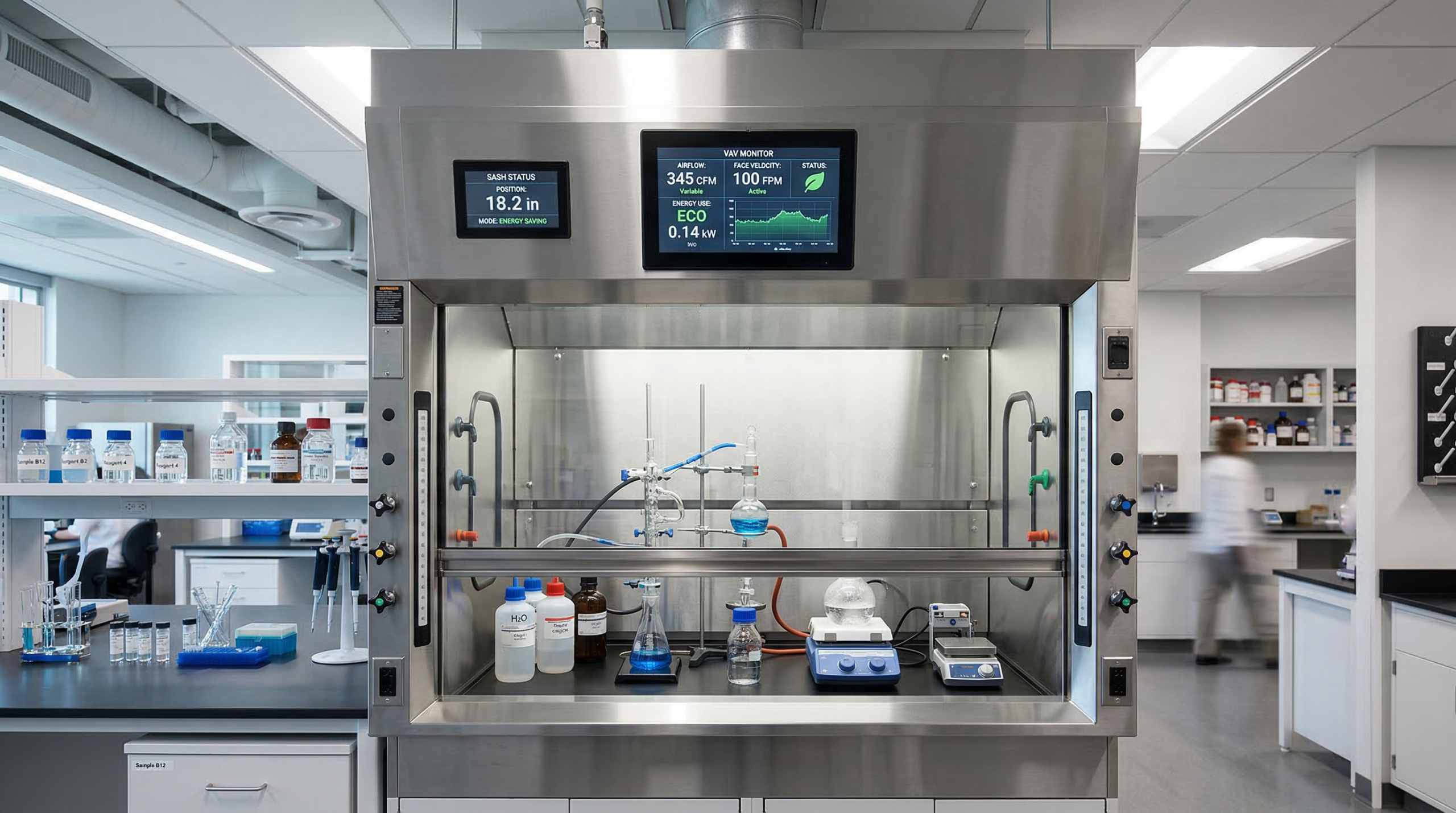
Ventilation is the single largest energy consumer in most laboratories, which makes it the biggest opportunity for savings. Traditional labs use constant-volume (CV) ventilation systems that deliver the same airflow rate regardless of occupancy or fume hood usage. Modern approaches use variable air volume (VAV) systems that adjust airflow based on real-time demand.
For an in-depth look at fume hood-specific strategies, see Energy-Efficient Fume Hoods: VAV, Low-Flow & Sash Management. Key ventilation efficiency strategies include:
- Install VAV fume hoods: These hoods reduce exhaust volume when the sash is lowered, directly cutting the energy needed to condition replacement air. A single VAV conversion can save 40 to 60 percent of that hood’s energy consumption.
- Implement demand-based ventilation controls: Use occupancy sensors and air quality monitors to reduce air change rates when labs are unoccupied. Many labs can safely reduce from 8 ACH to 4 ACH during unoccupied periods.
- Use heat recovery systems: Energy recovery wheels or plate heat exchangers capture energy from exhaust air and transfer it to incoming supply air. These systems can recover 50 to 70 percent of the thermal energy in exhaust streams.
- Optimize ductwork design: Reduce pressure drops in the duct system by using smooth, properly sized ductwork with gradual transitions. Every inch of water gauge pressure drop eliminated reduces fan energy consumption.
- Zone ventilation by risk level: Not every area of the lab requires the same air change rate. Assign higher ventilation rates to chemical-intensive zones and lower rates to computational or office areas within the lab.
Equipment Layout and Selection for Lower Energy Consumption
How you arrange and select lab equipment has a direct impact on energy consumption. Heat-generating equipment placed near temperature-sensitive zones forces HVAC systems to work harder. Inefficient equipment models consume unnecessary power around the clock. Strategic equipment planning reduces both direct energy use and the cascading cooling demands.
Apply these equipment layout and selection principles:
- Centralize heat-generating equipment: Group freezers, autoclaves, ovens, and other high-heat equipment in dedicated equipment rooms with independent cooling. This prevents localized heat loads from affecting laboratory ambient temperatures.
- Choose ENERGY STAR certified equipment: Where available, specify ENERGY STAR rated freezers, refrigerators, and other appliances. Ultra-low temperature freezers with efficient compressors can save 30 to 50 percent compared to older models.
- Implement shared equipment programs: Instead of purchasing duplicate instruments for every lab, create shared equipment rooms. Fewer total instruments mean less total energy consumption and less associated cooling load.
- Use power management systems: Install smart power strips and equipment scheduling systems that power down instruments during off-hours when safe to do so. Many analytical instruments do not need to run 24/7 but remain on by default.
- Position equipment away from windows: Direct sunlight on freezers and refrigerators forces compressors to work harder. Interior placement reduces solar heat gain on temperature-sensitive equipment.
- Plan for equipment ventilation clearance: Ensure adequate clearance around heat-exchanging equipment. Restricting airflow around condensers and exhaust vents reduces efficiency and increases energy consumption.
Sustainable Lab Design Through Furniture and Material Choices
The furniture and materials you choose for your laboratory contribute to both direct and indirect energy impacts. Thermal mass, reflectivity, modularity, and material sourcing all play roles in a sustainable lab design strategy. Explore eco-friendly laboratory furniture and sustainable options for modern labs for a deeper dive into this topic.
Consider these furniture and material strategies for energy efficiency:
- Choose light-colored work surfaces and casework finishes: Higher reflectivity reduces the amount of task lighting required, which lowers both lighting energy and cooling load from light-generated heat.
- Specify modular, reconfigurable furniture: Labs that can be rearranged without construction reduce the embodied energy cost of future renovations. Mobile casework and adjustable-height benches adapt to changing research needs.
- Use locally manufactured furniture: Shorter supply chains reduce transportation energy. Working with domestic manufacturers also provides shorter lead times and easier coordination for sustainable material sourcing.
- Select materials with low volatile organic compound (VOC) emissions: Low-VOC materials improve indoor air quality, which can enable reduced ventilation rates in some circumstances, directly lowering energy consumption.
- Integrate cable management into casework design: Clean cable routing prevents airflow obstruction around equipment and reduces the fire load that triggers increased ventilation requirements.
Lighting Optimization for Laboratory Energy Savings
While lighting represents a smaller fraction of lab energy use than ventilation, it still offers meaningful savings opportunities, especially when combined with the cooling load reduction from less heat-generating light sources. For detailed guidance, consult How to Optimize Laboratory Lighting for Different Research Needs.
Lighting efficiency strategies for labs include:
- Convert to LED lighting throughout: LEDs use 50 to 75 percent less energy than fluorescent tubes and generate significantly less heat. The reduced heat output also lowers cooling demand.
- Install occupancy and daylight sensors: Automated controls dim or turn off lights in unoccupied areas and reduce artificial light when natural daylight is sufficient. Labs with perimeter windows benefit most from daylight harvesting.
- Use task lighting at workstations: Rather than uniformly lighting the entire lab to the highest required level, provide adjustable task lights at individual work positions. This allows lower ambient lighting levels.
- Specify the correct color temperature: Choose 4000K to 5000K LEDs for general lab work. This range provides excellent color rendering for sample inspection without the energy penalty of over-illumination.
- Design lighting zones independently: Separate lighting circuits for different lab zones allow unused areas to be dark while active zones maintain full illumination.
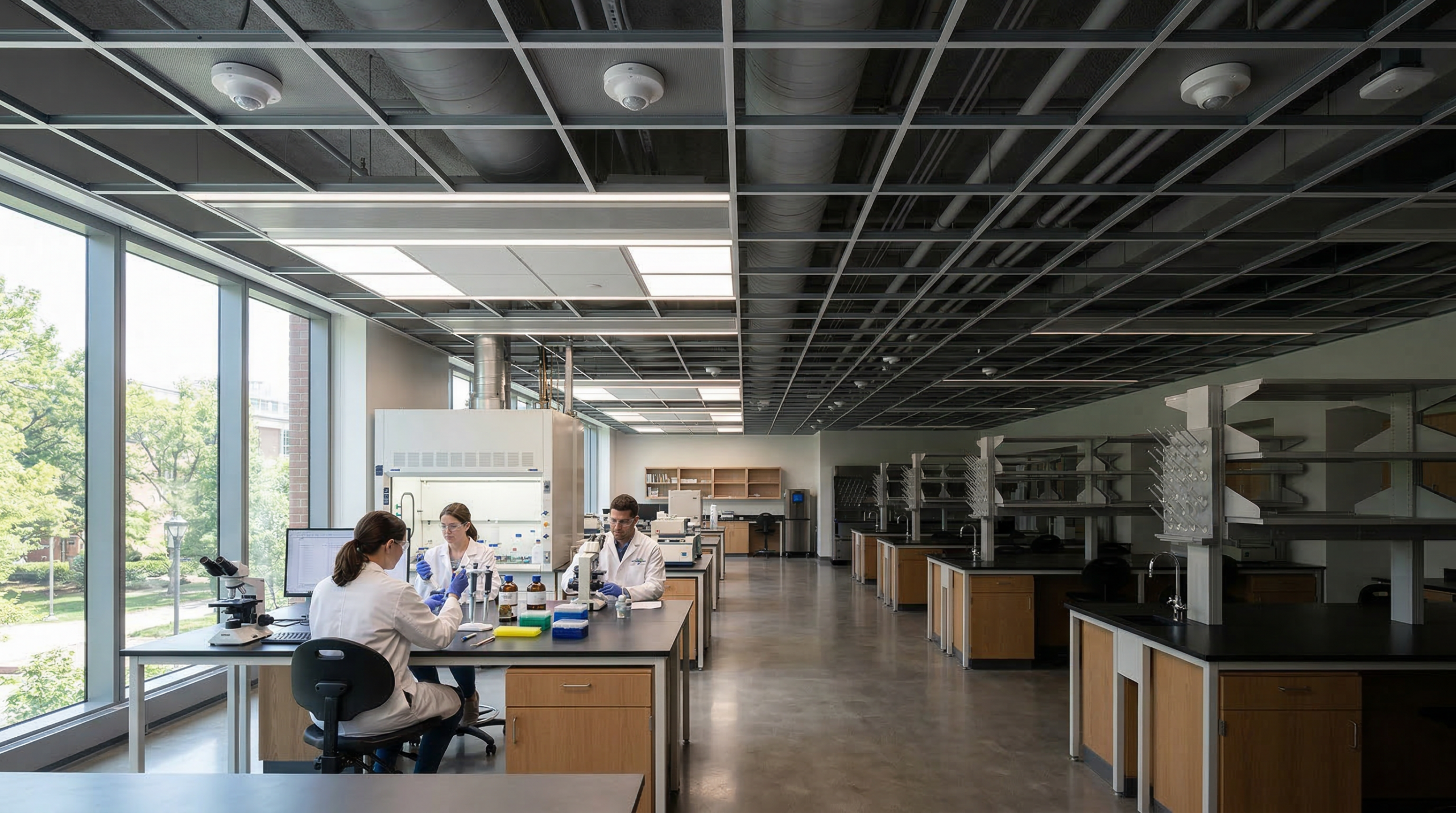
Conclusion: Making Energy Efficiency a Core Lab Design Principle
Energy efficient laboratory design is not about compromising research capability for the sake of lower utility bills. It is about thoughtful design that delivers the same or better research environment while eliminating waste. Smart ventilation controls, strategic equipment layout, sustainable material choices, and modern lighting systems all contribute to a lab that costs less to operate without sacrificing performance.
The best time to implement these strategies is during initial design or a major renovation, but many improvements like VAV fume hood conversions, LED lighting retrofits, and equipment consolidation programs can be implemented incrementally in existing facilities.
Genie Scientific partners with institutions to create laboratories that balance research excellence with operational efficiency. From energy-conscious furniture design to layout strategies that minimize HVAC demand, our team helps you build labs that are as cost-effective as they are capable. Reach out to discuss how sustainable design principles can transform your next lab project.