
What a Fume Hood Safety Audit Covers and Why It Matters
A fume hood safety audit is one of the most critical protective measures in any laboratory that handles volatile chemicals, toxic vapors, or hazardous particulates. These audits verify that your fume hoods are performing as designed, containing harmful substances, and protecting the health of every person in the lab. Skipping or delaying audits puts your team at risk and exposes your organization to regulatory penalties.
The scope of a comprehensive fume hood safety audit extends beyond a simple airflow check. It includes face velocity measurements, sash operation testing, alarm verification, containment integrity assessment, and documentation review. Each component must meet established standards before a hood can be certified for continued use.
Lab safety officers and facilities managers turn to trusted partners like Genie Scientific for guidance on establishing robust audit programs that meet OSHA, ANSI/ASHRAE 110, and NFPA 45 requirements. Getting your audit framework right from the start prevents costly remediation and protects your most valuable asset: your people.
Fume Hood Testing Frequency: How Often Should You Audit?
Establishing the correct fume hood testing frequency is the foundation of a reliable safety program. Testing too infrequently leaves dangerous gaps in your protection. Over-testing wastes resources without meaningfully improving safety. The key is matching your testing schedule to your risk profile, regulatory requirements, and equipment condition.
- Annual comprehensive certification: At minimum, every fume hood should receive a full performance certification once per year. This is the baseline standard recommended by ANSI/ASHRAE 110 and required by most institutional safety programs. For a detailed overview of what annual certification involves, see Essential Fume Hood Maintenance & Safety.
- Semi-annual testing for high-hazard applications: Labs working with highly toxic compounds (OSHA PELs below 50 ppm), carcinogens, or radioactive materials should conduct full performance testing every six months.
- Quarterly spot checks: Between comprehensive certifications, perform quarterly face velocity spot checks at the center and edges of the sash opening. Document the readings and compare them to the baseline established during the last full certification.
- After-event testing: Conduct immediate testing after any HVAC system modification, building pressure change, fume hood relocation, or sash mechanism repair. These events can alter containment performance in ways that are invisible without measurement.
- Daily user verification: Train researchers to perform a daily visual and functional check before using any fume hood. This includes verifying the sash moves freely, the airflow indicator shows normal operation, and no alarms are active.
Face Velocity Measurement and Calibration Procedures
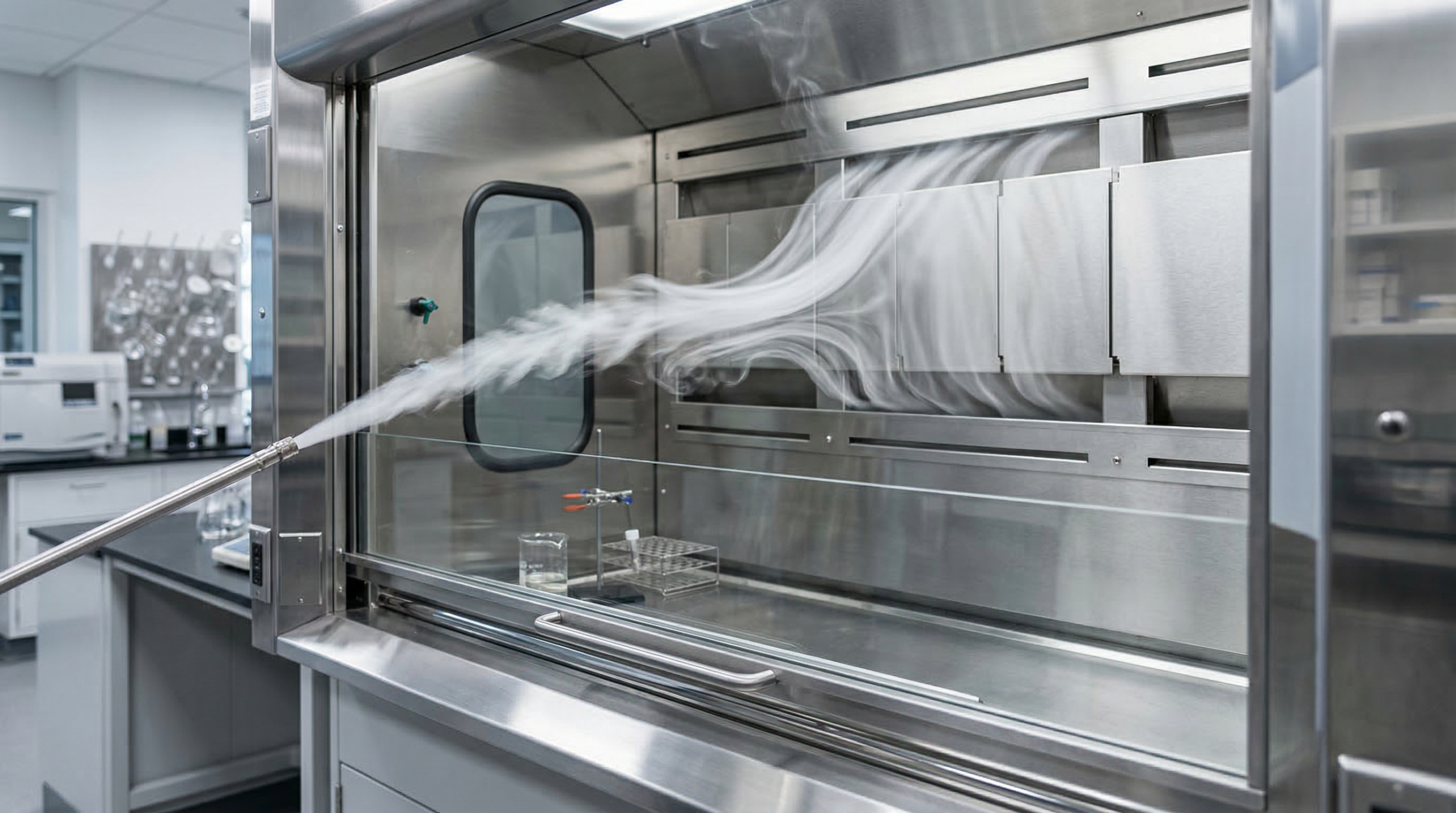
Face velocity, the speed of air entering the hood opening, is the primary indicator of fume hood containment performance. Proper calibration of your measurement instruments and consistent measurement technique are essential for audit accuracy.
The standard face velocity target for most chemical fume hoods is 80 to 120 feet per minute (fpm) at the operating sash height. Velocities below 80 fpm may provide inadequate containment, while velocities above 120 fpm can create turbulence that actually pulls contaminants out of the hood. For a detailed explanation of face velocity dynamics and how baffles and bypass systems influence containment, read Understanding Fume Hood Face Velocity.
- Use a calibrated thermal anemometer or vane anemometer with a current calibration certificate (typically annual calibration is required).
- Take face velocity readings at a grid of points across the sash opening. ANSI/ASHRAE 110 specifies a minimum of six measurement points for standard-width hoods.
- Record readings with the sash at the designated operating height, typically marked with an arrow or sticker on the hood frame.
- Calculate the average face velocity and verify that no individual reading deviates more than 20% from the average. Excessive variation indicates airflow distribution problems.
- Document ambient conditions (room temperature, barometric pressure) at the time of testing, as these factors affect anemometer accuracy.
Fume Hood Compliance: Regulatory Standards You Must Meet
Fume hood compliance is governed by a layered framework of federal, state, and institutional regulations. Understanding which standards apply to your laboratory is essential for designing an audit program that keeps you in good standing with regulators and protects your team.
OSHA’s general duty clause (Section 5(a)(1)) requires employers to provide a workplace free from recognized hazards. While OSHA does not prescribe specific fume hood face velocity numbers, the agency expects employers to maintain engineering controls that effectively protect workers from chemical exposure. Failure to maintain properly functioning fume hoods can result in citations.
ANSI/ASHRAE Standard 110, “Method of Testing Performance of Laboratory Fume Hoods,” provides the definitive testing protocol for evaluating fume hood containment. This standard covers the as-manufactured (AM) test, the as-installed (AI) test, and the as-used (AU) test. Your annual certification should follow the AI and AU test procedures.
- NFPA 45, “Standard on Fire Protection for Laboratories Using Chemicals,” sets requirements for fume hood construction, installation, and ventilation rates in laboratories that handle flammable or combustible materials.
- OSHA 29 CFR 1910.1450 (the Lab Standard) requires a Chemical Hygiene Plan that addresses the use and maintenance of engineering controls, including fume hoods.
- State and local fire codes may impose additional requirements beyond federal standards. Always verify local requirements with your jurisdiction.
- Institutional safety policies often exceed regulatory minimums. Universities, pharmaceutical companies, and government labs frequently require more frequent testing and stricter face velocity ranges than regulations mandate.
Common Fume Hood Audit Failures and How to Prevent Them
Understanding the most frequent reasons fume hoods fail safety audits helps you take proactive steps to prevent failures before they compromise containment. Here are the issues that experienced auditors encounter most often.
- Low face velocity due to clogged exhaust ductwork or deteriorated fan belts. Prevention: Schedule ductwork inspections and fan belt replacements on a preventive maintenance calendar.
- Sash counterbalance failure. When the sash will not stay at the designated operating height, researchers prop it open or work with it fully raised, destroying containment geometry. Prevention: Test sash operation monthly and replace counterbalance mechanisms at the first sign of stiffness or drift.
- Blocked baffles or baffle slots. Items stored in the back of the hood can obstruct the rear baffle slots, disrupting the internal airflow pattern. Prevention: Train researchers to keep the rear six inches of the hood clear at all times.
- Alarm system malfunction. Low-airflow alarms that fail to activate during audit testing mean researchers receive no warning when containment is compromised. Prevention: Include alarm functional testing in your quarterly spot check protocol.
- Inadequate documentation. Auditors frequently find that hoods lack current certification stickers, previous test records are missing, or corrective action from prior audits was never completed. Prevention: Maintain a centralized fume hood database with testing history, corrective actions, and upcoming certification dates.

Choosing the Right Fume Hood for Your Safety Requirements
Your audit results are only as good as the fume hood you are auditing. Selecting the right hood type for your specific applications is the first step toward consistently passing safety audits. The two fundamental categories, ducted and ductless fume hoods, serve different risk profiles and operational environments.
Ducted fume hoods exhaust contaminated air through building ductwork to the exterior. They are the standard choice for labs handling highly toxic chemicals, unknown compounds, or large volumes of volatile solvents. Ductless fume hoods use activated carbon or HEPA filtration to clean air before recirculating it into the lab. They work well for applications with known, low-toxicity chemicals and offer significant energy savings.
For a detailed comparison of ducted and ductless options and guidance on which applications each type serves best, read Ducted vs. Ductless Fume Hoods. Understanding the strengths and limitations of your equipment helps you set appropriate audit parameters and avoid specifying tests that do not match your hood type.
Building a Sustainable Fume Hood Safety Audit Program
A sustainable fume hood safety audit program is not a once-a-year event. It is an ongoing system that integrates daily user checks, quarterly spot measurements, annual certifications, and continuous documentation into the normal rhythm of laboratory operations.
Start by creating a fume hood inventory that catalogs every hood in your facility, including its location, type, age, chemical use classification, and testing history. Assign each hood a unique identifier and link it to your facility management system. This inventory becomes the backbone of your scheduling, tracking, and compliance reporting.
Train every researcher who uses a fume hood on basic daily verification procedures. Post a simple checklist at each hood station that covers sash operation, airflow indicator check, alarm verification, and workspace clearance. When daily checks become habit, your quarterly and annual audits surface far fewer surprises.
Partner with a laboratory equipment provider that understands the full lifecycle of fume hood safety. Genie Scientific works with facilities teams to select hoods that match their risk profile, establish maintenance schedules, and build audit programs that satisfy regulators and protect researchers. A proactive approach to fume hood safety audits is always more cost-effective and far safer than reacting to failures after they occur.