
The Evolution of the Lab
The laboratory has long been a cornerstone of scientific discovery—a space where ideas are tested, breakthroughs are born, and the future is shaped. But as science advances at an unprecedented pace, future lab design and the environments in which that science happens must evolve just as rapidly.
The traditional lab, with its fixed benches and rigid layouts, is giving way to a new era defined by flexibility, sustainability, and smart technology.
As we look toward 2030, future lab design is about more than aesthetics or infrastructure—it’s a response to the changing needs of researchers, institutions, and the planet. From modular casework to cloud-connected instruments, tomorrow’s laboratories will be agile, intelligent, and deeply human-centered. They’ll be built not only for what science is today, but for what it’s becoming.
In this article, we’ll explore the key trends shaping the lab of the future—and how forward-thinking design is already laying the foundation for discovery in the next decade and beyond.

Drivers of Change in Lab Design
The laboratory of 2030 won’t emerge by accident—it’s being shaped, piece by piece, by powerful shifts in technology, culture, and science itself. Understanding these drivers is key to anticipating the needs of tomorrow’s research environments. Here are some of the most influential forces pushing lab design forward:
1. Rapid Technological Advancements
From artificial intelligence and robotics to IoT-enabled devices and cloud-based data systems, labs are becoming increasingly high-tech. These innovations demand infrastructure that can support automation, real-time data exchange, and advanced analytics. Future lab design must accommodate constant connectivity, seamless integration, and the flexibility to evolve alongside emerging technologies.
2. Sustainability and Energy Efficiency
With climate concerns at the forefront of global conversation, sustainability is no longer optional—it’s essential. Laboratories are among the most energy-intensive buildings, and the pressure to reduce environmental impact is reshaping everything from HVAC systems to material selection. Future lab design prioritizes energy efficiency, waste reduction, and eco-friendly construction practices without compromising performance.
3. The Post-Pandemic Push for Flexibility and Safety
The COVID-19 pandemic spotlighted the need for labs that can pivot quickly in response to new safety protocols and changing workflows. Flexible spaces, improved ventilation, and touchless technologies have become more than conveniences—they’re necessities. Future labs must be designed to handle both day-to-day operations and unexpected disruptions.
4. The Rise of Interdisciplinary and Collaborative Research
Modern science is increasingly collaborative, often requiring specialists from multiple fields to work together in shared environments. This trend demands open, modular layouts that support both focused tasks and cross-disciplinary teamwork. Future lab design embraces multifunctional spaces that break down silos and promote innovation across boundaries.

Future Lab Design Trends to Watch
The lab of 2030 won’t just be smarter—it’ll be more adaptive, efficient, and human-centered than ever before. These emerging trends in future lab design are setting the stage for a new era of scientific exploration:
1. Modular and Flexible Layouts
Gone are the days of fixed casework and static bench arrangements. Future labs are being built with modular systems that allow researchers to reconfigure spaces as needs evolve. Movable workstations, plug-and-play utilities, and open floor plans make it easy to shift from individual experiments to team-based projects without missing a beat.
Flexibility is especially crucial in high-growth fields like biotech and materials science, where research pivots rapidly. Adaptable lab environments not only support innovation—they accelerate it.
2. Smart Labs and Automation
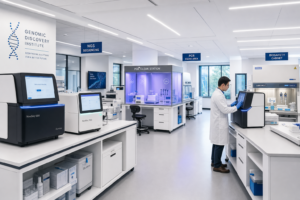
Labs are getting an IQ boost. Thanks to the Internet of Things (IoT), cloud computing, and AI-powered systems, future lab design integrates smart technology into nearly every element. Sensors monitor temperature, air quality, and equipment status in real time. Automated systems handle repetitive tasks like sample tracking or inventory management, freeing scientists to focus on discovery.
These connected systems also improve safety, reduce human error, and streamline compliance—making labs more efficient and more resilient.
3. Sustainable and Green Design
Sustainability is not a trend—it’s a transformation. Future lab design is embracing green architecture to minimize ecological impact. This includes using energy-efficient equipment, LED lighting, and recycled or low-emission materials, as well as incorporating renewable energy sources like solar panels and heat recovery systems.
Water conservation systems, waste reduction programs, and LEED certification goals are also playing a greater role in how labs are planned and constructed.
4. Digital Integration and Virtual Collaboration
As research becomes more global, so does collaboration. Future labs are designed to support hybrid and remote scientific teamwork, using technologies like augmented reality (AR), virtual reality (VR), and digital twins of lab spaces. Cloud-based platforms allow teams to share data, analyze results, and conduct virtual walkthroughs in real time—no matter where they’re located.
This shift enables faster innovation cycles and opens the door for more inclusive, cross-border scientific partnerships.
5. Ergonomic and Human-Centered Design
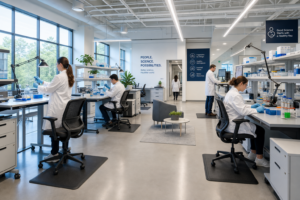
The wellbeing of researchers is becoming a design priority. Future lab design focuses not just on productivity, but on comfort, safety, and mental wellness. Expect to see more natural light, biophilic design elements (like indoor plants and wood textures), and noise-reducing architecture. Adjustable-height benches and ergonomic tools reduce physical strain, while rest zones and wellness spaces promote healthier work-life balance.
A better-designed space supports not just better science—but better scientists.
Additional Reading: Eco-Friendly Laboratory Furniture: Sustainable Options for Modern Labs

The Role of Custom Lab Furniture in Future Lab Design
As laboratories become more adaptive, digital, and sustainable, their physical components must evolve in step. One of the most impactful—and often underestimated—aspects of future lab design is the role of custom lab furniture.
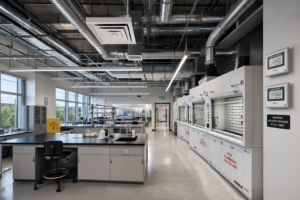
Far from being static fixtures, today’s benches, casework, and fume hoods are integral to lab functionality, safety, and long-term flexibility. Enters Genie Scientific—The lab planning specialists, who ensure a proper space plan for maximum output and future growth. Genie is also a manufacturer and dealer of fume hoods, laboratory furniture, and related products.
Supporting Flexibility Through Design
In a future-focused lab, workspaces need to accommodate shifting research goals, new technologies, and interdisciplinary teams. Custom-built lab furniture provides the modular flexibility to make this possible. Adjustable-height benches, mobile casework, and lab tables with integrated utilities allow teams to reconfigure spaces without major overhauls—an essential feature in high-turnover or rapidly scaling environments.
Enhancing Workflow Efficiency
Well-designed furniture doesn’t just fill a space—it supports how people move through it. Custom layouts can be tailored to a lab’s specific workflows, equipment needs, and safety protocols. This improves efficiency, minimizes risk, and helps researchers stay focused on their work instead of fighting against a space that doesn’t fit.
Built to Withstand Tomorrow
Future labs will be smarter, but also busier. With automation, robotics, and more sophisticated instruments in play, furniture must be durable enough to handle heavy use while integrating seamlessly with evolving tech. Investing in high-quality, custom-built pieces ensures longevity and compatibility with the lab’s trajectory.
Sustainability Starts at the Bench
Custom lab furniture can also contribute to sustainability goals. Choosing environmentally responsible materials, designing for long-term reuse, and optimizing space can reduce waste and support green building certifications. It’s a practical way to align the physical space with broader institutional values around environmental stewardship.
Whether designing a lab from scratch or upgrading for the next decade, tailored solutions offer the kind of precision and foresight that future lab design demands.

Challenges and Considerations
While the possibilities of future lab design are exciting, bringing that vision to life requires navigating a range of practical and strategic challenges. From budget constraints to workforce adaptation, these considerations are essential to creating labs that are not just innovative, but viable and sustainable.
1. Balancing Innovation with Budget
Advanced technologies, sustainable materials, and modular systems all come at a cost. Budget limitations can make it difficult to implement every future-forward feature at once. Lab planners must strike a careful balance—prioritizing investments that deliver the greatest long-term value while leaving room for phased upgrades over time.
2. Integrating New Tech with Legacy Systems
Not every lab starts from scratch. Many facilities must incorporate future-ready tools and infrastructure into existing environments. This can be technically complex, especially when older equipment or rigid layouts don’t easily accommodate smart systems or cloud connectivity. Strategic retrofitting is key.
3. Regulatory and Safety Compliance
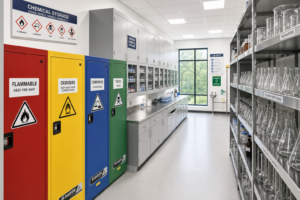
With every innovation comes the need to meet evolving safety standards and regulatory guidelines. Whether it’s new materials, automation systems, or energy-saving technologies, labs must remain compliant with local, national, and industry-specific codes. Design decisions must be made with safety and compliance built in—not bolted on later.
4. Training and Change Management
Even the most advanced lab is only as effective as the people using it. Transitioning to smart systems, automated workflows, or digital collaboration tools can require significant training. Future lab design must include plans for onboarding, skill development, and change management to ensure teams can thrive in the new environment.
5. Space Constraints and Real Estate Pressures
Urban campuses and research hubs often face limited physical space. Making room for flexibility, collaboration zones, and cutting-edge equipment can be a challenge within existing square footage. Creative space planning and vertical design strategies are becoming increasingly important.
The lab of the future holds immense promise—but realizing that promise means thinking beyond design trends and addressing the complex realities of implementation.
Additional Reading: Customizable Lab Tables: Adapting to Different Research Needs

Conclusion: Designing for Discovery
The laboratory has always been a launchpad for innovation—but by 2030, it will be more than just a space. It will be a dynamic ecosystem where architecture, technology, and human creativity converge. Future lab design isn’t about chasing trends—it’s about anticipating the evolving needs of science and building environments that empower discovery at every level.
From modular casework to intelligent automation, from sustainable materials to collaborative layouts, the lab of the future will be flexible, efficient, and deeply purpose-driven. But getting there requires more than vision—it demands thoughtful planning, strategic investment, and trusted partners, like Genie Scientific—a single source solution, who understands how to turn cutting-edge ideas into functional, future-ready spaces.
As researchers and institutions begin shaping the next generation of laboratories, one thing is clear: the future isn’t waiting. It’s being designed—right now.