
Forensic science plays a pivotal role in modern criminal investigations, turning trace evidence into powerful proof that can solve mysteries and secure justice. Behind every accurate DNA match or chemical analysis lies a carefully structured environment—one where design and function intersect to support critical scientific work. Setting up a forensic science laboratory isn’t just about installing high-tech equipment.
It begins with a foundational element that often gets overlooked: the furniture. From ergonomic workbenches to chemical-resistant cabinetry, every piece must be designed to meet the unique demands of forensic workflows. The right lab furniture enhances safety, streamlines processes, and ensures that forensic scientists can carry out their investigations with precision and confidence.
In this guide, we’ll explore how to furnish a forensic science laboratory the right way—ensuring that form, function, and compliance all align to support groundbreaking work in the field of forensic science.

Understanding the Needs of a Forensic Science Laboratory
A well-equipped forensic science laboratory is far more than just a space with lab benches and microscopes. Each area must be tailored to the precise requirements of forensic investigations—where contamination must be minimized, workflows need to be efficient, and sensitive evidence must be handled with extreme care.
Different forensic disciplines—such as toxicology, serology, trace evidence analysis, and digital forensics—require specialized tools, environments, and procedures. For example, DNA analysis demands ultra-clean zones to avoid cross-contamination, while chemical analysis might need ventilated enclosures for handling volatile substances.
The diversity of tasks performed in a forensic science lab means that the furniture must not only be durable but also adaptable to the specific functions of each workstation.
Moreover, workflow optimization is a critical design factor. From the moment evidence enters the lab to the time results are reported, each step must follow a logical, secure, and efficient path. Proper furniture placement and thoughtful layout planning can drastically reduce time wasted moving between work areas, while also improving collaboration between team members.
Safety and compliance also weigh heavily in furnishing decisions. Forensic science laboratories must meet strict local and international regulations to ensure the protection of personnel, the integrity of evidence, and the reliability of results. The furniture used should support these standards—whether through built-in ventilation, chemical resistance, or secure storage capabilities.
Understanding these needs at the outset is key to creating a lab environment that not only supports forensic science professionals today, but is flexible enough to evolve as technology and investigative methods advance.

Key Considerations Before Purchasing Laboratory Furniture
Furnishing a forensic science laboratory isn’t as simple as picking standard lab tables and cabinets. The furniture you choose must support the scientific integrity, safety, and efficiency that forensic work demands. Before making any purchasing decisions, it’s essential to consider the following critical factors:
1. Space Planning and Workflow
Begin by mapping out your lab’s workflow—from evidence intake to analysis and storage. Forensic science requires a structured, contamination-free flow of materials and personnel. Furniture should be strategically placed to minimize cross-traffic and ensure that each function—such as documentation, testing, and sample storage—has a dedicated, well-equipped area. Mobile workstations and modular layouts can help labs adapt to evolving workflows.
Additional Reading: The Science of Lab Layout: How Furniture Placement Impacts Efficiency
2. Compliance with Safety and Regulatory Standards
Forensic science labs must adhere to a range of safety regulations, including OSHA guidelines and industry-specific protocols. Furniture should support these standards—for instance, by integrating proper ventilation systems or offering lockable storage for hazardous materials. Choosing lab furniture that complies with ISO or ANSI/BIFMA standards can ensure your lab meets inspection requirements and supports long-term safety.
3. Material Durability and Chemical Resistance
The chemicals and solvents used in a forensic science laboratory can be harsh. Your work surfaces, cabinets, and fume hoods must be constructed from materials that resist corrosion, staining, and long-term wear. Options like epoxy resin, stainless steel, and phenolic resin are popular in forensic environments for their resilience and longevity.
4. Flexibility and Future Expansion
Technology in forensic science evolves rapidly. Choosing furniture that’s modular or reconfigurable allows your lab to grow and adapt without a complete overhaul. Adjustable shelving, mobile benches, and customizable cabinetry can help future-proof your investment.
5. Budget and Value
While it may be tempting to cut corners, quality furniture is an investment in the accuracy and safety of forensic science work. Evaluate total value over time—factoring in durability, maintenance, and potential downtime from equipment failure or workspace inefficiencies.
By carefully weighing these considerations, forensic science professionals can create a lab environment that supports precision, efficiency, and safety—laying the groundwork for successful investigations and scientific breakthroughs.

Essential Furniture for a Functional Forensic Science Laboratory
A well-designed forensic science laboratory relies on more than just high-end equipment—it requires the right furniture to support delicate processes, protect evidence, and maintain a safe, organized environment. Here’s a closer look at the essential furniture pieces every forensic science laboratory should include:
Workbenches
At the heart of every forensic workstation is a durable, functional workbench. Whether analyzing trace evidence or preparing samples, forensic scientists need benches that are stable, chemical-resistant, and easy to clean.
- Height-adjustable workbenches enhance ergonomics and accommodate different users and tasks.
- Anti-vibration tables are crucial for precision instruments like microscopes and balances.
- Mobile benches offer flexibility for multi-use lab spaces.
Fume Hoods and Ventilated Enclosures
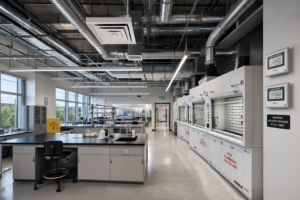
Handling volatile chemicals or biological samples is a daily reality in forensic science. Fume hoods and ventilated enclosures are essential for protecting lab personnel and maintaining a contaminant-free environment.
- Choose ducted, or ductless hoods based on lab layout and types of analyses performed.
- Enclosures should be designed to minimize airflow disruption and allow safe manipulation of materials.

Cabinetry and Storage Solutions
Secure, accessible cabinetry and storage is vital for maintaining the chain of custody and ensuring sample integrity.
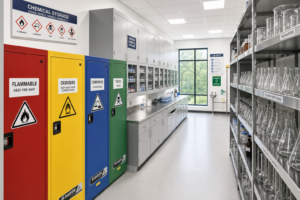
- Chemical storage cabinets must be fire-resistant and corrosion-proof.
- Evidence lockers help organize and protect sensitive materials awaiting analysis.
- Overhead cabinets and under-bench storage keep essential tools and supplies within reach without cluttering work surfaces.
Sinks and Wash Stations
Decontamination is a core part of forensic science workflows.
- Install deep sinks with touchless faucets for easy cleanup.
- Emergency wash stations or eye wash units should be readily accessible in any area where hazardous materials are handled.
Seating and Ergonomic Accessories
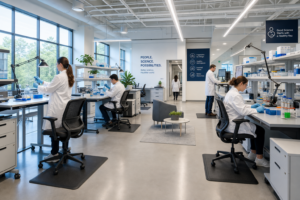
Comfortable, ergonomic seating is often overlooked—but forensic work can require long hours of intense focus.
- Choose height-adjustable chairs with lumbar support and chemical-resistant surfaces.
- Incorporate footrests, anti-fatigue mats, and monitor stands to support long-term well-being and productivity.
By equipping a forensic science laboratory with furniture that’s purpose-built for function, safety, and durability, labs can support consistent, high-quality results while protecting both personnel and evidence.

Custom vs. Modular Furniture: What Works Best for Forensic Science?
When setting up a forensic science laboratory, one size rarely fits all. The specialized nature of forensic work often calls for highly tailored solutions—but how do you decide between custom-built furniture and modular systems? The answer lies in your lab’s specific needs, available space, and long-term goals.
The Benefits of Modular Furniture
Modular lab furniture is designed with flexibility in mind. These pre-engineered systems can be configured, expanded, or rearranged as your lab’s demands change.
- Ideal for a forensic science laboratory that needs to scale up quickly or adjust layouts for different investigative disciplines.
- Components like mobile benches, adjustable shelving, and interchangeable storage units make it easy to adapt without costly renovations.
- Modular systems often reduce downtime during upgrades or reconfigurations.
For labs that process a variety of case types or expect evolving workflows, modular furniture offers the agility to pivot when needed—whether to accommodate new equipment, techniques, or team members.
Additional Reading: Custom Fume Hoods
When Custom Furniture Is the Right Fit
Custom furniture is often the best solution for highly specialized forensic science tasks or unique architectural constraints.
- Ideal for integrating specialized instruments or fitting irregular lab layouts.
- Allows for precise tailoring of workstations to support evidence handling protocols or sensitive analytical procedures.
- Provides options for enhanced security, built-in ventilation, or specific material requirements.
Custom designs are particularly useful in high-security labs or facilities that handle classified or legally sensitive evidence, where workflow control and space optimization are critical.

Finding the Right Balance
In many cases, the best approach combines both modular and custom elements. A base of modular workstations might be supplemented with custom cabinetry or built-in ventilation systems to support specific forensic science functions.
That’s where working with a trusted lab design partner like Genie Scientific makes all the difference. With expertise in both modular and custom lab solutions, they can help you design a forensic science laboratory that meets today’s needs—and tomorrow’s challenges.

Future-Proofing Your Laboratory Design
A forensic science laboratory isn’t just an investment in the present—it’s a commitment to long-term scientific excellence. As technology evolves and investigative methods grow more complex, your lab must be ready to adapt. Future-proofing your design ensures your space remains efficient, compliant, and relevant for years to come.
Plan for Technological Advancements
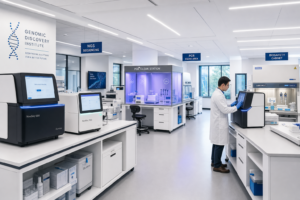
Forensic science is a rapidly advancing field. Emerging technologies—like enhanced DNA sequencing, digital forensics, or AI-assisted analysis—may require new tools, space configurations, or infrastructure.
- Choose furniture with built-in cable management, power access, and data ports to accommodate advanced equipment.
- Leave room for future instrument installations by incorporating flexible layouts and movable casework.
Design with Flexibility in Mind
Static lab layouts can become obstacles as needs shift. Instead, plan for change by using reconfigurable furniture and adaptable storage systems.
- Modular workstations, mobile benches, and adjustable shelving allow your lab to grow with minimal disruption.
- Avoid overly permanent fixtures in areas where workflow may evolve.
Sustainability Matters
A modern forensic science laboratory should also consider environmental responsibility.
- Use eco-friendly materials that are durable, low-emission, and recyclable.
- Install energy-efficient lighting and ventilation systems to reduce operational costs and environmental impact.
Collaborate with Lab Design Experts
Future-proofing isn’t just about guessing what’s next—it’s about anticipating change with the guidance of professionals. Partnering with an experienced lab furniture provider like Genie Scientific gives you access to custom insights, proven designs, and scalable solutions tailored to forensic science.
By thinking beyond your immediate needs and designing with growth and change in mind, you can create a forensic science laboratory that remains a high-performing, safe, and compliant space well into the future.

Conclusion
Setting up a forensic science laboratory is about more than just equipping a room—it’s about creating an environment that supports precision, protects evidence, and adapts to the demands of modern investigation. Every decision, from the layout to the furniture, plays a role in ensuring that forensic science professionals can work efficiently, safely, and accurately.
By understanding your lab’s unique needs, choosing between modular and custom solutions, and planning for future growth, you lay the foundation for long-term success. The right furniture isn’t just functional—it’s fundamental.
Partnering with experienced providers like Genie Scientific ensures that your forensic science laboratory isn’t just built for today—it’s designed for tomorrow.