
Why Casework Material Selection Matters
Laboratory casework is the backbone of any functional lab environment. From supporting heavy equipment and housing sensitive instruments to withstanding daily cleaning and chemical exposure, casework must perform reliably year after year. Choosing the right laboratory casework materials is not just a design decision—it’s a long-term investment in safety, efficiency, and durability.
In high-performance laboratory settings, casework failures can lead to costly downtime, contamination risks, and frequent repairs or replacements. Materials that are poorly matched to the lab’s application may warp, corrode, delaminate, or lose structural integrity far sooner than expected. Over time, these issues increase maintenance costs and compromise the lab’s ability to operate at peak performance.
Whether designing a new facility or upgrading an existing space, lab planners, facility managers, and specifiers must carefully evaluate how different laboratory casework materials respond to chemicals, moisture, load demands, and routine wear. A well-informed material choice ensures long-term durability, supports compliance with safety standards, and allows the lab to adapt as workflows evolve.
This guide looks at the key factors that influence casework longevity and breaks down the most common laboratory casework materials to help you make a confident, future-ready decision.
Key Factors That Impact Long-Term Casework Durability
Not all laboratory environments place the same demands on casework. To ensure long-term performance, durability must be evaluated in the context of how the lab operates day to day. Several critical factors influence how well different laboratory casework materials hold up over time.
Chemical Exposure and Corrosion Resistance
One of the biggest threats to casework longevity is repeated exposure to chemicals. Acids, solvents, disinfectants, and cleaning agents can degrade surfaces, weaken structural components, and cause corrosion if materials are not properly specified. Laboratories that handle aggressive chemicals require casework materials with proven resistance to corrosion and chemical breakdown to prevent premature failure.
Moisture, Humidity, and Spill Tolerance
Moisture is another common challenge in laboratory settings. High humidity, frequent washdowns, and accidental spills can cause certain materials to swell, warp, or delaminate. Selecting laboratory casework materials that resist moisture intrusion helps maintain structural integrity and prevents long-term damage, especially in clinical, life science, and cleanroom environments.
Load-Bearing Capacity and Structural Strength
Laboratory casework often supports heavy instruments, analytical equipment, and dense storage loads. Over time, insufficient load ratings can lead to sagging, misalignment, or joint failure. Durable casework materials must be engineered to handle both static and dynamic loads without compromising stability or safety.
Cleaning Protocols and Maintenance Demands
Routine cleaning is essential for laboratory hygiene, but harsh cleaning protocols can accelerate wear on lower-quality materials. Casework surfaces must withstand repeated exposure to disinfectants and abrasives without degrading. Low-maintenance laboratory casework materials reduce long-term upkeep costs and help maintain a professional, compliant lab environment.
Safety, Compliance, and Longevity
Durable casework also plays a role in meeting safety and regulatory requirements. Fire resistance, chemical containment, and structural stability all contribute to a safer workspace. Choosing laboratory casework materials that align with relevant standards ensures long-term compliance while supporting uninterrupted lab operations.
Common Laboratory Casework Materials Explained
Understanding the strengths and limitations of different laboratory casework materials is essential for selecting solutions that deliver long-term durability. While several material options are available, each performs differently depending on the lab environment, usage intensity, and exposure conditions.
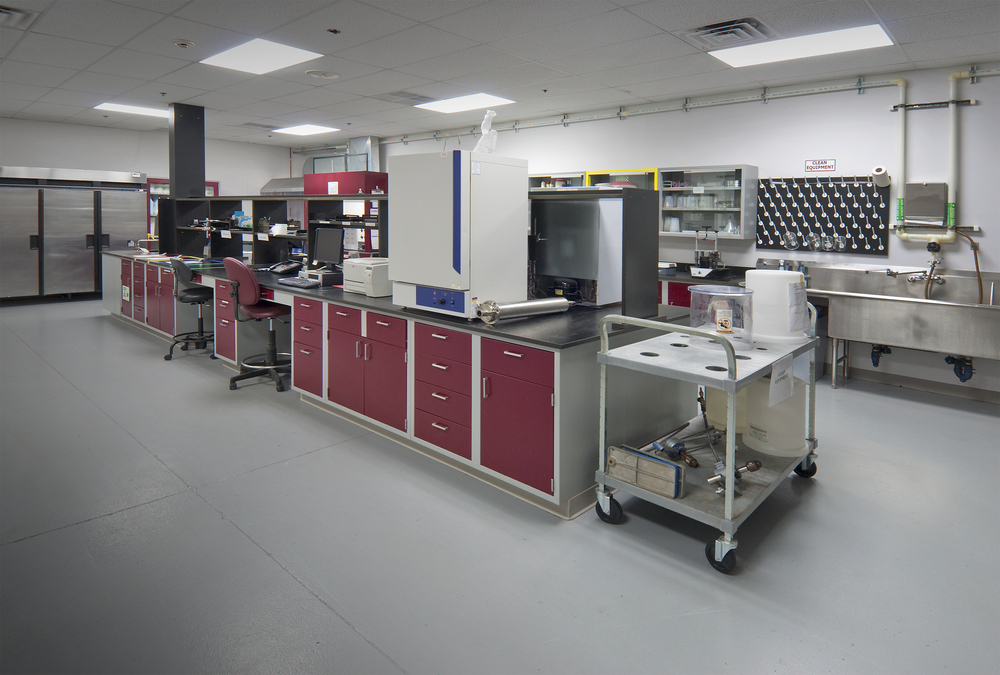
1. Steel Casework
Steel casework is widely regarded as one of the most durable options for laboratory environments. Typically finished with a chemical-resistant epoxy coating, steel provides excellent resistance to corrosion, impact, and daily wear. Its non-porous surface makes it easy to clean and well-suited to laboratories that require frequent sanitation.
In addition to durability, steel casework offers strong load-bearing capabilities, making it ideal for supporting heavy equipment and dense storage. Because steel cabinets maintain their structural integrity over time, they are often preferred in research, pharmaceutical, and industrial laboratories where reliability is critical. Modular steel systems also allow for future reconfiguration, extending the usable life of the casework.
Powder-coated steel is a high-performance option that goes a step further. It offers superior chemical and moisture resistance compared to traditional epoxy coatings, while the durable finish resists chipping, scratching, and corrosion. This makes it ideal for high-traffic labs or environments with aggressive cleaning protocols. Genie Scientific specializes in powder-coated casework, ensuring consistent quality and long-term durability for demanding applications.
2. Wood Casework
Wood casework has traditionally been used in educational and light-duty laboratory settings. It is commonly constructed from hardwood, plywood, or engineered wood products such as MDF or particleboard. While wood casework can be visually appealing and cost-effective, its durability is highly dependent on the quality of materials and protective finishes used.
Compared to metal options, wood is more susceptible to damage from moisture, chemicals, and impact. Prolonged exposure to spills or high humidity can cause swelling, warping, or delamination. For this reason, wood is best suited to dry labs or teaching environments with limited chemical exposure and lower durability demands.
3. Plastic Laminate Casework
Plastic laminate casework is often selected for budget-conscious projects or low-risk laboratory applications. These systems typically consist of a composite wood core covered with a decorative laminate surface. Laminate offers a degree of resistance to stains and mild chemicals, but its performance can decline over time in demanding lab conditions.
Seams and edges are particularly vulnerable to moisture intrusion, which can lead to substrate deterioration. While plastic laminate casework may be appropriate for administrative areas or light-use labs, it generally does not provide the long-term durability required in high-performance laboratory environments.
4. Stainless Steel Casework
Stainless steel casework is designed for environments where hygiene, moisture resistance, and corrosion protection are paramount. Its non-porous surface resists bacterial growth and withstands frequent washdowns, making it ideal for healthcare, cleanrooms, and certain life science laboratories.
Although stainless steel casework typically comes with a higher upfront cost, it delivers exceptional longevity in challenging conditions. Its resistance to rust, chemicals, and temperature fluctuations makes it one of the most durable laboratory casework materials available when properly specified.
Comparing Casework Materials: Durability at a Glance
When evaluating laboratory casework materials, a side-by-side comparison helps clarify how each option performs over time. While upfront cost is often a consideration, long-term durability, maintenance requirements, and resistance to environmental stressors ultimately determine the true value of laboratory casework.
| Material | Durability | Chemical & Moisture Resistance | Maintenance | Best Use |
| Epoxy-Coated Steel | High | High | Low | General research & industrial labs |
| Powder-Coated Steel | Very High | Very High—resists chipping, scratching & corrosion | Very Low | High-traffic labs, aggressive cleaning, long-term investment |
| Stainless Steel | Very High | Very High—excellent for wet & sterile environments | Low | Clinical, healthcare, cleanrooms |
| Wood | Moderate | Low—vulnerable to moisture & chemicals | Moderate | Dry teaching labs, low chemical exposure |
| Plastic Laminate | Low to Moderate | Low—prone to moisture & edge damage | Moderate | Light-use labs, administrative areas |
This comparison shows that powder-coated steel is a standout choice for labs demanding maximum durability and minimal maintenance, perfectly suited to Genie Scientific’s specialty offerings.
Matching Casework Materials to Lab Type
Selecting the right laboratory casework materials becomes much easier when material performance is aligned with the specific demands of the lab environment. Different lab types place different stresses on casework, and matching materials to real-world applications is key to achieving long-term durability.
Research and Pharmaceutical Laboratories
Research and pharmaceutical labs typically involve frequent chemical use, sensitive instruments, and evolving workflows. Casework in these environments must offer high chemical resistance, strong load-bearing capacity, and flexibility for future reconfiguration.
Epoxy-coated steel casework is commonly preferred due to its durability, ease of cleaning, and compatibility with modular lab designs. Stainless steel may also be specified in areas with heightened hygiene or moisture requirements.
Educational and Teaching Laboratories
Teaching labs often balance durability with budget considerations. While these spaces may experience heavy daily use, chemical exposure is usually more controlled. Steel casework remains a strong long-term option due to its resilience and low maintenance needs. In some low-risk instructional settings, wood or laminate casework may be acceptable, provided moisture and chemical exposure are limited.
Healthcare and Clinical Laboratories
Healthcare and clinical labs prioritize cleanliness, infection control, and moisture resistance. Casework must withstand frequent disinfection and comply with strict hygiene standards. Stainless steel casework is well suited to these environments thanks to its non-porous surface and corrosion resistance. Steel casework with appropriate coatings is also commonly used in clinical support areas where flexibility and durability are essential.
Industrial and High-Load Laboratories
Industrial labs often house heavy equipment and operate under rigorous conditions. Casework materials must support substantial loads while resisting impact, vibration, and chemical exposure. Heavy-duty steel casework is ideal for these applications, offering the structural strength and durability needed for long-term performance in demanding environments.
Additional Reading: Custom Laboratory Casework: Tailoring Storage for Specific Applications
Why Modular and Metal-Based Casework Performs Better Long-Term
When long-term durability is the priority, modular and metal-based laboratory casework materials consistently outperform fixed and non-metal alternatives. These systems are engineered not only for today’s lab requirements but also for the changes laboratories inevitably face over time.
Designed for Strength and Longevity
Metal casework, particularly steel and stainless steel, is built to withstand the physical demands of laboratory environments. From heavy equipment loads to repeated daily use, metal-based systems retain their structural integrity far longer than wood or composite materials. This durability translates into fewer repairs, reduced downtime, and a longer service life.
Flexibility Through Modular Design
Modular casework systems allow laboratories to adapt without major reconstruction. Cabinets, shelving, and work surfaces can be reconfigured, relocated, or expanded as workflows evolve. This flexibility is especially valuable in research-driven environments where equipment and processes change frequently. Modular laboratory casework materials protect long-term investments by eliminating the need for complete replacements when layouts shift.
Powder-Coated Steel Advantage
Powder-coated steel is one of Genie Scientific’s specialty offerings, providing an extra layer of chemical and moisture resistance. When combined with modular design, it extends the life of laboratory casework, reduces maintenance, and protects long-term investments.
Improved Resistance to Chemicals and Moisture
Metal-based casework materials offer superior resistance to chemical exposure and moisture intrusion. Epoxy-coated steel resists corrosion from common laboratory chemicals, while stainless steel and powder-coated steel excel in wet, sterile, or high-humidity environments. This resistance helps maintain both appearance and performance over time, even under aggressive cleaning protocols.
Lower Total Cost of Ownership
Although metal casework may involve a higher upfront cost, its long lifespan and low maintenance requirements often result in a lower total cost of ownership. Reduced repair needs, extended usability, and adaptability to future lab changes make modular metal casework, especially powder-coated steel, a cost-effective solution over the life of the laboratory.
How Genie Scientific Helps Labs Choose the Right Casework Materials
Choosing the right laboratory casework materials requires more than selecting products from a catalog. It demands a clear understanding of how a laboratory operates today—and how it may evolve in the future. Genie Scientific supports this process with a consultative, experience-driven approach focused on long-term performance and durability.
Rather than promoting one-size-fits-all solutions, Genie Scientific works closely with lab planners, architects, and facility managers to assess environmental conditions, workflow requirements, and compliance needs. This collaborative process ensures that casework materials are matched precisely to the lab’s function, risk level, and operational demands.
With extensive experience across research, educational, healthcare, and industrial laboratories, Genie Scientific understands how different laboratory casework materials perform in real-world conditions. Their expertise spans material selection, modular system design, and integration with broader lab infrastructure, allowing them to deliver cohesive, future-ready solutions.
As a single-source provider for laboratory environments, Genie Scientific simplifies complex projects by coordinating casework, furniture, and supporting lab systems. This integrated approach reduces misalignment between components, minimizes installation challenges, and helps ensure that casework performs as intended over the long term.
By guiding clients through informed material choices and durable system designs, Genie Scientific helps laboratories protect their investment, maintain compliance, and create spaces that continue to perform as science advances.
Additional Reading: Steel Lab Casework Explained: Selecting Base, Wall & Tall Cabinets for Modern Labs

Conclusion: Investing in Durability Starts with the Right Materials
Selecting the right laboratory casework materials is a foundational decision that directly impacts safety, efficiency, and long-term operational costs. From chemical resistance and load-bearing strength to maintenance demands and future flexibility, material performance determines how well a laboratory can support daily work and adapt to change over time.
Metal-based and modular casework systems consistently deliver the durability required for modern laboratories, particularly in high-performance research, healthcare, and industrial environments.
Among these, powder-coated steel stands out for its superior chemical and moisture resistance, long-lasting finish, and resilience in high-traffic, demanding labs. When casework materials are carefully matched to lab type and usage conditions, facilities benefit from longer service life, fewer disruptions, and improved compliance with safety standards.
With the right guidance, choosing laboratory casework materials becomes a strategic investment rather than a short-term solution. By taking a consultative approach and drawing on real-world experience, Genie Scientific helps laboratories select durable, future-ready solutions—including powder-coated steel—that continue to perform as science advances.
Planning a new lab or upgrading an existing space? Genie Scientific helps you evaluate, specify, and implement laboratory casework materials—including powder-coated steel—that deliver long-term durability and flexibility. Consult their experts to find solutions tailored to your lab’s unique needs.