
Modern research is no longer conducted in isolation. From biotech startups to university innovation hubs, scientific breakthroughs increasingly depend on cross-functional collaboration, shared instrumentation, and agile teamwork. Collaborative lab workstations play a critical role in this shift—providing structured, multi-user environments that support efficiency, safety, and seamless communication.
As laboratories evolve to support multidisciplinary projects and tighter project timelines, the physical environment must keep pace. Designing these spaces requires more than simply placing larger benches in a room; it demands strategic planning around workflow, utilities, ergonomics, and long-term adaptability. For research facilities aiming to enhance productivity without compromising compliance or flexibility, thoughtful workstation design becomes a foundational investment.
Core Design Principles for Multi-User Lab Workstations
Designing collaborative lab workstations for multi-user teams requires more than expanding surface area. Effective layouts must balance productivity, safety, accessibility, and long-term flexibility. When multiple researchers share a single workstation zone, even small design oversights can create workflow bottlenecks, safety risks, or inefficiencies. The following principles form the foundation of high-performing, team-based laboratory environments.
Zoning for Simultaneous Tasks
In shared research settings, clearly defined zones prevent interference between concurrent activities. Wet and dry work areas should be strategically separated to reduce contamination risks, while instrument zones must allow adequate clearance for equipment operation and maintenance. Integrating write-up space adjacent to benching areas also supports real-time data recording without forcing researchers to relocate.
Thoughtful zoning improves task flow and reduces cross-traffic, especially in labs where analytical testing, sample preparation, and equipment calibration occur simultaneously. Designing for simultaneous use ensures that collaborative spaces remain productive rather than congested.
Ergonomics for Shared Use
Multi-user environments demand adaptable solutions. Adjustable-height benches, sit-stand flexibility, and properly positioned shelving allow researchers of varying statures to work comfortably throughout long shifts. Knee clearance, reach distances, and equipment placement must accommodate both seated and standing tasks without creating strain.
Ergonomic planning in collaborative lab workstations directly supports researcher well-being, reduces fatigue, and enhances sustained productivity—particularly in facilities operating extended hours.
Clear Sightlines and Communication Flow
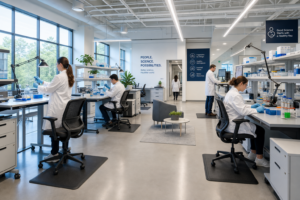
Collaboration thrives when communication is effortless. Workstations should allow unobstructed sightlines between team members without compromising defined work zones. Open benching concepts, strategically placed shared resources, and logical circulation paths reduce unnecessary movement and interruptions.
At the same time, aisle widths must maintain compliance with laboratory safety standards while preventing congestion during peak usage. Balancing openness with structured layout ensures that communication flows naturally without sacrificing safety or efficiency.

Utility Integration: Power, Data, Gases, and Plumbing for Shared Stations
In high-performing research environments, utilities are the backbone of collaborative lab workstations. Poorly planned service distribution can quickly undermine workflow efficiency, limit flexibility, and create long-term operational constraints. For multi-user stations, utility integration must be intentional, accessible, and scalable.
Strategic Power and Data Distribution
Shared workstations often support multiple instruments operating simultaneously. Dedicated circuits, properly spaced receptacles, and accessible data ports prevent extension-cord workarounds that compromise safety and compliance. Overhead service carriers or ceiling-mounted utility panels can distribute power and data cleanly while keeping benchtops free of clutter.
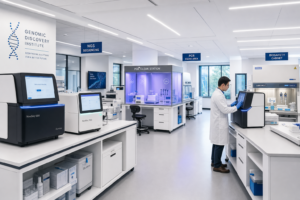
Designing for technology density—particularly in biotech, analytical, and teaching labs—ensures that teams can integrate new instruments without costly retrofits. Future-ready electrical planning supports evolving research demands and equipment upgrades.
Gas and Plumbing Coordination
Multi-user lab workstations frequently require compressed air, vacuum, specialty gases, and water connections within the same footprint. Centralized but clearly organized service fixtures reduce cross-traffic and eliminate the need for researchers to move between stations for essential utilities.
Quick-connect fittings and modular service panels enhance flexibility, allowing labs to reconfigure equipment layouts as project needs shift. Proper placement also reduces trip hazards and supports efficient emergency shutoff access.
Overhead vs. Base-Mounted Service Strategies
Selecting the right service delivery method depends on workflow and reconfiguration goals.
- Overhead carriers provide clean, adaptable distribution and maximize usable bench space.
- Base-mounted services offer a streamlined aesthetic and may suit more fixed laboratory layouts.
In collaborative environments where teams evolve and equipment density changes over time, overhead systems often provide greater adaptability without structural modification.
Planning for Future Reconfiguration
The most effective collaborative lab workstations are not designed solely for current needs. Integrating flexible utility pathways, accessible shutoffs, and modular infrastructure allows facilities to adapt without major demolition or downtime.
Forward-thinking utility planning reduces lifecycle costs, supports safety compliance, and preserves operational continuity—critical in research settings where interruptions can delay projects and impact funding timelines.

Safety and Compliance Considerations in Collaborative Layouts
While collaboration enhances productivity, multi-user environments also introduce increased movement, shared equipment access, and higher traffic density. Designing collaborative lab workstations therefore requires careful alignment with safety codes, clearance standards, and industry best practices to ensure protection without compromising workflow.
Aisle Widths and Circulation Planning
Clear circulation paths are essential in shared laboratory zones. Adequate aisle widths support safe movement of personnel, equipment carts, and emergency responders while preventing congestion during peak activity.
In collaborative settings, where multiple researchers may access the same workstation simultaneously, circulation planning must account for both routine workflow and emergency egress. Strategic spacing reduces bottlenecks and ensures uninterrupted access to exits, eyewash stations, and safety showers.
Emergency Access and Shutoff Visibility
Gas valves, electrical shutoffs, and plumbing controls must remain clearly accessible in shared environments. Obstructed service panels or hidden shutoff points can delay response during critical incidents.
Designing collaborative lab workstations with visible, unobstructed emergency controls supports compliance with established safety standards and enhances overall risk management. Utility placement should never require researchers to cross active work zones to reach shutoff mechanisms.
Chemical Storage and Hazard Segregation
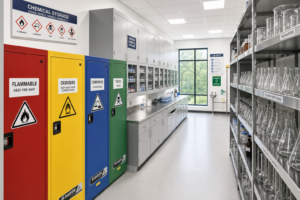
In multi-user layouts, improper storage proximity can increase exposure risks. Flammable materials, corrosives, and specialty reagents should be stored according to compatibility guidelines and positioned to minimize cross-contamination potential.
Integrating designated storage solutions within or adjacent to shared workstations reduces unnecessary transport of hazardous materials across the lab, lowering spill and exposure risks.
Ventilation and Airflow Coordination
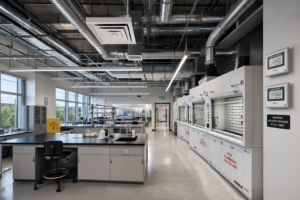
Collaborative workstations must align with the laboratory’s overall ventilation strategy. Coordination with fume hoods, localized exhaust systems, and room airflow patterns ensures that shared benching areas do not disrupt containment zones or create unintended air turbulence.
Proper airflow management protects both personnel and research integrity, particularly in facilities handling volatile chemicals or sensitive biological materials.
Aligning with Industry Standards
Compliance with established guidelines—including recommendations from organizations such as the Scientific Equipment and Furniture Association (SEFA)—reinforces both safety and durability expectations. Adhering to recognized standards for casework construction, load ratings, and chemical resistance ensures that collaborative lab workstations perform reliably under demanding, high-traffic conditions.

Fixed vs. Modular Configurations for Collaborative Lab Workstations
Selecting the appropriate configuration is a critical early decision when designing collaborative lab workstations. Both fixed and modular systems offer distinct advantages, and the right choice depends on workflow stability, long-term growth projections, and facility infrastructure.
When Fixed Systems Make Strategic Sense
Fixed laboratory systems are anchored to the building structure and typically integrate utilities directly through walls or floors. These configurations are well-suited for environments with stable workflows, predictable equipment placement, and limited need for future reconfiguration.
In facilities where heavy instrumentation remains in place for extended periods—such as specialized testing labs or long-term research programs—fixed collaborative lab workstations can offer structural durability and streamlined utility routing. They often provide a clean, built-in aesthetic and may reduce upfront material complexity.
However, their permanence can limit adaptability if research priorities evolve.
When Modular Systems Enhance Flexibility
Modular systems are designed for adaptability. Freestanding benches, movable casework, and overhead utility carriers allow facilities to reconfigure layouts as team structures, equipment needs, or research objectives shift.
For growing biotech firms, academic institutions, and innovation labs where collaboration patterns change over time, modular collaborative lab workstations provide a strategic advantage. Utility distribution can be rerouted or expanded without extensive demolition, minimizing downtime and preserving operational continuity.
Modular configurations also support phased expansions, making them particularly attractive in facilities planning for growth.
Additional Reading: Choosing Between Fixed vs Modular Lab Furniture for Modern Laboratories
Lifecycle Cost and Long-Term Value
While fixed systems may present lower initial planning complexity, modular configurations often deliver stronger lifecycle value. The ability to reconfigure without structural alterations reduces renovation costs and protects capital investment over time.
The most effective solution is rarely one-size-fits-all. Many modern research facilities adopt hybrid approaches—combining fixed elements for stability with modular zones for flexibility. This balanced strategy supports both immediate operational needs and long-term adaptability.
Materials and Durability for High-Traffic Team Workstations
In collaborative environments, surfaces and structural components endure significantly more wear than single-user stations. Shared equipment, increased movement, and frequent reconfiguration demand materials engineered for resilience.
Chemical-Resistant Work Surfaces
Benchtops must withstand exposure to acids, solvents, and cleaning agents without degrading. Epoxy resin, phenolic resin, and stainless steel surfaces are commonly specified in high-use laboratories due to their resistance to chemical corrosion and impact.
Selecting appropriate surface materials for collaborative lab workstations ensures long-term performance and protects research integrity from contamination risks.
Additional reading: How to Choose Chemical-Resistant Countertops for Your Lab
Structural Integrity and Load Capacity
Multi-user workstations often support shared centrifuges, analytical equipment, and instrumentation that generate vibration or concentrated loads. Steel casework systems typically offer higher load ratings and improved durability in high-traffic environments.
Proper structural planning reduces deflection, enhances stability, and extends the service life of the installation.
Edge Detailing and Impact Protection
In team-based labs, corners and edges experience frequent contact from carts, stools, and equipment. Reinforced edging and impact-resistant finishes help prevent chipping and delamination, maintaining both safety and appearance over time.
Maintenance and Cleanability
Durable materials should also support efficient sanitation protocols. Seamless surfaces, minimal joints, and chemical-resistant finishes reduce microbial growth potential and simplify routine cleaning.
Investing in durable, low-maintenance materials ensures that collaborative lab workstations continue performing safely and efficiently under continuous use.
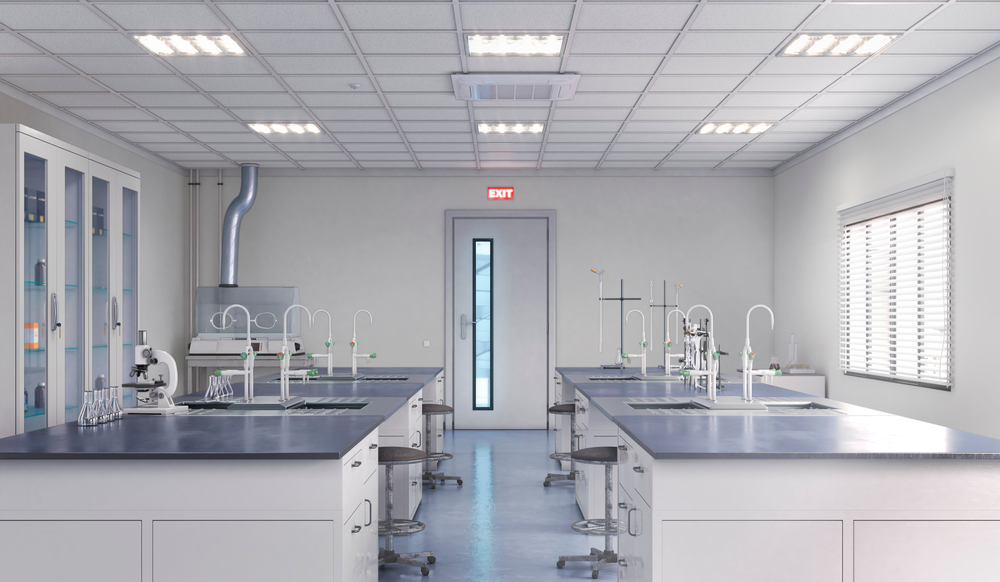
Designing for Scalability and Future Growth
Research environments rarely remain static. Team structures evolve, grant funding fluctuates, new instrumentation is introduced, and research priorities shift. Designing collaborative lab workstations with scalability in mind ensures that facilities can adapt without major operational disruption.
Planning for Team Expansion
Multi-user zones should anticipate increased personnel density. Adjustable bench lengths, expandable modular systems, and flexible seating configurations allow labs to accommodate new researchers without overcrowding existing stations.
Proper spatial planning reduces the need for costly renovations as teams grow.
Infrastructure That Evolves with Research
Forward-thinking laboratories integrate accessible utility pathways, additional electrical capacity, and adaptable service panels during initial construction. Planning for future equipment loads and emerging technologies protects the facility from premature obsolescence.
Scalable collaborative lab workstations allow teams to introduce new instrumentation without tearing into walls or floors—preserving both budget and workflow continuity.
Phased Growth Without Downtime
Facilities that anticipate expansion can implement phased upgrades. Modular casework, overhead service carriers, and reconfigurable layouts support incremental adjustments rather than disruptive overhauls.
For research-driven organizations operating under strict timelines, minimizing downtime is not just convenient—it is essential.
Why Partnering with a Single-Source Lab Provider Simplifies Multi-User Design
Designing collaborative lab workstations involves far more than selecting benches and surfaces. Utility coordination, ventilation planning, casework integration, compliance alignment, and installation sequencing must function as a cohesive system.
Working with a single-source laboratory partner streamlines this complexity.
Integrated providers coordinate:
- Casework and workstation systems
- Utility distribution planning
- Fume hood placement and airflow strategy
- Compliance alignment with industry standards
- Installation and project management
This unified approach reduces communication gaps, shortens project timelines, and minimizes risk during construction or renovation. Rather than managing multiple vendors, facilities benefit from a coordinated design-build strategy that aligns performance, safety, and long-term flexibility from the outset.
For organizations investing in collaborative lab workstations, partnering with an experienced laboratory solutions provider like Genie Scientific ensures that design intent translates seamlessly into operational reality.
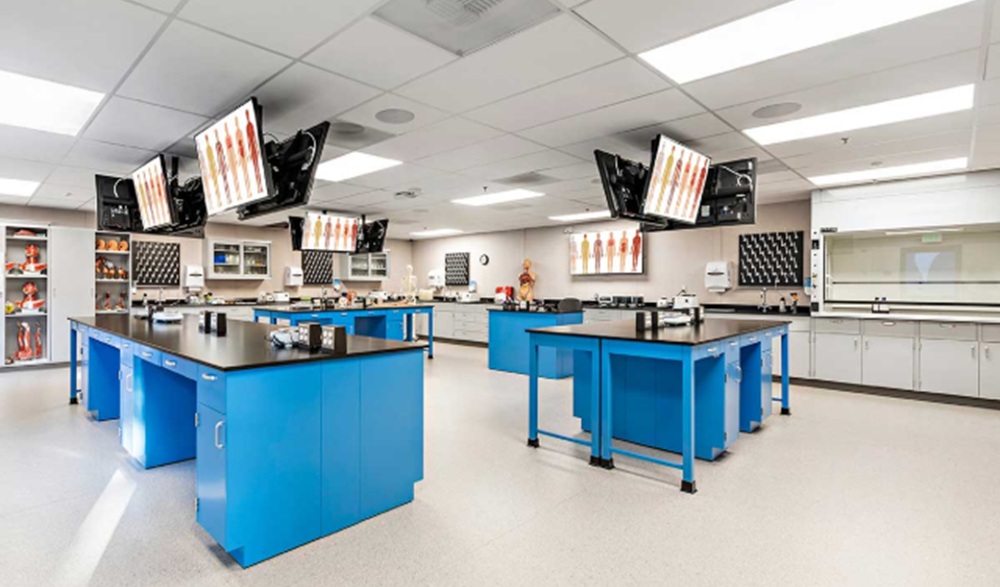
Conclusion: Designing Collaborative Lab Workstations for Performance and Longevity
As research environments continue to evolve, the demand for thoughtfully engineered collaborative lab workstations will only increase. Multi-user laboratory spaces must support simultaneous workflows, integrated utilities, safety compliance, and long-term adaptability—all without sacrificing durability or operational efficiency.
From high-intensity biotech environments like TriLink BioTechnologies to dynamic academic research settings such as Vanguard University, successful facilities demonstrate that workstation design is not merely a matter of layout—it is a strategic investment in performance, safety, and scalability.
By aligning configuration strategy, material selection, utility planning, and compliance standards, organizations can create collaborative laboratory environments that enhance productivity today while remaining flexible for tomorrow’s research demands.
For facilities planning new construction or renovation projects, partnering with Genie Scientific, an experienced single-source laboratory solutions provider, ensures that collaborative lab workstations are designed as integrated systems—supporting innovation from concept to completion.