
In today’s university chemistry labs, the right furniture is more than just a backdrop for experiments—it’s the foundation for safety, learning, and discovery. As academic programs evolve to include more hands-on, research-based teaching, educators and facility planners need environments with university chemistry teaching lab furniture that are functional, flexible, and built to last.
From durable workstations that withstand constant use to modular benches that adapt to collaborative learning, every piece of furniture plays a role in shaping the lab experience. Modern university chemistry labs demand furniture designed not only for performance and compliance but also for sustainability and ergonomic comfort.
That’s where Genie Scientific comes in. With decades of experience designing and manufacturing custom laboratory furniture and equipment, Genie provides single-source solutions that combine quality, innovation, and safety. For university chemistry teaching lab furniture, whether it’s outfitting a new teaching facility or upgrading an existing space, Genie Scientific helps universities create labs that inspire learning—and stand the test of time.
Understanding the Needs of University Chemistry Teaching Labs
University chemistry teaching labs are among the most demanding environments in academia. They must withstand frequent use, support diverse experiments, and maintain strict safety and performance standards—all while fostering an engaging learning experience for students. Designing these spaces requires a thoughtful balance between durability, flexibility, and compliance.
Durability for High-Traffic Use
Unlike research labs used by a limited number of professionals, university chemistry teaching labs often accommodate dozens of students per session. Furniture must endure daily wear from repeated experiments, exposure to corrosive chemicals, and constant cleaning. High-quality materials such as epoxy resin or phenolic resin surfaces are essential to ensure long-term performance without warping, staining, or degrading.
Flexibility for Changing Learning Styles
Today’s chemistry instruction goes beyond traditional demonstrations. Collaborative and inquiry-based learning require adaptable layouts that can easily transition between lectures, experiments, and group projects. Modular lab benches, mobile workstations, and reconfigurable storage units allow universities to make the most of their space while adapting to future needs.
Safety and Compliance at the Core
Safety is non-negotiable in a university chemistry teaching lab. Every piece of furniture—from benches to fume hoods—must meet rigorous safety standards, ensuring adequate ventilation, chemical resistance, and ergonomic comfort. Proper layout and design help instructors maintain visibility and control in the lab, reducing the risk of accidents and ensuring a secure environment for students.
By understanding these unique requirements, universities can make informed choices that enhance both safety and educational outcomes. And with Genie Scientific’s proven experience in academic lab design, institutions gain a trusted partner who understands university chemistry teaching labs and how to turn these needs into practical, high-performing solutions.

Essential Types of Lab Furniture for Chemistry Teaching Labs
Outfitting a university chemistry teaching lab requires a combination of durable, ergonomic, and purpose-built furniture that supports both safety and active learning. Each piece plays a distinct role in helping instructors deliver hands-on education. while maintaining compliance and efficiency.
Lab Benches and Workstations
At the heart of every teaching lab are the workbenches—the platforms where experiments, observations, and discoveries unfold. For university chemistry environments, benches must combine chemical resistance, strength, and flexibility.
Genie Scientific’s lab benches are available in fixed or modular configurations, with durable work surfaces made from materials such as epoxy resin, phenolic resin, or stainless steel. Height-adjustable and mobile options also help accommodate diverse teaching methods and student needs.
Fume Hoods
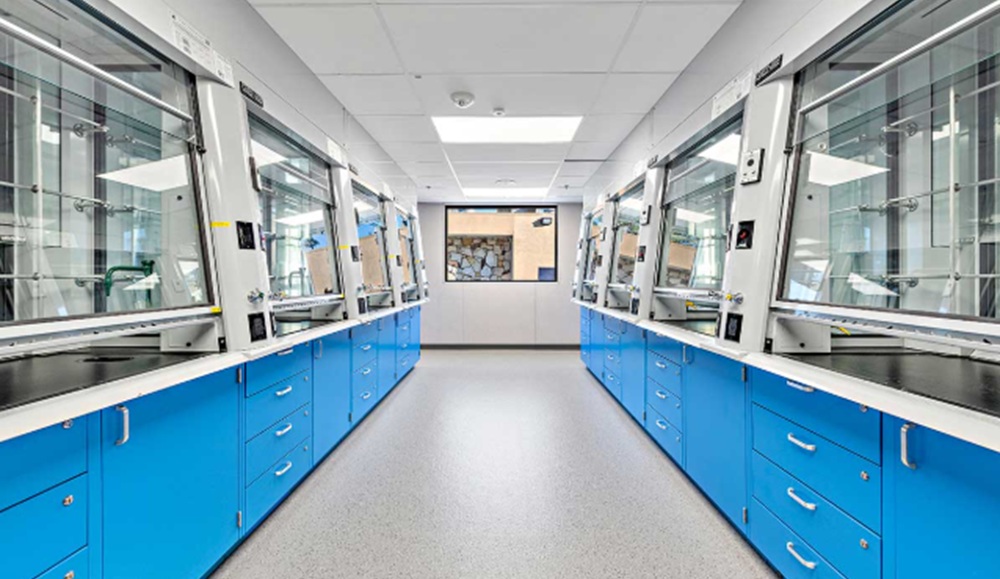
Fume hoods are critical to maintaining air quality and protecting students from hazardous fumes and vapors during chemical experiments. Genie Scientific is an industry leader in ducted and ductless fume hood systems, designed for optimal containment and compliance with OSHA and SEFA standards. Integrating hoods directly into the lab’s layout ensures that safety remains seamless, not an afterthought.
Storage Solutions
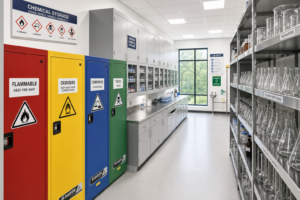
Organization is key to safety and efficiency in a chemistry lab. Proper storage keeps chemicals, glassware, and personal protective equipment secure and accessible. Universities benefit from acid- and base-resistant cabinets, flammable material storage units, and open shelving systems that simplify classroom management while meeting fire and chemical safety regulations.
Sinks and Service Fixtures
A well-designed university chemistry teaching lab includes strategically placed sinks, eyewash stations, and utility fixtures for water, gas, and vacuum connections. These essential components promote safety, streamline workflow, and make cleanup efficient. Genie Scientific offers integrated service modules that can be incorporated into benches or island units for convenience and compliance.
Seating and Accessories
Comfortable, adjustable seating is often overlooked in lab design — yet it directly impacts focus and posture during long lab sessions. Lab stools and chairs should feature chemical-resistant upholstery, sturdy bases, and ergonomic support. Additional accessories, such as reagent shelves, pegboards, and monitor mounts, help instructors and students stay organized and engaged in chemistry labs.
Well-chosen furniture ensures that every aspect of a university chemistry teaching lab supports learning, collaboration, and safety. Each component works together to create a cohesive environment—one that encourages curiosity and protects both students and staff.

Material and Design Considerations
The materials and design choices behind university chemistry teaching lab furniture determine how well a lab performs over time. From withstanding corrosive chemicals to accommodating modern technology, every detail matters. Choosing the right combination of materials, finishes, and layouts ensures that the lab remains both functional and future-ready.
Selecting the Right Materials
University chemistry teaching labs face constant exposure to heat, moisture, and chemical agents—making material selection a top priority. The most common and reliable options include:
- Epoxy Resin: Highly resistant to acids, solvents, and heat. Ideal for heavy-duty chemistry applications.
- Phenolic Resin: Durable, moisture-resistant, and lighter in weight—a versatile option for flexible lab setups.
- Stainless Steel: Perfect for clean, sterile environments; resists corrosion and makes cleanup easy.
- High-Pressure Laminate: A cost-effective option for general-purpose areas with limited chemical exposure.
Each material offers its own balance of durability, maintenance, and cost-effectiveness, allowing universities to tailor solutions to their specific needs.
Designing for Safety and Efficiency
Good university chemistry teaching lab furniture design goes beyond appearance. It prioritizes safety, ergonomics, and accessibility to create a workspace where students can learn confidently and instructors can teach effectively. Rounded edges, chemical-resistant coatings, and properly ventilated layouts all contribute to a safer lab experience.
Flexible layouts—such as modular benches and mobile workstations—make it easier to reconfigure spaces for different class sizes, experiments, or instructional styles. Integrated utilities for gas, water, and electricity also streamline setup and minimize clutter.
Sustainability and Modern Innovation
With universities placing greater emphasis on sustainability, eco-friendly furniture has become a key design consideration. Many modern university chemistry teaching lab systems now use low-emission materials, recycled steel, and energy-efficient manufacturing processes. Genie Scientific supports these initiatives with customizable, American-made furniture systems that balance performance, safety, and environmental responsibility.
By carefully selecting materials and designs that align with educational goals, university chemistry teaching labs can be created to not only meet today’s needs but also adapt to the challenges of tomorrow.
Additional reading: How to Choose Chemical-Resistant Countertops for Your Lab
Safety, Ergonomics, and Compliance
In university chemistry teaching labs, safety isn’t just a design consideration — it’s the foundation of every decision. From furniture layout to material selection, every element must meet strict standards that protect students and instructors while supporting effective teaching. Equally important is ergonomics, ensuring that long hours of lab work don’t compromise comfort or concentration.
Built-In Safety Features
University chemistry teaching labs present constant risks — from chemical spills and open flames to glassware handling. That’s why laboratory furniture must incorporate safety-driven features, including:
- Rounded edges and non-slip surfaces to reduce injuries.
- Chemical-resistant coatings and spill containment designs.
- Proper ventilation through fume hoods and exhaust systems.
- Clearly marked storage for flammable or corrosive materials.
Genie Scientific’s furniture and equipment are designed with these priorities in mind, meeting or exceeding the standards required in academic environments.
Ergonomics for Learning and Productivity
Ergonomic design plays a significant role in creating a positive learning atmosphere in university chemistry teaching labs. Adjustable benches, stools with lumbar support, and accessible utility fixtures help maintain comfort and reduce fatigue during lab sessions. When students can work safely and comfortably, they stay more focused—improving both the quality of learning and overall lab efficiency.
Compliance with Industry Standards
To ensure a lab’s safety and integrity, all furniture and equipment should comply with recognized industry standards such as:
- OSHA (Occupational Safety and Health Administration)—for safe handling and workspace design.
- ANSI (American National Standards Institute)—for material quality and performance.
- SEFA (Scientific Equipment and Furniture Association)—for construction, load-bearing capacity, and chemical resistance.
Adhering to these standards ensures that university chemistry teaching labs remain compliant, safe, and ready for years of intensive academic use. Genie Scientific’s products are engineered and tested in accordance with SEFA standards, providing universities with full confidence in both quality and performance.
By integrating safety, ergonomics, and compliance into every aspect of lab design, universities create environments where discovery can happen without compromise—and where students learn science the way it’s meant to be learned: safely, comfortably, and confidently.
Additional reading: Lab Tables and Work Benches: Ergonomics and Efficiency in Design

Planning and Layout Tips for University Chemistry Labs
Designing a university chemistry teaching lab is about creating a space that balances safety, collaboration, and flexibility. A well-planned layout supports efficient instruction and ensures that students can work safely and comfortably, even during complex experiments.
Start with a Safety-First Layout
Safety should always guide the floor plan. Emergency exits, eyewash stations, and fume hoods must be strategically placed for quick access and unobstructed movement. Workstations in university chemistry teaching labs should be spaced to prevent crowding while allowing instructors a clear view of all students.
Genie Scientific’s lab planners often use zoned layouts—separating wet, dry, and prep areas—to streamline workflows and minimize risks.
Design for Flexibility and Future Growth
Today’s chemistry courses often blend traditional lab work with collaborative projects and digital learning. Modular lab furniture and mobile benches allow universities to reconfigure the space easily for different class sizes or instructional methods. This flexibility ensures that the lab can evolve alongside changing curricula and technology.
Optimize Traffic Flow and Visibility
Efficient movement is key to both safety and engagement. Central aisles and circular layouts help instructors supervise activities and respond quickly to questions or emergencies. Proper lighting and clear sightlines across the room also support student focus and instructor oversight—essential for maintaining a safe, interactive learning environment.
Integrate Utilities Thoughtfully
Gas, water, electrical, and data connections should be seamlessly integrated into the furniture design. Overhead service carriers or under-bench connections help reduce clutter and trip hazards while maintaining easy access for maintenance. Genie Scientific’s casework and service modules can be customized to support these utilities without compromising the university chemistry teaching lab’s clean, organized appearance.
Include Smart Storage and Equipment Zones
Strategically placed storage keeps the workspace efficient and reduces distractions. Separate areas for reagents, glassware, and student materials promote organization and speed up lab turnover between classes. Combining fixed and mobile storage units helps maintain flexibility while ensuring that everything has its place.
When safety, flexibility, and efficiency work together, chemistry teaching labs become spaces where learning flows naturally. With expert planning and precision-built furniture from Genie Scientific, universities can create environments that empower both students and instructors—for today’s experiments and tomorrow’s discoveries.

Why Choose Genie Scientific for University Lab Furniture
When it comes to outfitting university chemistry teaching labs, choosing the right partner is just as important as choosing the right furniture. Genie Scientific stands out as a trusted, single-source solution for universities seeking high-quality, safe, and customizable lab environments.
Experience and Expertise
With decades of experience in laboratory design and manufacturing, Genie Scientific understands the unique challenges of academic labs. From planning layouts that maximize space and safety to specifying materials that withstand frequent chemical use, Genie combines practical knowledge with technical precision.
Customizable Solutions
No two labs are alike. Genie Scientific offers custom fabrication to meet the specific needs of each institution—from modular benches and storage systems to fully integrated fume hoods and service fixtures. This flexibility ensures that labs are functional, future-proof, and aligned with teaching goals.
Single-Source Convenience
Universities benefit from having a single, reliable partner for all lab furniture and equipment needs. Genie Scientific provides everything from casework and lab benches to fume hoods and accessories, simplifying procurement and installation while maintaining consistent quality and compliance standards.
Quality, Compliance, and Sustainability
Every piece of Genie Scientific furniture is designed and manufactured to meet or exceed SEFA, ANSI, and OSHA standards. Materials are selected for durability, chemical resistance, and longevity, while sustainable practices minimize environmental impact—supporting universities’ green initiatives without compromising performance.
Trusted by Institutions
Generations of academic labs have relied on Genie Scientific’s innovative, reliable solutions to create environments that promote learning, collaboration, and safety. Their commitment to service and excellence ensures that every university chemistry lab is not just functional, but optimized for discovery.
For more on industry standards and best practices in lab furniture, you can refer to SEFA’s official guidelines.
Conclusion
Choosing the right lab furniture is fundamental to creating safe, efficient, and inspiring chemistry teaching labs. From durable benches and chemical-resistant surfaces to ergonomic seating and properly integrated fume hoods, every element contributes to an environment where students can explore, experiment, and excel.
With Genie Scientific, universities gain more than just furniture—they gain a trusted partner in designing, manufacturing, and installing lab solutions tailored to academic needs. Their customizable, single-source approach ensures that labs are not only functional and compliant but also adaptable for future teaching innovations.
Ready to elevate your university chemistry teaching lab? Consult Genie Scientific today to explore tailored furniture solutions that combine safety, durability, and modern functionality. Your students deserve a lab that inspires discovery—and Genie Scientific delivers it.