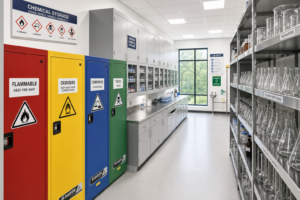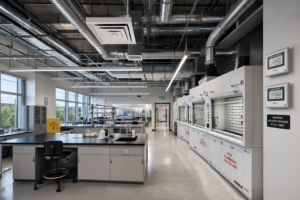

In the demanding environment of a laboratory, furniture takes a daily beating. Surfaces are subjected to constant movement, chemical spills, heat exposure, and frequent cleaning with harsh disinfectants. That’s why material choice matters. Increasingly, powder-coated steel is proving to be the go-to solution for lab designers and facility managers aiming for durability without compromise.
Over time, even high-quality materials can wear down, compromising not only appearance but performance and safety. This article examines how powder-coated steel enhances the resilience of laboratory furniture, offering lasting protection, superior hygiene, and long-term value in even the most challenging research environments.
What Is Powder-Coated Steel?
Powder-coated steel is exactly what it sounds like—steel that has been finished with a protective and decorative layer of powder coating. Unlike traditional liquid paint, which relies on solvents to keep pigments and resins in suspension, powder coating involves the application of a dry, electrostatically charged powder directly onto the metal surface.
Once applied, the coated steel is cured in a high-temperature oven, where the powder melts, flows, and forms a smooth, uniform finish that bonds tightly to the metal beneath.
This finish is not just cosmetic. The powder coating process produces a thicker, more resilient surface than paint can typically achieve, without running, dripping, or sagging. The result is a tough, attractive coating that stands up to abrasions, chemicals, moisture, and heavy use—making it especially well-suited for laboratory furniture.
There are several types of powder coatings available, with epoxy, polyester, and hybrid formulas commonly used in industrial and laboratory settings. Each type has its own strengths, but all offer a significant upgrade in durability and protection compared to bare or conventionally painted steel.

Benefits of Powder-Coated Steel in Laboratory Furniture
A. Enhanced Durability
In laboratories where equipment is constantly in use and furniture sees heavy traffic, structural strength is non-negotiable. Powder-coated steel delivers exceptional durability by forming a hard outer shell that resists chips, scratches, and everyday wear and tear.
Unlike traditional paint, the cured powder coating doesn’t peel or flake over time, even in high-stress areas like drawer handles, cart edges, or bench legs. This robust performance helps lab furniture maintain its integrity and appearance for years.
B. Chemical and Corrosion Resistance
Laboratories frequently expose furniture to corrosive agents—think acids, alkalis, solvents, and disinfectants. Powder-coated finishes are engineered to resist chemical attacks and moisture penetration, acting as a protective barrier that shields the steel substrate from rust and deterioration. This is especially critical in wet labs, biosafety labs, and pharmaceutical environments where chemical exposure is routine.
C. Improved Hygiene and Cleanability
A smooth, non-porous powder-coated surface makes cleaning quick and effective. There are no cracks or crevices for bacteria or contaminants to hide, and the coating withstands repeated cleaning with harsh sterilizing agents. In sterile environments where cross-contamination must be minimized, this cleanability is a key advantage.
D. Eco-Friendly Advantages
Powder coating is a more environmentally responsible finish compared to many solvent-based paints. It contains no volatile organic compounds (VOCs), produces less hazardous waste, and allows overspray to be collected and reused—minimizing waste during production. For labs pursuing LEED certification or other green initiatives, powder-coated steel offers both performance and peace of mind.
Additional Reading: The Durability of Steel: Why It’s Ideal for Lab Environments

Real-World Applications in the Lab
The true test of any material lies in how it performs under pressure—and in laboratories, pressure is a daily constant. Powder-coated steel has earned its reputation as a go-to material in lab environments not just for its resilience, but for its versatility across a wide range of furniture types.
You’ll find powder-coated steel in:
- Laboratory benches and workstations, where its scratch resistance and chemical durability make it ideal for daily experiments and equipment handling.
- Fume hood enclosures, which demand materials that can withstand corrosive vapors and repeated sterilization.
- Cabinetry and casework, where structural integrity must be matched by cleanability and resistance to moisture.
- Mobile carts and shelving, which often take a beating as they’re wheeled around carrying heavy equipment and supplies.
- Instrument stands and supports, which must endure constant vibration, shifting weight, and occasional spills.
Whether in pharmaceutical R&D labs, clinical diagnostics facilities, university research centers, or cleanrooms, powder-coated steel proves its worth by standing up to repeated use, demanding protocols, and rigorous cleaning—all without compromising performance or appearance.

Comparing Materials: Powder-Coated Steel vs. Alternatives
When it comes to lab furniture, material choice is more than a matter of cost—it directly impacts safety, longevity, and performance. While several options are available, powder-coated steel offers a rare combination of strength, versatility, and affordability that many other materials struggle to match.
Powder-Coated Steel vs. Stainless Steel
Stainless steel is often seen as the gold standard for laboratory environments due to its corrosion resistance and clean appearance. However, it can be significantly more expensive and is heavier, making it less practical for mobile furniture or cost-sensitive projects.
Powder-coated steel, on the other hand, offers comparable durability and resistance to moisture and chemicals at a more accessible price point. It’s also easier to customize in terms of color and finish, which adds flexibility in lab design.
Powder-Coated Steel vs. Plastic Laminate and Wood-Based Furniture
Plastic laminate and wood-core furniture may be suitable for offices or dry labs, but they tend to deteriorate quickly in environments with high humidity, chemical exposure, or heavy cleaning routines.
Laminate can peel or warp, and underlying materials like particleboard are vulnerable to swelling and microbial growth. Powder-coated steel doesn’t have these weaknesses—its non-porous, sealed surface holds up in challenging lab conditions where organic materials often fall short.
Additional Reading: Modular Lab Benches: Customizable Options for Dynamic Workspaces
The Sweet Spot: Balanced Performance
Ultimately, powder-coated steel strikes a practical balance. It’s strong enough to handle tough lab work, resistant enough for harsh environments, and economical enough to fit within a wide range of lab budgets. For many facilities, it delivers the ideal middle ground between premium performance and cost-efficiency.

Genie Scientific’s Approach
At Genie Scientific, durability isn’t an afterthought—it’s engineered into every product from the ground up. Their powder-coated steel lab furniture is a reflection of this commitment, offering clients high-performance solutions that stand up to the rigorous demands of scientific environments.
What sets Genie apart is more than just material selection—it’s their meticulous attention to quality. Genie’s powder-coated steel casework is manufactured to comply with SEFA (Scientific Equipment & Furniture Association) standards, a benchmark that ensures durability, safety, and performance in laboratory furnishings.
From impact resistance to chemical resilience, SEFA compliance is your assurance that the furniture is built for real-world lab conditions—not just showroom aesthetics.
Genie’s powder coating process delivers consistent, even finishes that protect the steel beneath and enhance cleanability. Whether you’re outfitting a teaching lab, a cleanroom, or a pharmaceutical testing facility, their furniture offers a long-lasting, low-maintenance solution that supports scientific work without compromise.
Conclusion
In lab environments where precision, cleanliness, and resilience are non-negotiable, powder-coated steel rises to the challenge. Its tough, chemical-resistant finish protects against wear, corrosion, and microbial growth, while offering superior cleanability and long-term value. Compared to other materials, powder-coated steel delivers a smart balance of performance, affordability, and environmental responsibility.
From benches and carts to full casework systems, this material is helping labs stay efficient, compliant, and future-ready. And with manufacturers like Genie Scientific building to SEFA standards, labs can trust that their investment in powder-coated steel furniture is built to last—no shortcuts, no compromises.