
The global push toward renewable power, electrification, and advanced energy storage has accelerated innovation at an unprecedented pace. From lithium-ion breakthroughs to next-generation solid-state technologies, researchers are racing to develop safer, more efficient, and more sustainable solutions. Effective clean energy and battery research lab design goes far beyond standard laboratory planning.
Innovation at this level demands more than brilliant scientists — it requires purpose-built environments designed to support complex, high-risk experimentation. These facilities must accommodate reactive chemistries, precision environmental controls, heavy testing equipment, and evolving safety regulations — all while maintaining flexibility for rapid technological advancement.
Designing for clean energy and battery research means integrating robust infrastructure, specialized containment solutions, chemical-resistant materials, and scalable layouts from the outset. When laboratories are thoughtfully engineered to meet these demands, researchers can focus on discovery rather than limitations imposed by their environment.
Understanding the Unique Demands of Clean Energy and Battery Labs
High-Risk Materials and Chemical Handling
When it comes to clean energy and battery research lab design, environments frequently involve volatile and highly reactive materials. Lithium-ion chemistries, organic solvents, and emerging electrolyte formulations can present fire, explosion, and contamination risks if not properly managed.
Laboratory layouts must therefore incorporate:
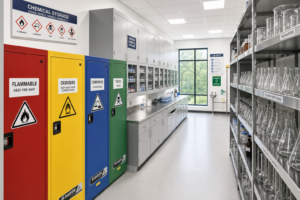
- Segregated chemical storage areas
- Ventilated enclosures and containment systems
- Chemical-resistant work surfaces
- Dedicated hazardous material handling zones
In advanced battery research, even trace contamination can compromise experimental results. Cleanroom integration or controlled-atmosphere glove boxes may be required depending on the chemistry under development. These considerations significantly influence overall facility design.
Environmental Control Requirements
Precision environmental control is central to successful battery testing and materials research.
Many lithium battery facilities require:
- Strict temperature stability
- Controlled humidity environments
- Dry rooms with ultra-low moisture levels
- Advanced HVAC systems with pressure zoning
Even minor fluctuations in temperature or moisture can alter electrochemical performance, impact safety, or invalidate long-term cycling tests. For this reason, clean energy and battery research lab design must prioritize robust environmental infrastructure from the earliest planning stages.

Heavy Equipment and Load-Bearing Needs
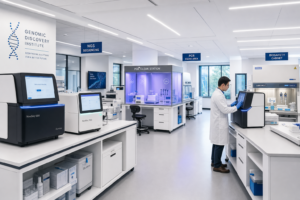
Clean energy laboratories are equipment-intensive environments. Battery cyclers, environmental chambers, calorimeters, and formation testing systems can impose significant structural and electrical demands.
Facility planning must account for:
- Reinforced flooring and load-bearing capacity
- High-capacity electrical distribution systems
- Dedicated power circuits with redundancy
- Equipment spacing for maintenance access and safety compliance
Heavy-duty laboratory casework and workstations must be engineered to support substantial loads without compromising durability or chemical resistance. Proper planning ensures that infrastructure for clean energy and battery research lab design supports both current research needs and future equipment upgrades.
Additional reading: Impact-Resistant Lab Benches: The Best Materials for Heavy-Duty Use
Safety-Driven Infrastructure in Battery Research Facilities

Fire Suppression and Thermal Runaway Mitigation
Battery research facilities face a unique risk profile, particularly when working with lithium-ion and emerging chemistries. Thermal runaway events, though rare in controlled environments, can escalate rapidly if infrastructure is not properly engineered.
Effective facility design should incorporate:
- Specialized fire suppression systems suited for lithium battery risks
- Zoned fire detection and rapid response systems
- Explosion venting where applicable
- Fire-rated wall assemblies and compartmentalization
Rather than relying solely on portable mitigation strategies, facility-level fire protection planning is critical. In any clean energy and battery research lab design, early coordination between engineers, safety consultants, and laboratory designers ensures the building itself supports risk containment.
Fume Hoods and Containment Solutions
Solvent handling, electrolyte preparation, and materials synthesis demand proper containment systems.
Depending on the application, facilities may require:
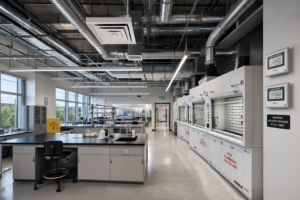
- Ducted fume hoods for volatile chemical processes
- Glove boxes for oxygen- and moisture-sensitive research
- Local exhaust ventilation for targeted hazard control
- Chemical-resistant interior liners
Strategic placement is key. Poor hood positioning can disrupt workflow, compromise containment efficiency, or interfere with pressure zoning. In high-performance environments, ventilation design and lab layout must work in harmony.
Zoning and Functional Separation
Battery research laboratories often combine multiple processes under one roof — materials synthesis, cell assembly, testing, aging studies, and failure analysis. Without clear zoning, safety and efficiency can quickly erode.
Smart clean energy and battery research lab design includes:
- Clear separation between wet chemistry and dry assembly spaces
- Dedicated dry rooms isolated from humid areas
- Segregated storage for flammable materials
- Controlled-access testing zones
Zoning not only reduces risk — it improves workflow, prevents cross-contamination, and enhances regulatory compliance.
Flexible and Scalable Laboratory Layouts
Clean energy innovation moves rapidly. New chemistries, emerging storage technologies, and pilot-scale production processes can quickly alter spatial and infrastructure demands. For this reason, clean energy and battery research lab design must prioritize flexibility from the outset.
Facilities that are rigidly configured around a single workflow often struggle to adapt as research directions shift. Scalable infrastructure allows laboratories to remain functional, compliant, and competitive over time.
Modular Casework and Reconfigurable Workstations
For clean energy and battery research lab design, modular laboratory systems provide a strategic advantage in such research environments.
Unlike fixed installations, modular casework allows:
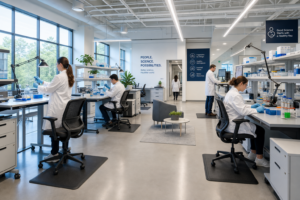
- Reconfiguration as research protocols change
- Expansion of testing capacity
- Relocation of equipment without structural disruption
- Integration of new technologies
Heavy-duty modular workstations can be engineered to accommodate evolving equipment loads while maintaining chemical resistance and structural stability. This approach minimizes downtime and reduces the cost of future renovations.

Planning for Future Expansion
Battery innovation often progresses from small-scale research to pilot production and advanced testing phases. Early-stage design should account for this trajectory.
Forward-looking facility planning includes:
- Reserved floor space for additional cyclers or chambers
- Infrastructure capacity beyond immediate electrical demand
- Oversized utility chases for future services
- Structural allowances for expanded load requirements
Designing only for present needs may constrain growth. Planning for expansion ensures that laboratories can scale alongside technological breakthroughs. Future-focused clean energy and battery research lab design ensures that facilities remain adaptable as energy storage technologies evolve.
Utility Distribution and Infrastructure Integration
Clean energy laboratories place significant demands on power, data, and environmental systems. Poorly planned utility distribution can create inefficiencies, safety risks, and costly retrofits.
Effective design incorporates:
- Overhead service carriers or accessible utility panels
- Dedicated high-capacity electrical circuits
- Redundant power systems for long-term cycling studies
- Centralized gas and vacuum distribution where required
- Integrated data infrastructure for equipment monitoring
In battery research facilities, uninterrupted power can be mission-critical. Long-duration testing and aging studies depend on reliable electrical systems and backup solutions.
When utilities are thoughtfully integrated into the overall layout, researchers gain both operational efficiency and the confidence that infrastructure will not limit experimentation.

Material Selection for Durability, Compliance, and Performance
Material performance is a cornerstone of successful clean energy and battery research lab design, particularly in high-demand battery development environments.Material selection plays a critical role in clean energy and battery research lab design.
Battery development environments combine chemical exposure, heat generation, heavy equipment loads, and strict compliance requirements. Surfaces and casework must withstand all four without compromising safety or longevity.
Chemical-Resistant Work Surfaces
Battery research frequently involves:
- Organic solvents
- Electrolyte formulations
- Acids and reactive compounds
- Cleaning agents used in contamination control
Work surfaces such as epoxy resin or phenolic resin provide strong chemical resistance and durability under repeated exposure. Stainless steel may be preferred in areas requiring easy decontamination or enhanced fire resistance. Material performance is a cornerstone of successful clean energy and battery research lab design, particularly in high-demand battery development environments.
Hypothetical application example:
In a university energy storage research lab conducting electrolyte formulation studies, epoxy resin worktops paired with chemical-resistant base cabinetry provide long-term durability while minimizing surface degradation from daily solvent handling.
SEFA-Compliant Casework and Structural Integrity
SEFA-compliant laboratory casework ensures durability under load and resistance to chemical and physical stress. In battery labs where cyclers and environmental chambers generate heat and vibration, structural integrity is non-negotiable.
High-performance laboratory cabinetry should offer:
- Reinforced construction
- Load-bearing capacity for heavy instrumentation
- Corrosion-resistant finishes
- Secure anchoring options where required
Hypothetical application example:
A private-sector battery innovation center installing multiple high-capacity cyclers integrates heavy-duty steel casework engineered to handle both static weight and dynamic vibration without compromising alignment or stability.
Anti-Static and Contamination Considerations
Battery cell assembly and advanced materials research may require electrostatic discharge (ESD) mitigation. Static buildup can interfere with sensitive components and compromise product integrity.
Design considerations may include:
- ESD-safe work surfaces
- Grounded workstation components
- Controlled flooring materials
- Environmental monitoring systems
When these elements are integrated during the design phase, laboratories avoid costly retrofits and operational interruptions.
Integrating Sustainability into Clean Energy and Battery Research Lab Design
Facilities dedicated to renewable energy and battery innovation often aim to align infrastructure with mission. Sustainable building strategies not only reduce operational costs but also reinforce environmental responsibility.
Effective clean energy and battery research lab design incorporates sustainability at multiple levels.

Energy-Efficient HVAC and Environmental Controls
Laboratories are energy-intensive environments, particularly those requiring strict temperature and humidity regulation. Advanced HVAC systems with:
- Zoned airflow control
- Energy recovery ventilation
- Smart monitoring systems
- Variable air volume (VAV) technology
can significantly reduce overall energy consumption without compromising environmental stability.
Hypothetical application example:
A regional clean technology research facility integrates zoned HVAC systems with automated environmental controls, reducing operational energy use while maintaining ultra-low humidity levels in battery dry rooms.
Smart Lighting and Automation
LED lighting with occupancy sensors, daylight harvesting systems, and automated building controls contribute to long-term energy efficiency.
Centralized monitoring systems allow facility managers to track power consumption from high-demand battery testing equipment, identifying opportunities for optimization.
Sustainable Material Selection
Sustainability extends beyond energy use. It also includes:
- Low-emission building materials
- Durable, long-life casework systems
- Recyclable metal components
- Reduced-waste modular construction
Modular laboratory systems support sustainability by reducing demolition waste during reconfiguration or expansion.
Waste Management and Responsible Handling
Battery research facilities must also plan for safe chemical disposal and recycling processes. Integrated waste handling areas and secure storage zones help maintain compliance while minimizing environmental impact.
As battery technologies continue to evolve, infrastructure must evolve with them. Thoughtful clean energy and battery research lab design anticipates shifts in chemistry, testing protocols, safety standards, and equipment requirements.
By integrating scalable layouts, durable materials, and advanced environmental controls from the outset, organizations can ensure that their clean energy and battery research lab design remains resilient, compliant, and capable of supporting innovation for years to come.
Why Partnering with an Experienced Laboratory Manufacturer Matters
Designing advanced research environments is not simply about selecting cabinetry or specifying surfaces. Clean energy and battery facilities demand coordinated infrastructure planning that aligns safety, performance, durability, and long-term scalability.
Partnering with an experienced laboratory manufacturer brings strategic advantages throughout the project lifecycle.
Integrated Design and Manufacturing Expertise
Laboratory environments require seamless coordination between architects, engineers, facility planners, and equipment suppliers. An experienced manufacturer understands how laboratory casework, containment systems, and utility integration intersect with building systems.
Rather than treating furnishings as an afterthought, integrated planning ensures:
- Proper load distribution for heavy equipment
- Alignment with HVAC and ventilation strategies
- Accommodation of fire protection and zoning requirements
- Long-term durability under demanding conditions
In complex environments such as battery research facilities, early collaboration reduces costly redesigns and infrastructure conflicts.
Engineered for Performance and Compliance
High-performance laboratory casework must meet rigorous industry standards while supporting real-world use. Manufacturers with established quality benchmarks and compliance expertise help facilities avoid performance gaps that can emerge under heavy equipment loads or chemical exposure.
In clean energy research environments, this translates to:
- Structurally sound installations
- Chemical-resistant materials suited to solvent exposure
- Configurations that support safety compliance
- Long-term reliability in high-demand spaces
Selecting a partner with demonstrated engineering and manufacturing capabilities adds a layer of assurance in environments where failure is not an option.

Scalability and Long-Term Adaptability
Energy storage technologies evolve rapidly. Laboratories that are designed with modularity and expansion in mind are better positioned to adapt to emerging chemistries, pilot-scale production needs, and next-generation testing equipment.
An experienced manufacturer can provide:
- Modular systems engineered for reconfiguration
- Heavy-duty workstations for evolving equipment demands
- Infrastructure foresight for future expansion
- Consistency across multi-phase projects
This adaptability helps facilities protect their investment while supporting innovation over time.
Additional reading: Modular Laboratory Systems: The Flexible Solution for Dynamic Research Needs
Conclusion: Building Infrastructure for the Future of Energy Innovation
As clean energy innovation accelerates, research facilities must be engineered to match the complexity and safety demands of advanced battery development. Purpose-driven clean energy and battery research lab design ensures that infrastructure supports discovery rather than limiting it.
From chemical-resistant casework and heavy-duty workstations to scalable layouts and integrated utility planning, every element plays a role in long-term performance.
For organizations planning a new facility or upgrading existing space, partnering with a single-source laboratory manufacturer simplifies coordination and strengthens outcomes. Genie Scientific provides integrated design, manufacturing, and laboratory infrastructure solutions tailored to the unique demands of clean energy and battery research environments.
Consult Genie Scientific to explore how a comprehensive, single-source approach to clean energy and battery research lab design can support safety, scalability, and future innovation.