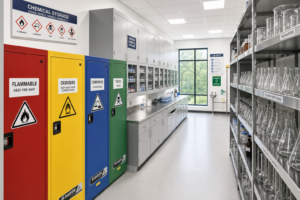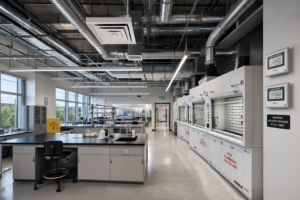

In heavy industrial laboratories, surfaces don’t just need to look durable—they need to survive. From corrosive acids and aggressive solvents to continuous exposure in high-temperature production environments, the demands placed on industrial lab furniture far exceed those of standard research or academic facilities. That’s why specifying chemical resistant lab workstations is not a design preference—it’s an operational necessity.
When materials degrade, the risks aren’t just cosmetic. Structural failure, contamination, safety hazards, and costly downtime quickly follow.
Industrial labs in sectors such as petrochemicals, advanced manufacturing, pharmaceuticals, and materials testing routinely handle highly reactive substances like Sulfuric acid, Hydrochloric acid, and solvents such as Toluene. Over time, these chemicals can compromise standard laminate surfaces, corrode untreated steel frames, and weaken cabinetry cores—leading to premature replacement and increased liability.
Heavy-duty industrial environments require workstations engineered with chemically inert surfaces, corrosion-resistant structural components, and reinforced load-bearing capacity. Proper material selection—from epoxy resin tops to high-grade stainless steel framing—directly impacts safety compliance, equipment longevity, and long-term return on investment.
For facility managers, lab planners, and industrial engineers, the question is no longer whether chemical resistance matters, but how to specify the right system for the specific exposure level, workflow, and regulatory environment.
In this article, we’ll explore the materials, structural considerations, and design features that define high-performance chemical resistant lab workstations—and how to select solutions built to withstand the realities of heavy industrial use.
Understanding Chemical Exposure in Industrial Labs
Not all laboratory environments expose furniture to the same level of chemical stress. In heavy industrial settings, exposure is often more frequent, more concentrated, and more unpredictable than in academic or light research labs. This distinction is critical when specifying chemical resistant lab workstations.
Types of Chemical Threats
Industrial labs may handle:
- Strong mineral acids such as Sulfuric acid and Hydrochloric acid, which can aggressively attack porous surfaces and corrode lower-grade metals.
- Strong bases like Sodium hydroxide, capable of breaking down resins and causing surface pitting over time.
- Organic solvents such as Acetone and Toluene, which can soften laminates and weaken adhesive bonds.
- Oxidizing agents, which accelerate corrosion and degrade protective coatings.
While occasional splashes may be manageable in lower-demand labs, industrial environments often involve continuous exposure, routine cleaning with harsh agents, and temperature fluctuations that intensify chemical reactions. Chemical resistant lab workstations can limit this risk.
Splash Zones vs. Continuous Exposure
There is a significant difference between:
- Intermittent surface contact (brief spills that are cleaned immediately), and
- Sustained or repeated exposure in manufacturing QA labs, pilot plants, or process development facilities.
Without chemical resistant lab workstations, continuous exposure can gradually compromise substrates beneath surface coatings. Even minor breaches in protective layers allow chemicals to penetrate, leading to swelling, delamination, or corrosion within structural components.
Over time, what begins as a small surface imperfection can evolve into structural instability.
The Hidden Risk: Chemical + Heat + Load
Heavy industrial laboratories often combine:
- Elevated temperatures
- Concentrated chemical handling
- High static or dynamic equipment loads
When these factors intersect, standard furniture systems fail quickly. Heat accelerates chemical reactions, weight stresses weakened materials, and corrosive agents exploit microscopic surface cracks.
This is precisely why industrial facilities cannot rely on conventional casework or commercial-grade laminate benches. Specifying properly engineered chemical resistant lab workstations means accounting for real-world exposure scenarios—not ideal lab conditions.
Core Materials Used in Chemical Resistant Lab Workstations
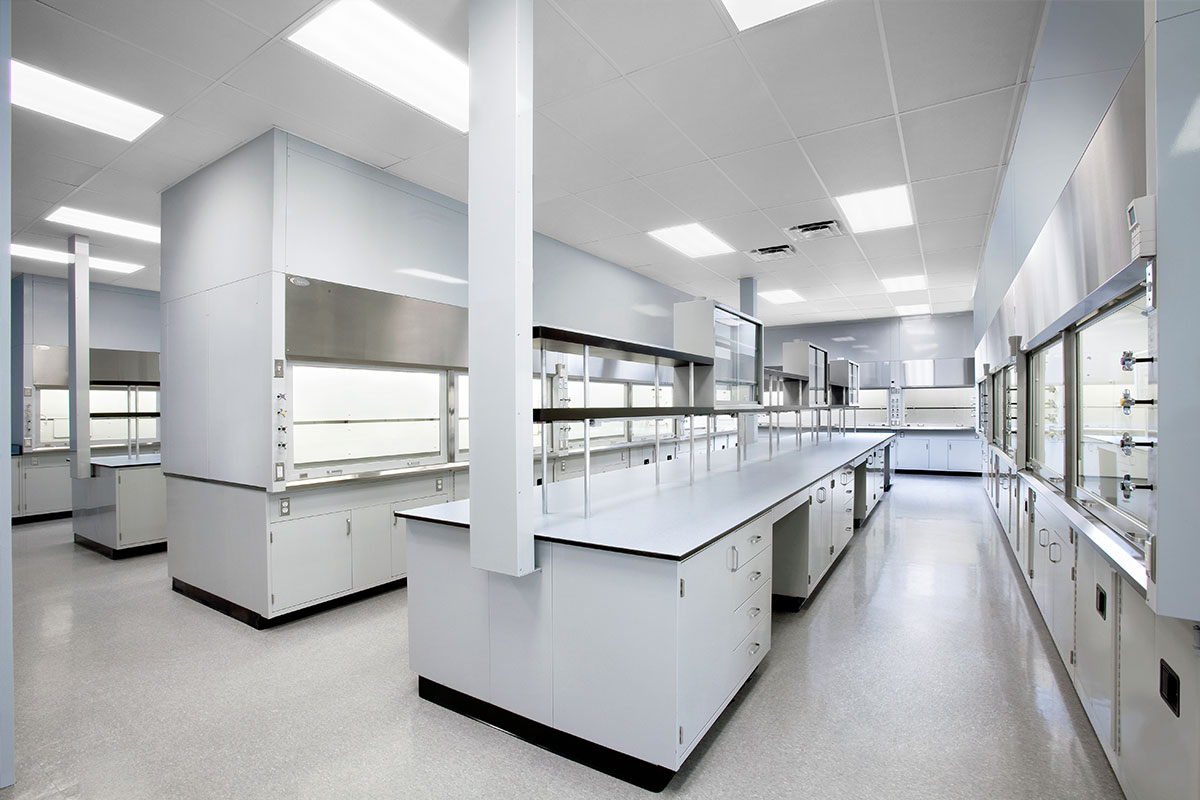
Material selection is the single most important factor in determining whether a lab workspace will endure or deteriorate under heavy industrial conditions. True chemical resistant lab workstations are engineered using non-porous, chemically stable surfaces paired with corrosion-resistant structural components.
Let’s break down the materials that actually perform.
Epoxy Resin Work Surfaces
Epoxy resin is widely regarded as the gold standard for high-exposure chemical environments.
Why it performs:
- Non-porous, seamless construction
- Exceptional resistance to strong acids, solvents, and oxidizers
- High heat tolerance
- Impact resistance for heavy equipment use
Because epoxy is molded as a solid, homogeneous material, it does not rely on surface coatings that can peel or degrade. This makes it particularly suitable for labs handling concentrated corrosives or conducting aggressive chemical processing.
For heavy industrial settings with frequent acid exposure or high thermal stress, epoxy resin surfaces provide unmatched durability of chemical resistant lab workstations, and long-term ROI.
Phenolic Resin (Compact Laminate) Surfaces
Phenolic resin surfaces—constructed from layers of kraft paper saturated in resin and compressed under high pressure—are practical for chemical resistant lab workstations.
Where they excel:
- Strong chemical resistance for moderate exposure
- Moisture resistance
- Lighter weight compared to epoxy
- Cost-effective for industrial QA and testing labs
While not as chemically inert as solid epoxy, phenolic resin performs well in environments where exposure is controlled and spills are promptly addressed. It offers a balanced solution for facilities that require chemical durability without extreme exposure demands.
Stainless Steel Frames & Structural Components
Surface durability alone is not enough for chemical resistant lab workstations. The structural integrity of the workstation must also resist corrosion and mechanical stress.
High-quality 304 or 316 stainless steel frames are commonly specified in heavy industrial labs:
- 304 stainless steel — suitable for general corrosion resistance in many industrial environments.
- 316 stainless steel — enhanced resistance to chlorides and highly corrosive conditions.
Welded construction further improves durability by minimizing joints where chemical intrusion could occur. Stainless steel components also simplify sanitation and reduce long-term maintenance requirements.
Why Material Pairing Matters
The most effective chemical resistant lab workstations combine:
- Chemically inert work surfaces
- Corrosion-resistant frames
- Reinforced load-bearing construction
A mismatch—such as pairing a high-performance epoxy top with a low-grade steel frame—undermines the entire system.
When it comes to chemical resistant lab workstations in heavy industrial environments, durability is holistic. Every component must be engineered to withstand chemical exposure, heat, and mechanical load simultaneously.

Structural Design Considerations for Heavy Industrial Use
In heavy-duty environments, durability goes beyond surface chemistry. Even the most chemically inert top will fail if the underlying structure cannot support sustained loads, resist corrosion at connection points, or contain accidental spills.
True chemical resistant lab workstations are engineered as integrated systems—not just upgraded countertops placed on standard cabinetry.
Load Ratings & Reinforced Construction
Industrial laboratories often support:
- Reactors and pilot-scale processing units
- Analytical instrumentation
- Industrial mixers and testing rigs
- Large containment vessels
These systems introduce significant static and dynamic loads. Over time, vibration and weight stress weak joints and fasteners in commercial-grade furniture.
Heavy industrial workstations should feature:
- Welded steel frames (rather than bolted light-gauge systems)
- Reinforced cross-bracing
- Higher load-bearing capacity ratings
- Minimal flex under equipment stress
Rigidity is not just about strength—it protects precision instruments from micro-movement that can affect calibration and test accuracy.
Welded vs. Modular Structural Systems
In high-exposure zones, welded steel construction offers distinct advantages:
- Fewer seams where chemicals can infiltrate
- Reduced corrosion risk at connection points
- Greater long-term structural integrity
However, modular systems may still be appropriate in certain industrial labs that anticipate workflow reconfiguration. The key is ensuring that modular components are built with the same corrosion-resistant materials and industrial load specifications to ensure chemical resistant lab workstations.
Flexibility should never compromise durability.
Spill Containment & Edge Design
Chemical exposure rarely occurs in ideal conditions. Accidental splashes, overflows, or transfer mishaps are part of industrial operations, making chemical resistant lab workstations essential.
Design considerations should include:
- Raised containment lips
- Integrated drip grooves
- Seamless backsplashes
- Chemical-resistant sealants at joints
These features prevent liquids from reaching structural cores or underlying cabinetry—a common failure point in non-industrial systems.
Utility Integration & Ventilation Compatibility
Heavy industrial workstations must often integrate:
- Gas lines
- Compressed air
- Vacuum systems
- Electrical conduit
- Data connections
Poorly designed utility penetrations create weak points where chemical intrusion and corrosion can begin. Industrial-grade systems are engineered with sealed pass-throughs and corrosion-resistant fittings, improving the efficiency of chemical resistant lab workstations.
Additionally, workstation design should support seamless integration with ventilation systems, including compatibility with chemical exhaust equipment such as fume hoods and localized extraction units.
When utilities, ventilation, and structural reinforcement are planned together, the result is a cohesive, high-performance industrial workspace—not a patchwork solution.
Designing for Longevity, Not Replacement Cycles
Industrial facilities cannot afford recurring downtime caused by premature furniture failure. Structural reinforcement, corrosion-resistant materials, and engineered containment features dramatically extend lifecycle performance.
In high-exposure settings, the true cost of chemical resistant lab workstations is measured not just in initial procurement — but in durability, safety compliance, and operational continuity.

Safety & Compliance Considerations
In heavy industrial laboratories, durability alone is not enough. Workstations must also meet established safety and performance standards to ensure long-term compliance, operational reliability, and worker protection. For facilities handling corrosive chemicals and industrial processes, specifying chemical resistant lab workstations built to recognized industry benchmarks is essential.
The Importance of SEFA Standards
The Scientific Equipment and Furniture Association (SEFA) establishes performance standards for laboratory furniture, including chemical resistance, load capacity, and structural integrity.
SEFA testing evaluates factors such as:
- Resistance to chemical exposure
- Surface staining and degradation
- Impact durability
- Load-bearing performance
- Structural deflection under stress
Chemical resistant lab workstations manufactured to SEFA guidelines undergo controlled testing that simulates real-world laboratory conditions. For industrial facilities, this validation reduces risk by ensuring that materials and construction methods perform as specified.
Choosing SEFA-compliant systems is not just a purchasing decision—it is a risk management strategy.
Chemical Storage Compatibility
Industrial workstations often integrate base cabinets or under-bench storage. However, improper material selection can lead to dangerous incompatibilities.
Considerations include:
- Corrosion-resistant cabinet interiors
- Proper ventilation for volatile chemicals
- Secondary containment for liquid storage
- Compatibility between stored chemicals and cabinet liners
Even if the work surface is chemically inert, substandard storage components can become hidden failure points.
Spill Management & Worker Safety
Safety design extends beyond durability. Industrial-grade chemical resistant lab workstations should support:
- Integrated containment edges
- Seamless transitions between surfaces
- Easy-to-clean, non-porous finishes
- Resistance to repeated decontamination cycles
Frequent cleaning with harsh disinfectants and industrial solvents should not degrade surfaces or compromise structural integrity.
When surfaces resist staining, cracking, and corrosion, facilities reduce contamination risk and improve overall workplace safety.
Ventilation & Hazard Mitigation Integration
Industrial labs handling volatile or corrosive substances must coordinate chemical resistant lab workstation design with ventilation systems. Workstations positioned adjacent to chemical exhaust equipment—including fume hoods—should be engineered to maintain airflow efficiency and resist corrosion from captured vapors.
Improperly specified materials can deteriorate under prolonged exposure to airborne chemical residues, even when direct liquid contact is limited.
Compliance, in this context, is both structural and environmental.
Documentation & Long-Term Accountability
For industrial facility managers, documentation matters. Chemical resistant lab workstations built to recognized standards simplify:
- Regulatory inspections
- Safety audits
- Insurance verification
- Lifecycle planning
When manufacturers adhere to SEFA performance criteria and provide clear material specifications, facility teams gain transparency and confidence in their investment.

Why Standard Commercial Furniture Fails in Industrial Labs
At first glance, commercial-grade lab furniture may appear sufficient. Laminate surfaces look clean and professional. Powder-coated steel frames seem sturdy. Standard cabinetry offers storage at a lower upfront cost.
But in heavy industrial environments, these systems are not engineered for sustained chemical exposure — and the failure cycle begins almost immediately.
When facilities substitute general-purpose furniture for true chemical resistant lab workstations, the consequences often include premature degradation, safety risks, and unplanned replacement costs.
Laminate Delamination & Surface Breakdown
High-pressure laminate tops rely on adhesive bonding to secure a thin decorative surface layer to a substrate, often particleboard or MDF.
In environments where acids, bases, or solvents are present:
- Surface coatings soften or stain
- Adhesives weaken under chemical attack
- Edges swell as moisture penetrates
- Substrates expand and distort
Once the protective surface layer is compromised, deterioration accelerates rapidly.
Industrial labs do not operate in “wipe-and-forget” conditions. Repeated exposure—even from cleaning agents—gradually undermines laminate performance and compromises chemical resistant lab workstations.
Corrosion in Light-Gauge Steel Frames
Powder-coated mild steel may perform adequately in dry office environments. However, in industrial labs:
- Microscopic coating breaches allow chemical intrusion
- Corrosion begins at welds and fasteners
- Rust spreads beneath coatings
- Structural integrity declines over time
Unlike stainless steel systems engineered for corrosive conditions, commercial-grade frames are vulnerable to vapor exposure—even when liquid spills are minimal.
Structural Instability Under Heavy Equipment
Industrial equipment introduces significant weight and vibration. Commercial cabinetry and light-duty benches are rarely designed for:
- Sustained high load ratings
- Dynamic vibration from mixers or processing equipment
- Long-term mechanical stress
Over time, joints loosen, frames flex, and alignment shifts—potentially affecting sensitive instrumentation and workflow efficiency.
Hidden Costs of “Budget” Solutions
What appears cost-effective at procurement often becomes expensive over time.
Premature replacement cycles lead to:
- Operational downtime
- Disposal costs
- Reinstallation expenses
- Safety remediation
- Regulatory scrutiny
In industrial settings, the cost of failure extends far beyond the furniture itself.
Investing in properly engineered chemical resistant lab workstations reduces lifecycle costs, minimizes disruption, and protects both personnel and equipment.
Additional reading: Heavy-Duty Lab Workstations (GFLEX): Unmatched Durability, Load Ratings & Optimal Layouts for Industrial Labs

Customization for Industrial Applications
No two industrial laboratories operate under identical conditions. Exposure levels, workflow patterns, equipment load, and regulatory requirements vary significantly between manufacturing QA labs, pilot plants, materials testing facilities, and pharmaceutical production environments.
That’s why high-performance chemical resistant lab workstations must be engineered—not simply selected from a catalog.
Genie Scientific designs systems tailored to real-world industrial demands, aligning materials, structure, and utility integration into a cohesive solution.
Application-Specific Surface Selection
Customization begins with material alignment.
- High-acid processing environments may require solid epoxy resin surfaces for maximum chemical inertness.
- Controlled QA labs with moderate exposure may benefit from phenolic resin systems.
- Chloride-heavy or corrosive vapor environments may call for 316 stainless steel framing rather than 304.
Instead of defaulting to a single material, Genie evaluates:
- Chemical compatibility
- Frequency and duration of exposure
- Cleaning protocols
- Temperature ranges
- Equipment load requirements
The result is a workstation specified for the environment—not a generalized solution.
Engineered Load Capacity & Reinforcement
Industrial customization also includes structural engineering.
Workstations can be designed with:
- Reinforced welded steel frames
- Increased load-bearing ratings
- Cross-bracing for vibration control
- Heavy-duty leveling systems for uneven industrial floors
For facilities supporting pilot-scale reactors or high-weight analytical instruments, structural stability directly impacts operational precision.
Integrated Utilities & Workflow Efficiency
Industrial laboratories rarely operate with standalone benches. Genie integrates:
- Gas lines
- Vacuum systems
- Compressed air
- Electrical conduit
- Data infrastructure
Utility routing is engineered to minimize exposure risk and protect structural components from corrosion. Sealed penetrations and corrosion-resistant fittings maintain system integrity over time.
Workflow optimization is equally critical. Customized configurations improve:
- Ergonomic efficiency
- Chemical handling safety
- Equipment accessibility
- Maintenance access
When workstation layout aligns with process flow, productivity improves and risk decreases.
Scalable Systems for Evolving Facilities
Industrial facilities grow, adapt, and reconfigure. Custom systems can incorporate:
- Modular expansion capability
- Mobile heavy-duty units where appropriate
- Adjustable height configurations
- Integrated containment solutions
Flexibility, when engineered correctly, does not compromise durability.
A Single-Source Industrial Solution
Genie Scientific’s manufacturing capabilities extend beyond standalone benches. By providing:
- Chemical resistant lab workstations
- Industrial-grade casework
- Ventilation integration
- Structural steel systems
- Coordinated lab planning support
Genie becomes a single-source partner — simplifying procurement, ensuring compatibility, and maintaining consistent performance standards across the entire lab environment.
In heavy industrial settings, that integration reduces risk, shortens project timelines, and supports long-term compliance.
Additional reading: How to Choose Chemical-Resistant Countertops for Your Lab
Conclusion: Engineering Durability Into Every Detail
In heavy industrial laboratories, furniture is not a background feature—it is part of the operational infrastructure. Chemical exposure, mechanical load, temperature fluctuation, and regulatory oversight create conditions that quickly expose the weaknesses of standard systems.
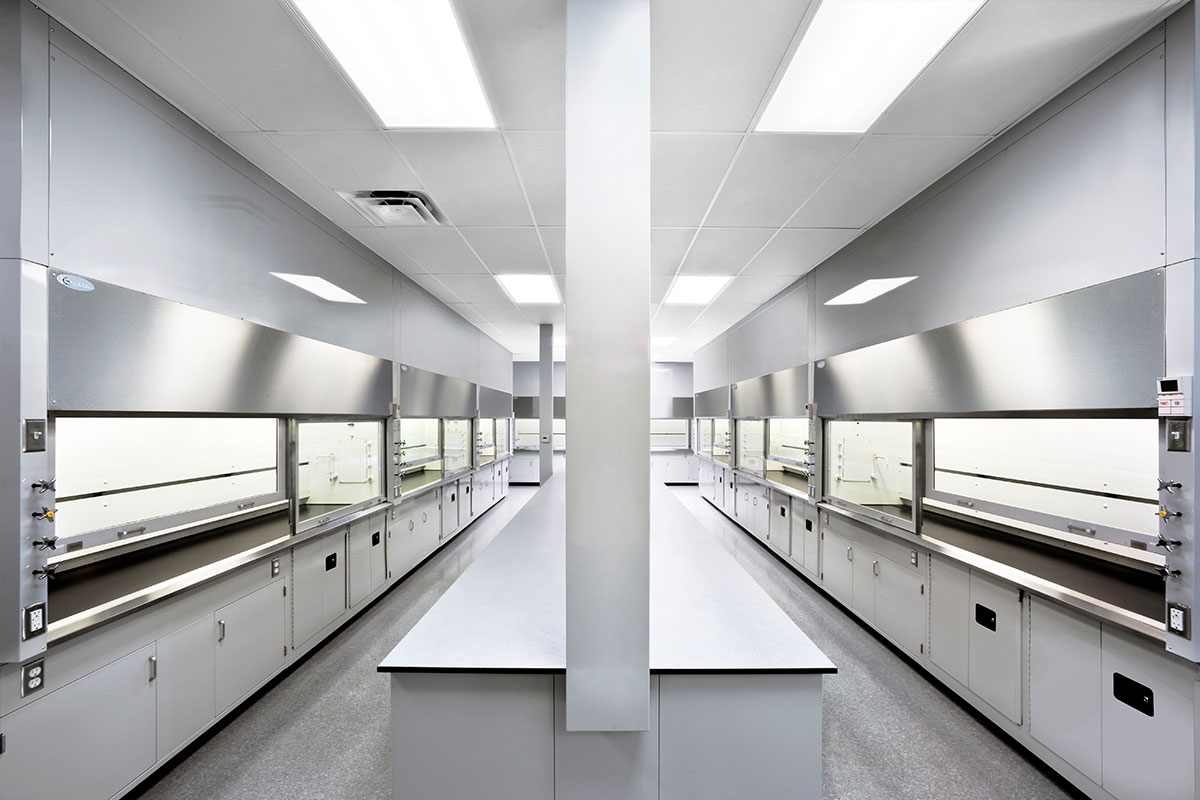
Properly specified chemical resistant lab workstations are engineered to withstand these realities. From chemically inert work surfaces and corrosion-resistant steel framing to reinforced load capacity and SEFA-compliant performance standards, every component plays a role in protecting personnel, equipment, and long-term investment.
Cutting corners in industrial environments rarely results in savings. Instead, it introduces risk, accelerates replacement cycles, and increases downtime. Facilities that prioritize engineered durability benefit from improved safety, regulatory confidence, and measurable lifecycle value.
Genie Scientific delivers industrial-grade solutions designed around real-world exposure conditions—not theoretical lab scenarios. By aligning material science, structural engineering, and compliance-driven manufacturing, Genie provides integrated laboratory systems built to perform under pressure.
For facility managers, engineers, and lab planners, the path forward is clear: specify workstations designed for the environment they will actually face.
If you are planning a new facility or upgrading an existing industrial lab, consult Genie Scientific, a manufacturer and dealer of fume hoods, laboratory furniture, and related products, to evaluate the optimal configuration of chemical resistant lab workstations for your specific operational demands.