
Why Biosafety Lab Design Matters
Designing laboratories that safely support biological research requires more than standard lab planning. In Biosafety Level 2 (BSL-2) and Biosafety Level 3 (BSL-3) environments, every design decision plays a critical role in protecting personnel, maintaining containment, and supporting efficient daily operations. This is where thoughtful biosafety lab design becomes essential.
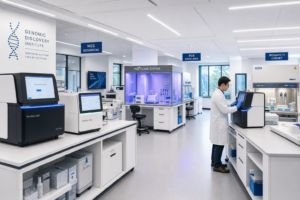
BSL-2 and BSL-3 laboratories are commonly used in clinical, pharmaceutical, and research settings where potentially infectious materials are handled. These environments demand carefully planned layouts, durable and cleanable furniture, and workflows that minimize risk without disrupting productivity. A well-designed biosafety lab does not simply meet safety requirements—it actively supports researchers by reducing cross-contamination, streamlining movement, and improving long-term functionality.
From the placement of workstations and biosafety cabinets to the selection of steel casework and seamless work surfaces, furniture and layout choices form the foundation of effective biosafety lab design. When these elements are planned together, laboratories become safer, more adaptable, and easier to maintain over time.
With extensive experience in designing and furnishing high-performance laboratory environments, Genie Scientific helps organizations create biosafety labs that balance safety, compliance, and operational efficiency—today and well into the future.

Understanding Biosafety Levels 2 and 3
Biosafety Level 2 (BSL-2) and Biosafety Level 3 (BSL-3) laboratories are designed to support work with biological materials that present varying degrees of risk to personnel and the surrounding environment. While both levels require controlled lab environments, the differences between them have a direct impact on biosafety lab design, particularly when it comes to layout planning and furniture selection.
BSL-2 laboratories are commonly used for clinical diagnostics, pharmaceutical research, and academic laboratories handling moderate-risk biological agents. These labs rely on well-defined work zones, appropriate containment equipment, and surfaces that are easy to clean and decontaminate.
From a design perspective, BSL-2 spaces prioritize efficient workflows, durable furniture, and layouts that reduce the likelihood of accidental exposure or cross-contamination during routine procedures.
BSL-3 laboratories, on the other hand, are intended for work involving higher-risk biological agents that may be transmitted through aerosols or cause serious disease. As a result, biosafety lab design at this level places greater emphasis on containment, directional workflows, and controlled movement within the space.
Layouts must carefully guide personnel, materials, and equipment in ways that support safety protocols, while furniture and surfaces must withstand frequent cleaning and rigorous decontamination processes.
Understanding these differences is essential when planning BSL-2 and BSL-3 laboratories. The biosafety level directly influences decisions related to room configuration, furniture durability, and long-term adaptability. By aligning design strategies with the specific requirements of each biosafety level, laboratories can achieve safer operations without sacrificing functionality or efficiency.

Core Principles of Effective Biosafety Lab Design
Successful biosafety lab design starts with a clear understanding of how people, materials, and equipment move through the laboratory. In BSL-2 and BSL-3 environments, thoughtful planning reduces risk by creating spaces that naturally support safe behaviors, rather than relying solely on procedures and signage.
One of the most important principles is zoning. Clearly defined zones help separate clean areas from spaces where biological materials are handled, minimizing the potential for cross-contamination. Well-planned zoning also supports controlled entry and exit points, allowing laboratory staff to follow consistent workflows without unnecessary backtracking or overlap.
Directional movement is another key consideration. Effective biosafety lab design guides the flow of personnel, samples, and waste in a logical sequence that aligns with safety protocols. By reducing cross-traffic and congestion, laboratories can lower the risk of accidental exposure while improving overall efficiency during daily operations.
Visibility and accessibility also play a critical role. Open sightlines improve supervision and situational awareness, while accessible workstations, storage, and safety equipment allow staff to respond quickly and confidently. Design choices that support ease of movement and clear visibility contribute to both safety and productivity.
Finally, biosafety labs must be designed with long-term performance in mind. Furniture, surfaces, and layouts should withstand frequent cleaning, chemical exposure, and evolving research needs. Flexible design strategies allow laboratories to adapt to new equipment, changing protocols, or future expansions without compromising safety.
By applying these core principles, biosafety lab design becomes a proactive safety measure—one that supports compliance, protects personnel, and enhances the daily functionality of BSL-2 and BSL-3 laboratories.
Furniture Essentials for BSL-2 & BSL-3 Labs
Furniture plays a central role in effective biosafety lab design, especially in BSL-2 and BSL-3 environments where cleanliness, durability, and containment are non-negotiable. The right furniture does more than fill a space—it actively supports safety protocols, withstands rigorous use, and contributes to efficient daily workflows.
Steel lab casework is a cornerstone of biosafety laboratory furniture. Its strength, longevity, and resistance to moisture and chemicals make it well suited for environments that require frequent cleaning and disinfection. Unlike wood-based alternatives, steel casework maintains structural integrity over time, even under demanding laboratory conditions.
Powder-coated finishes further enhance performance by providing a smooth, non-porous surface that resists corrosion, chemical exposure, and microbial growth. These finishes are especially valuable in biosafety labs, where surfaces must be easy to clean and capable of withstanding repeated decontamination without degrading.
Work surfaces are equally critical. Seamless, non-porous countertops reduce joints and crevices where contaminants can accumulate, supporting effective cleaning protocols. When integrated with steel casework, these surfaces create durable workstations that align with the strict hygiene requirements of BSL-2 and BSL-3 laboratories.
Flexibility is another key consideration. A combination of fixed and mobile furniture allows laboratories to adapt to changing research needs while maintaining safe workflows. Mobile benches and storage units can be repositioned to accommodate new equipment or processes, while fixed casework provides stability in high-use areas and around biosafety cabinets.
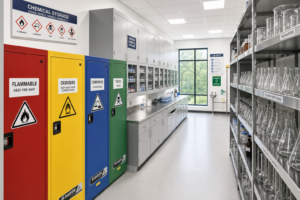
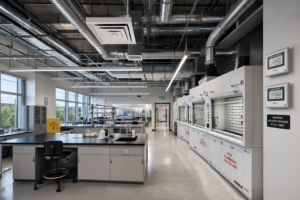
While biosafety cabinets are essential for handling biological materials in BSL-2 and BSL-3 labs, chemical fume hoods also play a critical role when chemical reagents or hazardous substances are used alongside biological work. Properly positioned fume hoods remove harmful vapors and protect laboratory personnel, complementing the containment provided by BSCs.
In well-planned biosafety lab design, fume hoods are strategically integrated into the layout, ensuring that chemical handling zones do not interfere with airflow patterns or compromise biological containment. This integration allows laboratories to safely manage both chemical and biological risks while maintaining efficient workflows.
Furniture is never selected in isolation when executing biosafety lab design. Casework, work surfaces, and storage solutions must work together to support containment, minimize cross-contamination, and enhance long-term functionality. By choosing furniture engineered for biosafety environments, laboratories can achieve safer operations and greater resilience over time.

Layout Strategies That Support Safety and Workflow
Effective biosafety lab design goes beyond selecting the right furniture—it depends on how that furniture is arranged to support safe, efficient movement throughout the laboratory. In BSL-2 and BSL-3 environments, well-planned layouts help reduce risk by guiding daily activities in a logical, controlled manner.
One key strategy is intentional spacing. Adequate aisle widths and clear work zones allow personnel to move comfortably without crowding, even when wearing personal protective equipment. Proper spacing also reduces accidental contact between staff and work surfaces, helping to maintain containment and cleanliness.
The strategic placement of biosafety cabinets, sinks, and storage is equally important. Biosafety cabinets should be positioned to avoid high-traffic areas, minimizing airflow disruption and unnecessary pass-through. Handwashing sinks placed near lab exits support safe entry and exit protocols, while thoughtfully located storage reduces excessive movement across the lab during procedures.
Minimizing cross-traffic is another core layout principle. Separating pathways for personnel, samples, and waste helps prevent workflow conflicts and lowers the risk of contamination. Clear routes and defined circulation paths make it easier for staff to follow protocols consistently, even during busy periods.
Layouts should also be designed with human behavior in mind. When benches, equipment, and storage are arranged intuitively, staff are more likely to move efficiently and safely without relying on constant reminders or signage. This reduces fatigue, errors, and workflow interruptions.
Coordinating Fume Hoods with Workflow
In laboratories where chemical handling is required, fume hoods are carefully integrated into the layout to support safe and efficient workflows. They are typically placed in designated chemical zones to prevent airflow conflicts with biosafety cabinets, ensuring that biological containment is never compromised.
Strategic placement of fume hoods allows personnel to manage both chemical and biological work safely, minimizing cross-traffic and maintaining clear directional movement throughout the lab. This careful coordination reinforces the principles of biosafety lab design while enhancing operational efficiency.
Finally, successful biosafety lab design anticipates change. Layouts that allow for future equipment additions, evolving research needs, or protocol updates help laboratories remain functional over time. By planning flexibility into the layout from the outset, organizations can protect their investment while maintaining high safety standards.

Specialized Design Considerations for BSL-3 Labs
Biosafety Level 3 laboratories introduce a higher level of complexity, making precision planning a critical component of effective biosafety lab design. At this level, design decisions must support enhanced containment while still allowing laboratory personnel to work efficiently and confidently.
One of the defining features of BSL-3 lab design is the emphasis on directional workflows. Layouts are carefully planned to guide personnel, materials, and waste through the space in a controlled sequence. Furniture placement plays a key role in reinforcing these pathways, helping to reduce backtracking and limit unnecessary movement within high-risk areas.
Furniture and surfaces in BSL-3 environments must also support frequent and rigorous decontamination. Steel casework, powder-coated finishes, and seamless work surfaces are particularly well suited to these conditions, as they maintain performance and structural integrity under repeated exposure to cleaning agents and disinfectants. Design choices that prioritize cleanability help maintain containment without increasing maintenance burdens.
Another important consideration is integration. Furniture must align seamlessly with biosafety cabinets, equipment, and building systems to avoid gaps, obstructions, or hard-to-clean spaces. Well-integrated casework and workstations contribute to smoother workflows and support consistent safety practices.
Flexibility remains essential, even in highly controlled environments. Thoughtful biosafety lab design anticipates evolving research needs by incorporating layouts and furniture solutions that can adapt without compromising containment. This approach allows BSL-3 laboratories to remain compliant, functional, and efficient as protocols and technologies change.
By addressing these specialized requirements, biosafety lab design for BSL-3 environments becomes a strategic tool—one that protects personnel, supports research objectives, and ensures long-term operational resilience.
Real-World Applications: Biosafety Labs in Action
In practice, successful biosafety lab design is measured by how well a laboratory supports safe, efficient work on a daily basis. Real-world biosafety labs must balance containment requirements with the practical needs of researchers, technicians, and facility managers—often within tight spatial and operational constraints.
In BSL-2 environments, custom furniture and thoughtfully planned layouts help streamline routine workflows while maintaining clean separation between work zones. Steel casework, seamless work surfaces, and strategically placed storage allow laboratory teams to focus on research tasks without unnecessary movement or disruption. When furniture and layout are designed together, these labs remain organized, adaptable, and easier to maintain over time.
BSL-3 laboratories place even greater demands on design precision. Here, layouts are carefully structured to support directional movement and containment, while durable furniture materials withstand frequent decontamination. Integrated casework and workstations help eliminate hard-to-clean gaps and support consistent safety practices, even during intensive research activities.
Across clinical, pharmaceutical, and research facilities, well-executed biosafety lab design enables laboratories to operate smoothly under real-world conditions. By tailoring furniture solutions and layouts to each facility’s specific biosafety level and operational needs, Genie Scientific helps organizations create laboratories that function reliably, protect personnel, and support long-term research goals.

Designing for Long-Term Performance and Compliance
Effective biosafety lab design is not only about meeting immediate safety requirements—it is about creating laboratory environments that perform reliably over time. In BSL-2 and BSL-3 laboratories, long-term performance depends on design decisions that support durability, ease of maintenance, and ongoing compliance.
Furniture and surfaces must withstand frequent cleaning, chemical exposure, and daily wear without compromising structural integrity. Steel casework and powder-coated finishes provide long-term resilience, helping laboratories maintain clean, professional environments even under demanding conditions. When materials are selected for durability, facilities can reduce repair costs and minimize operational disruptions.
Ease of cleaning and inspection is another critical factor. Seamless work surfaces, well-integrated furniture, and thoughtfully planned layouts simplify routine maintenance and support consistent safety practices. Designs that eliminate hard-to-reach areas or unnecessary joints make it easier for staff to uphold biosafety protocols day after day.
Long-term compliance also relies on adaptability. As research evolves, laboratories may require new equipment, updated workflows, or expanded capabilities. Flexible biosafety lab design allows facilities to respond to these changes without extensive renovations or compromised safety. Modular furniture systems and adaptable layouts help protect the laboratory’s investment while supporting future growth.
By prioritizing durability, maintainability, and flexibility, biosafety lab design becomes a strategic asset. Laboratories that are designed for long-term performance not only support compliance but also deliver greater efficiency, safety, and value throughout their lifecycle.
Why Genie Scientific Is a Trusted Partner in Biosafety Lab Design
Designing BSL-2 and BSL-3 laboratories requires a careful balance of safety, functionality, and long-term performance. Genie Scientific brings deep expertise in biosafety lab design, delivering solutions that are tailored to the specific risks, workflows, and operational demands of each facility.
From early planning through final installation, Genie Scientific takes a holistic approach to laboratory design. Furniture, layouts, and materials are selected to work together seamlessly, supporting containment strategies while enhancing daily usability. This integrated process helps laboratories avoid common design challenges and achieve environments that are both compliant and efficient.
With a strong focus on durable materials, precision layouts, and future-ready solutions, Genie Scientific supports laboratories across clinical, pharmaceutical, and research settings. The result is biosafety lab design that protects personnel, supports research objectives, and stands the test of time.
Conclusion: Building Safer, Smarter Biosafety Labs
Effective biosafety lab design is essential for laboratories operating at Biosafety Levels 2 and 3. Thoughtful furniture selection, well-planned layouts, and durable materials work together to create environments that support containment, streamline workflows, and enhance long-term performance.
By prioritizing safety, cleanability, and adaptability, laboratories can reduce risk while improving day-to-day efficiency. Whether designing a new facility or upgrading an existing space, investing in expert-led biosafety lab design ensures that laboratories are prepared to meet both current and future demands.
If you’re planning or upgrading a BSL-2 or BSL-3 laboratory, Genie Scientific can help you create a biosafety lab design that aligns safety, functionality, and longevity. Consult Genie Scientific’s laboratory design specialists to develop a solution tailored to your facility’s unique requirements.